A kidney drug that became a heart and metabolism drug
SGLT2 inhibitors began as diabetes medications. Their first purpose was simple: help the kidneys remove excess glucose through the urine.
However, the story did not stop there.
These drugs also reduce sodium reabsorption, lower blood pressure modestly, reduce cardiac congestion, protect kidney function, and improve outcomes in patients with heart failure and chronic kidney disease.
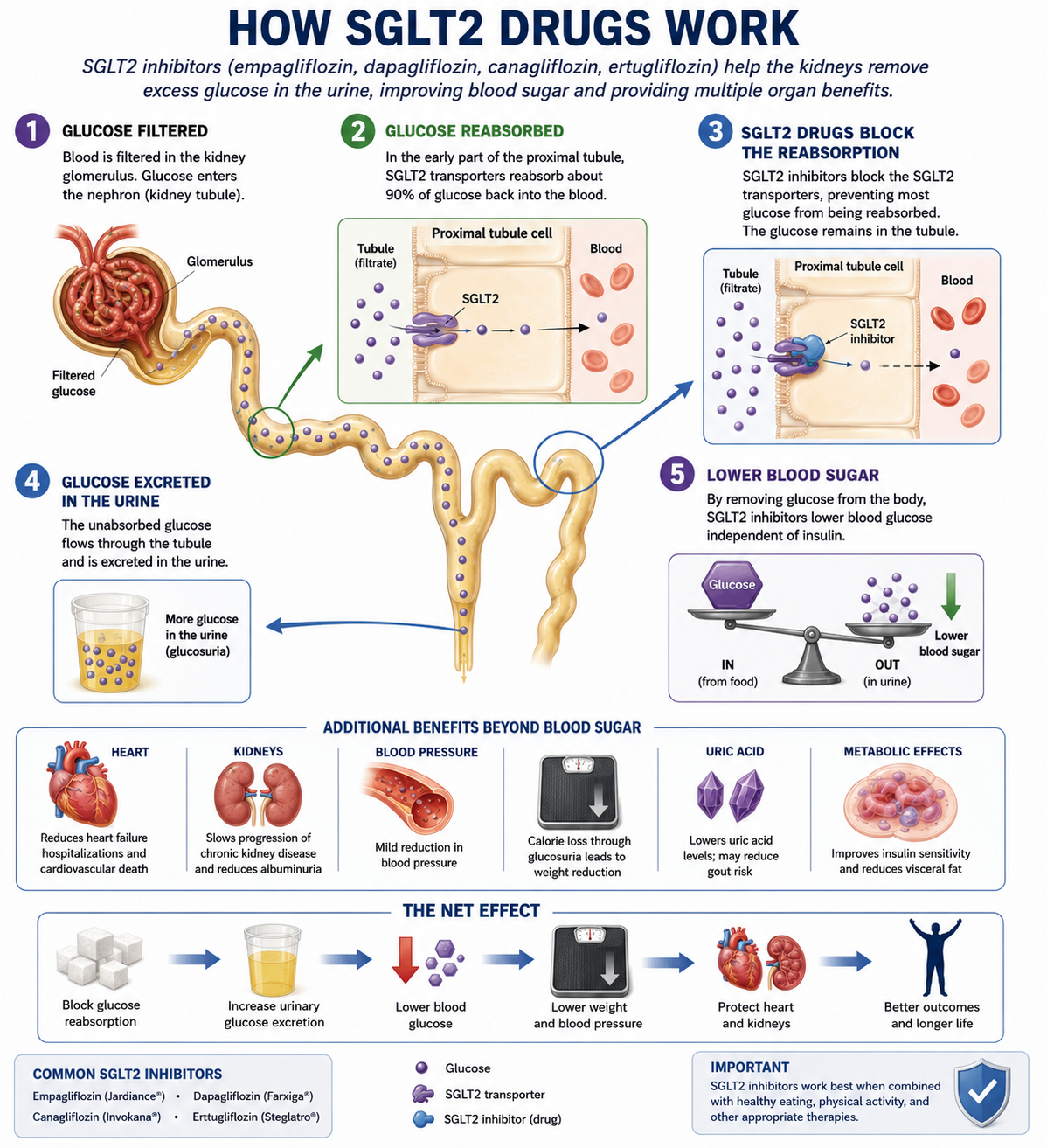
The basic mechanism
Every day, the kidneys filter glucose from the blood.
Normally, most of that glucose is reclaimed in the proximal tubule by a transporter called SGLT2.
SGLT2 inhibitors block this transporter.
As a result:
- less glucose is reabsorbed
- more glucose leaves the body in the urine
- blood glucose falls
- insulin demand decreases
This effect is partly independent of insulin, which makes the drugs useful in many patients with type 2 diabetes.
Why the benefits go beyond glucose
SGLT2 drugs do more than lower blood sugar.
By blocking glucose and sodium reabsorption in the kidney, they create several downstream effects:
- mild glucose loss through urine
- mild sodium and fluid loss
- lower blood pressure
- reduced cardiac filling pressure
- lower kidney filtration stress
- improved heart failure outcomes
- slower progression of chronic kidney disease
This is why SGLT2 inhibitors are now used not only in diabetes, but also in heart failure and chronic kidney disease.
Why they matter in metabolic disease
Modern metabolic disease is often driven by a cluster of problems:
- insulin resistance
- fatty liver
- high triglycerides
- high blood pressure
- kidney stress
- heart failure risk
SGLT2 inhibitors do not directly block fructose metabolism.
However, they help reduce several consequences of metabolic overload. They lower glucose burden, reduce sodium-volume stress, protect the heart and kidneys, and may help patients move away from the downward spiral of diabetes, hypertension, kidney disease, and heart failure.
Common SGLT2 inhibitors
Examples include:
- empagliflozin
- dapagliflozin
- canagliflozin
- ertugliflozin
These medications should be used under medical supervision. They are powerful tools, but they are not substitutes for dietary improvement, physical activity, sleep, and reduction of ultra-processed foods and sugar-sweetened beverages.
Important cautions
SGLT2 inhibitors can increase the risk of:
- genital yeast infections
- dehydration or dizziness
- urinary frequency
- rare ketoacidosis, especially during illness, fasting, surgery, or very low-carbohydrate intake
Patients should discuss sick-day rules and perioperative medication holding plans with their clinical team.
Bottom line
SGLT2 inhibitors help the kidneys release excess glucose and sodium.
The result is more than better blood sugar.
These drugs reduce metabolic pressure on the kidneys, blood vessels, and heart. In the modern era of diabetes, heart failure, and chronic kidney disease, they represent one of the most important pharmacologic advances in cardiometabolic medicine.
The best results occur when these medications are paired with the upstream intervention that remains essential:
less sugar,
less ultra-processed food,
more real food,
more movement,
and better metabolic structure.
References
- Zinman B, Wanner C, Lachin JM, et al. Empagliflozin, cardiovascular outcomes, and mortality in type 2 diabetes. N Engl J Med. 2015;373:2117–2128.
- Neal B, Perkovic V, Mahaffey KW, et al. Canagliflozin and cardiovascular and renal events in type 2 diabetes. N Engl J Med. 2017;377:644–657.
- McMurray JJV, Solomon SD, Inzucchi SE, et al. Dapagliflozin in patients with heart failure and reduced ejection fraction. N Engl J Med. 2019;381:1995–2008.
- Heerspink HJL, Stefánsson BV, Correa-Rotter R, et al. Dapagliflozin in patients with chronic kidney disease. N Engl J Med. 2020;383:1436–1446.
- Herrington WG, Staplin N, Wanner C, et al. Empagliflozin in patients with chronic kidney disease. N Engl J Med. 2023;388:117–127.