Global Metabolic Crisis
Explore the Crisis by Region
Start with the map, then move into regional, national, and subregional pages about diet transition, chronic disease, ancestry, urbanization, and food systems.
Overview5 links
Africa5 links
Europe4 links
Latin America and Caribbean7 links
Middle East and North Africa4 links
North America4 links
Pacific and Oceania6 links
South and Southeast Asia10 links
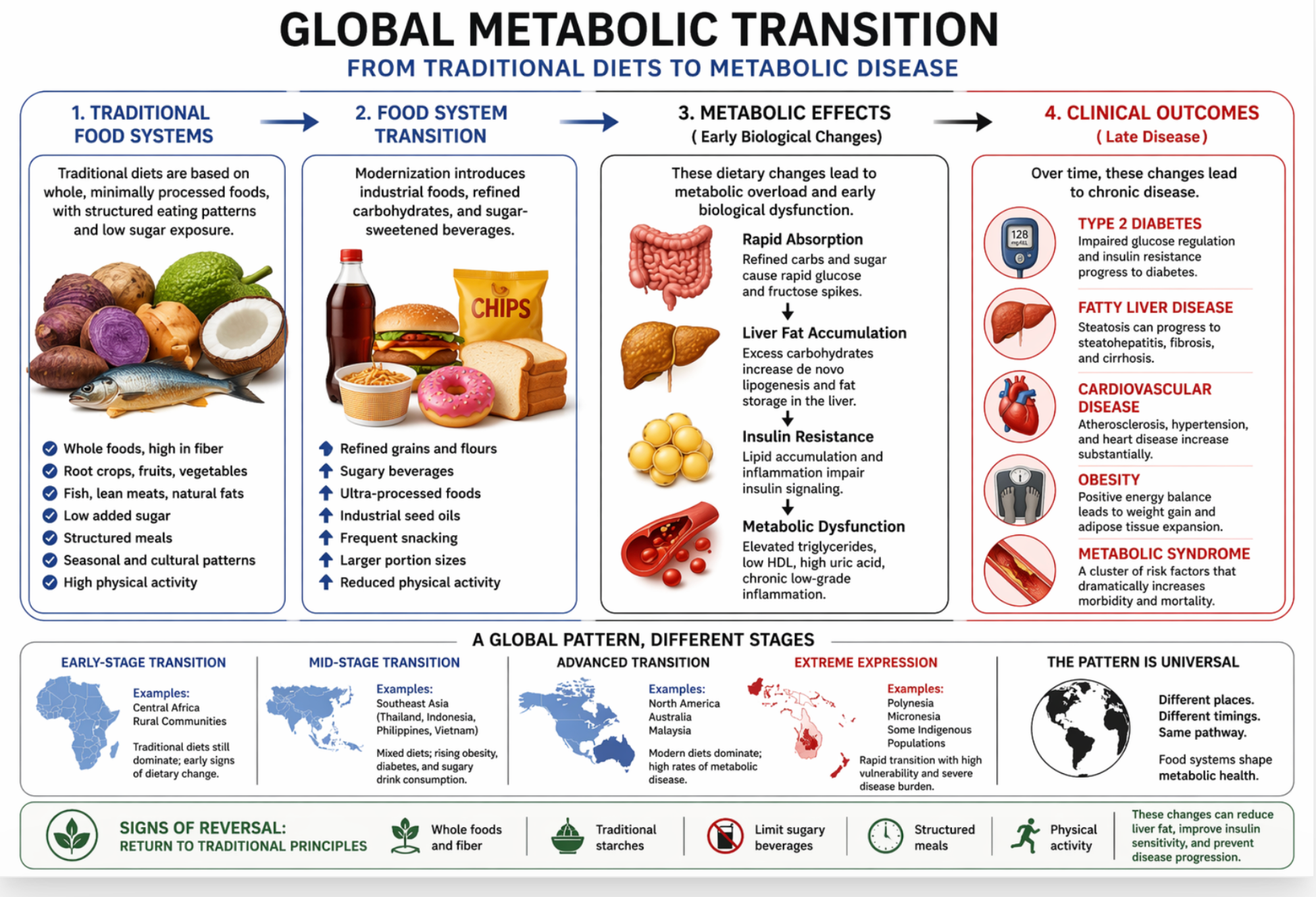
Over the past 50–70 years, a profound shift has occurred in human health. Across continents, populations that once thrived on traditional diets are now experiencing unprecedented rates of obesity, type 2 diabetes, and fatty liver disease. This is not a coincidence. It is the result of a rapid environmental change colliding with biology that evolved under very different conditions.
At the center of this transformation is the global spread of ultra-processed foods—particularly those rich in refined sugars and high-fructose corn syrup. Unlike glucose, which is metabolized broadly throughout the body, fructose is handled primarily by the liver. In ancestral environments, this pathway was rarely stressed. Today, it is overwhelmed.
The result is a predictable pattern: hepatic fat accumulation, insulin resistance, rising uric acid, and downstream cardiometabolic disease. What we are witnessing is not a failure of individuals—it is a mismatch between ancient genes and a modern food environment.