Food Section Navigation

The Modern Metabolic Environment

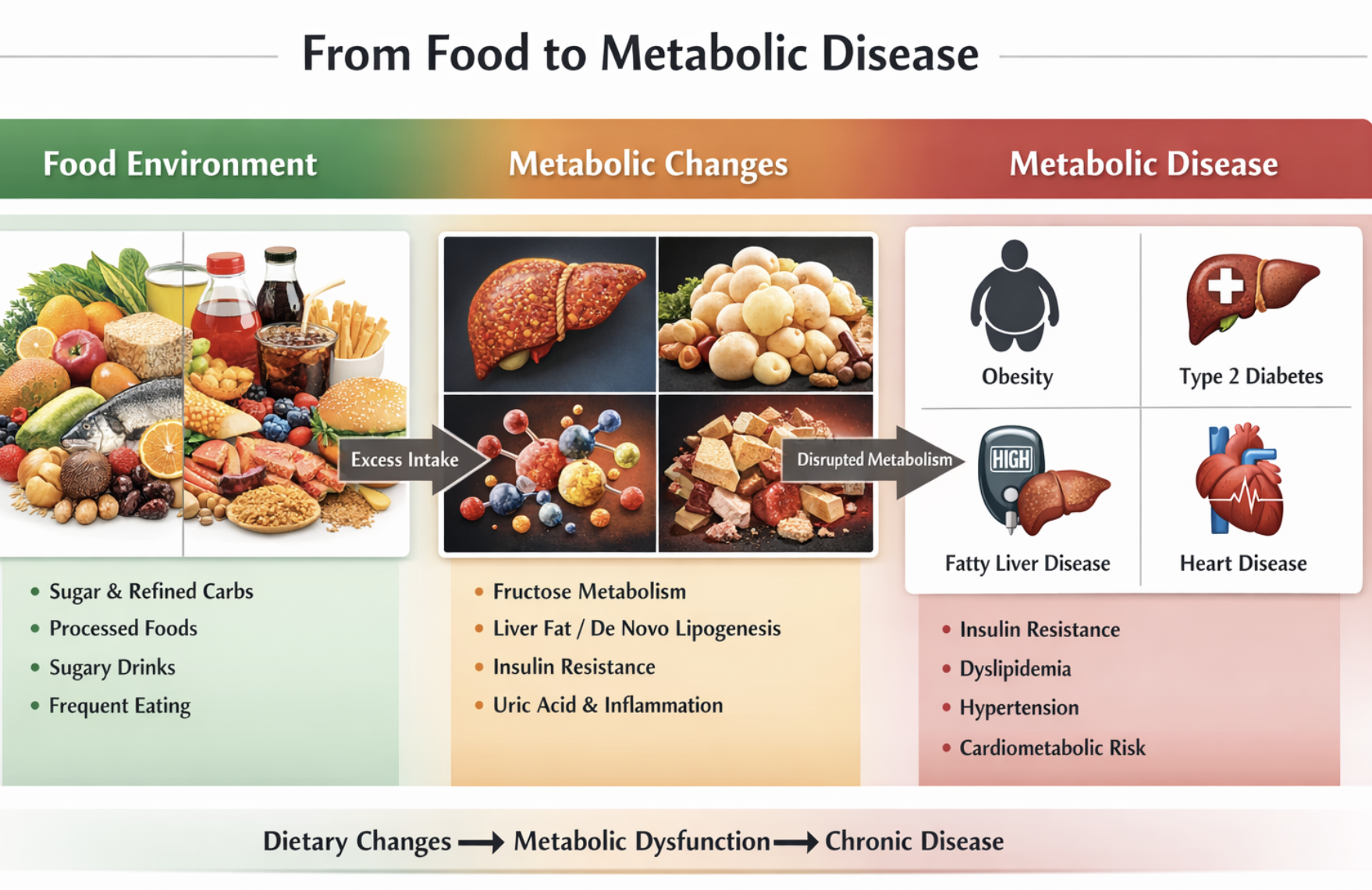
The modern metabolic crisis is not driven by a single food or nutrient. It reflects a broader shift in how food is produced, processed, and consumed.

Over time, traditional diets based on whole foods have been replaced by industrial food systems characterized by refined carbohydrates, added sugars, and ultra-processed products.

Understanding what has changed in the food environment is essential for understanding modern metabolic disease.
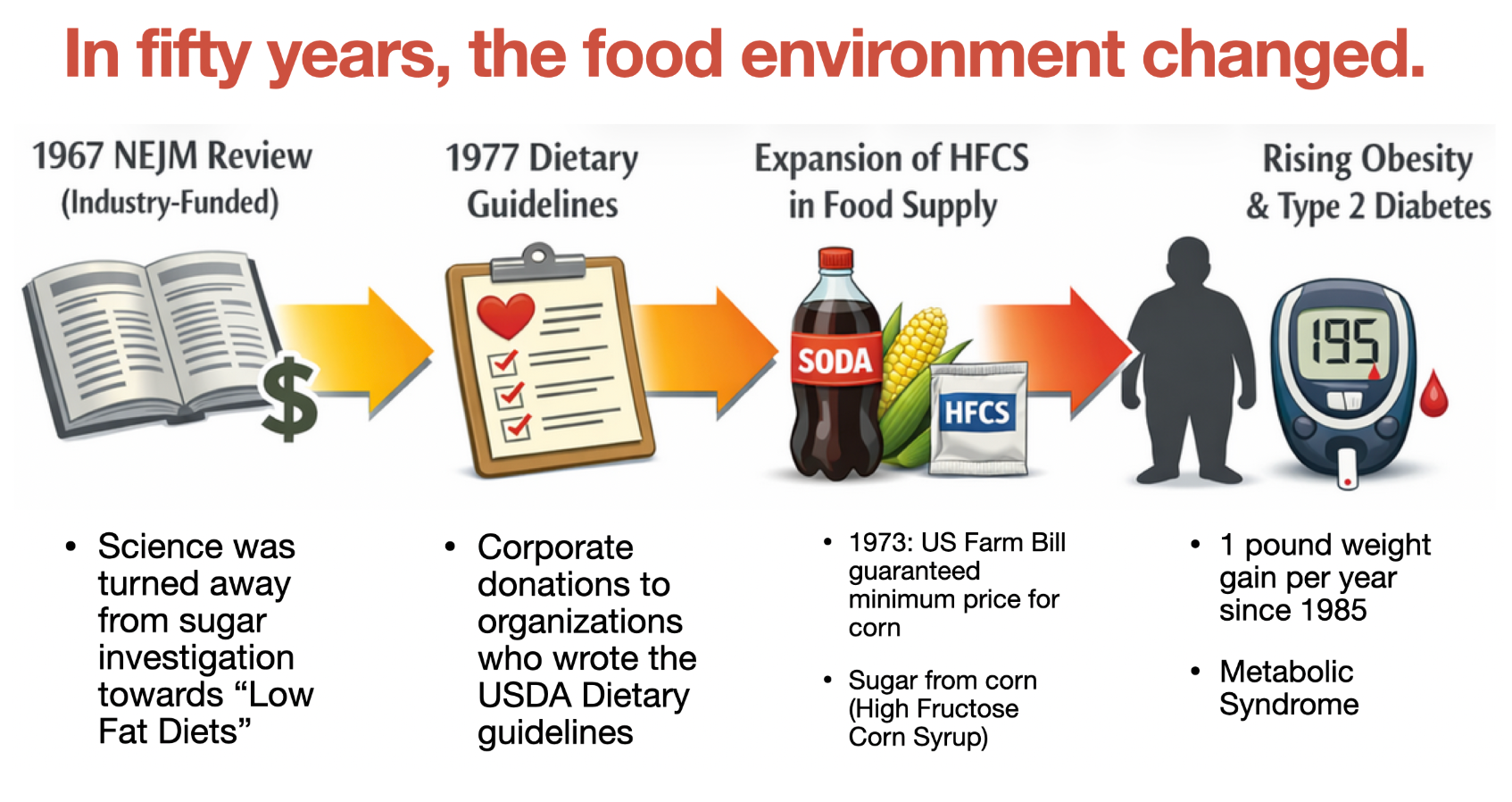
How the food environment changed

The modern diet did not emerge gradually. It evolved through a series of major shifts:

  • expansion of sugar production
  • industrial processing of grains and starches
  • development of low-cost sweeteners
  • global distribution of processed foods

These changes transformed both the composition of food and the pattern of consumption.

History of sugar

Sugar moved from rarity to routine over several centuries.

Early diets relied on fruit and honey. Later, global production expanded through plantation agriculture and industrial processing.

By the start of the 21st Century, sugar had become widely available and embedded in processed foods worldwide.

👉 History of Sugar (Pre-1984)
👉 Industrial Fructose Era (Post-1984)


The modern diet

Modern dietary patterns are characterized by:

  • refined grains
  • added sugars
  • ultra-processed foods
  • frequent eating patterns

These foods are often:

  • energy-dense
  • rapidly absorbed
  • low in fiber
  • highly palatable

This combination increases total energy intake and places sustained pressure on metabolic systems.

Sugar in whole foods is buffered by fiber. Liquid sugar delivers rapid, high-dose exposure.

Whole, minimally processed starches can be part of a stable diet. Refined starches and processed grains often produce more rapid metabolic effects.

👉 Safe Starches
👉 Dangerous Starches
👉 Rice
👉 Bread
👉 Glycemic Index vs Load

A pattern of exposure

The modern food environment creates a distinct pattern:

  • frequent intake
  • rapid absorption
  • high energy density
  • low satiety

Connecting food to biology

The foods described here interact with metabolic pathways explored elsewhere on this site.

Refined carbohydrates and sugars influence:


Ancestral patterns

Traditional diets across different regions shared common features:

  • whole foods
  • minimal processing
  • low added sugar
  • structured meal patterns

These diets supported metabolic stability over long periods of time.

👉 The Modern Diet

👉 Ancestral Diets


Bottom line

Modern metabolic disease reflects a shift in the food environment.

The transition from whole foods to processed, sugar-rich, and rapidly absorbed diets has created a sustained metabolic burden.

Understanding this shift is the first step in understanding—and addressing—the metabolic crisis.


Metabolic Disease
Metabolic Biochemistry
Global Metabolic Crisis


© 2026 All copyright reserved. Published with Ghost and Electronthemes