Introduction
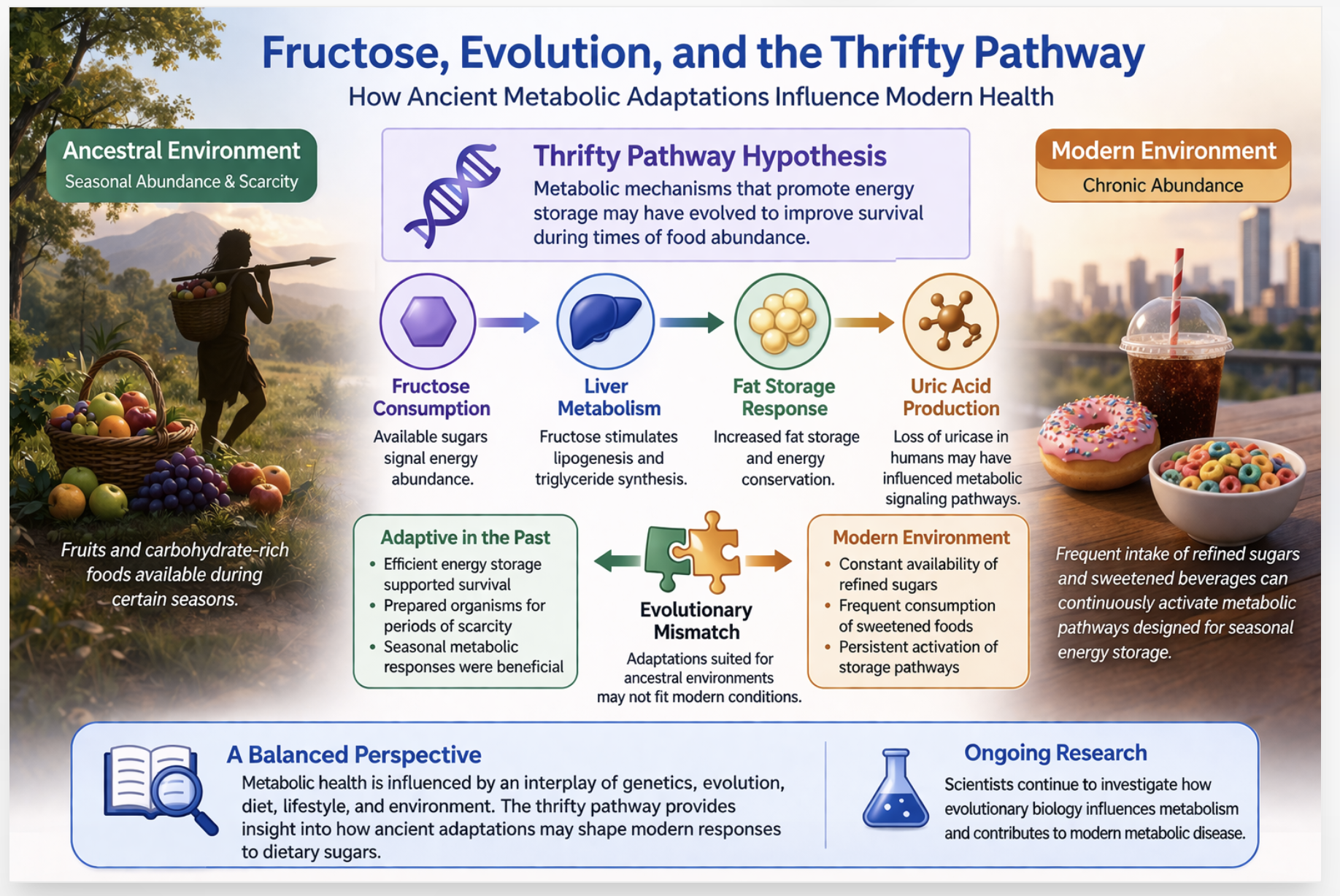
Human metabolism evolved in environments that differed greatly from modern dietary conditions. For much of human history, food availability fluctuated seasonally, and periods of abundance were often followed by periods of scarcity.
Under these circumstances, metabolic pathways that promoted efficient energy storage could improve survival. Some researchers have proposed that certain metabolic responses to fructose and other carbohydrates may have evolved as part of this adaptive strategy.
This idea is sometimes referred to as the thrifty pathway—a set of metabolic mechanisms that help convert excess energy into stored fat when food is plentiful.
Understanding these evolutionary perspectives provides useful context for the metabolic processes discussed elsewhere on this site.
Seasonal Energy Storage
In many natural environments, fruits and other carbohydrate-rich foods become available during specific seasons. For animals preparing for periods of reduced food availability, consuming these foods can stimulate metabolic pathways that promote fat storage.
Several physiological responses may occur when large amounts of simple sugars are consumed:
• increased conversion of carbohydrates into fatty acids
• accumulation of triglycerides in adipose tissue
• changes in hormonal signaling that promote energy conservation
These responses allow organisms to store energy that can later be used when food becomes scarce.
Some researchers believe that aspects of human fructose metabolism may reflect similar evolutionary pressures.
Fructose as a Storage Signal
Fructose has attracted particular interest in evolutionary metabolism because of its role in certain metabolic pathways associated with energy storage.
Experimental studies suggest that fructose metabolism can influence several biological processes, including:
• stimulation of lipogenesis in the liver
• alterations in cellular energy balance
• increased uric acid production
• metabolic signaling pathways that influence appetite and fat storage
In ancestral environments, these responses may have helped organisms accumulate fat reserves during times of food abundance.
In modern environments where sugar consumption is frequent and continuous, the same pathways may be activated more persistently.
Uric Acid and Evolution
Another component of the thrifty pathway hypothesis involves uric acid metabolism.
Humans and certain primates have relatively high circulating uric acid levels compared with many other mammals. This difference is partly related to the loss of an enzyme called uricase, which in other animals breaks down uric acid into more soluble compounds.
Some evolutionary biologists have proposed that this change may have influenced energy metabolism by altering cellular signaling pathways linked to fat storage and metabolic regulation.
Although this hypothesis remains an area of active research, it highlights how evolutionary changes in metabolism may influence modern physiology.
Evolutionary Mismatch
The concept of evolutionary mismatch describes situations in which biological systems adapted to past environments encounter very different conditions in modern settings.
Metabolic pathways that once helped organisms survive seasonal food shortages may function differently in environments where energy-dense foods are continuously available.
In modern food systems, refined sugars and sweetened beverages can deliver large quantities of rapidly absorbed carbohydrates throughout the day. This pattern differs from the seasonal and intermittent sugar exposure that characterized many ancestral diets.
Understanding this mismatch helps explain why certain metabolic pathways may respond differently in contemporary dietary environments.
Scientific Debate
The thrifty pathway hypothesis remains an area of ongoing scientific discussion. Researchers continue to study how evolutionary pressures shaped metabolic physiology and how those adaptations influence modern health.
Some scientists emphasize the importance of overall caloric intake and lifestyle factors, while others focus on specific metabolic pathways influenced by dietary sugars.
These perspectives are not mutually exclusive. Many aspects of metabolic disease likely arise from interactions among genetics, evolutionary biology, diet, and environmental conditions.
A Broader Perspective
Viewing metabolism through an evolutionary lens can help place modern metabolic disorders within a larger biological context.
Rather than representing entirely new diseases, many metabolic conditions may reflect the interaction between ancient physiological mechanisms and rapidly changing environments.
Examining both the evolutionary origins of metabolic pathways and the modern conditions that influence them can provide valuable insight into the biology of metabolic disease.
Related Topics
Readers interested in exploring these ideas further may also consult:
• Fructose Metabolism
• Uric Acid and Metabolism
• De Novo Lipogenesis
• The Western Diet and the Metabolic Environment
These pages examine the biochemical and environmental factors that interact with evolutionary metabolic pathways.