Introduction
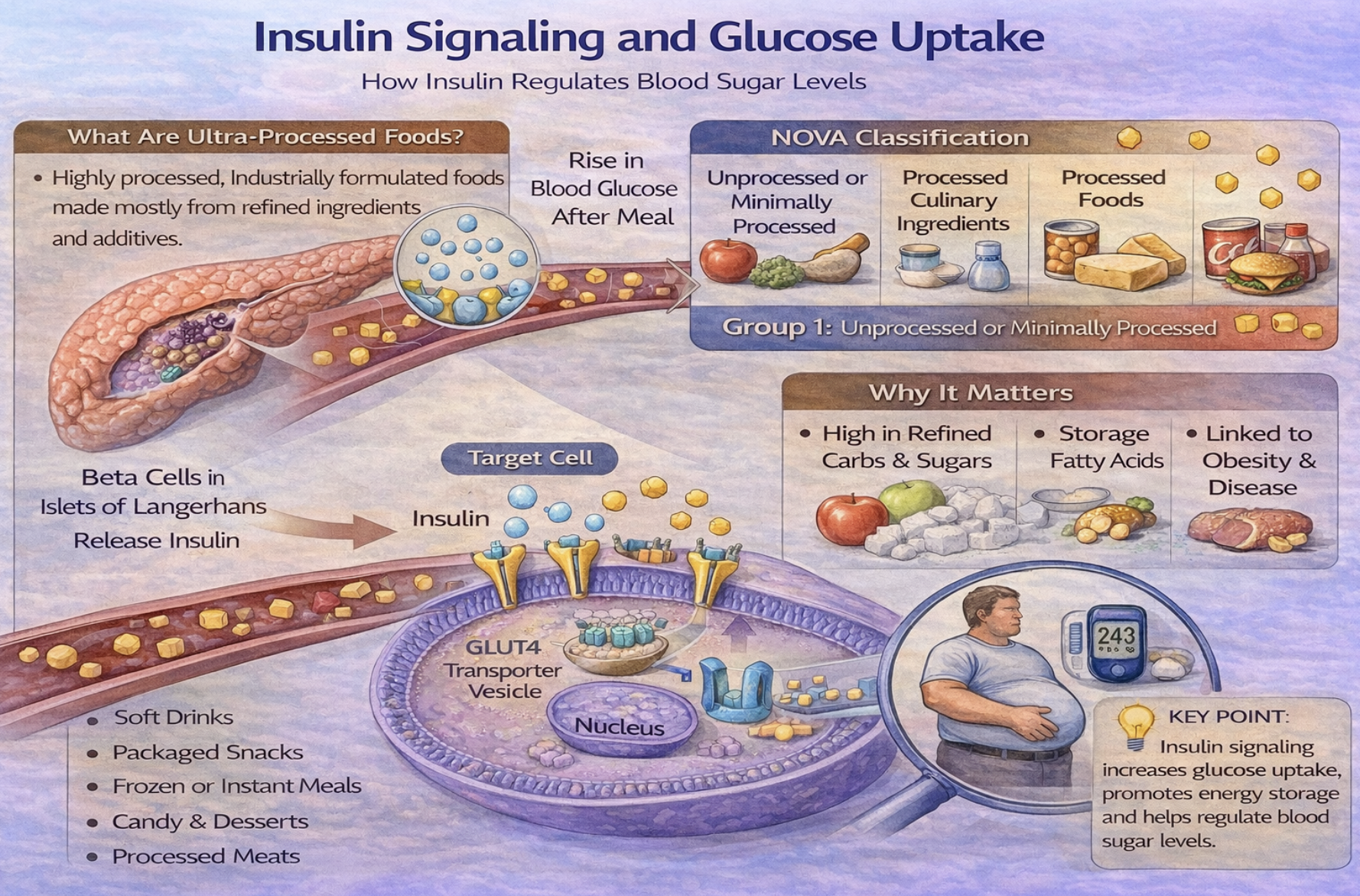
Glucose is one of the body’s primary sources of energy. Maintaining stable blood glucose levels is essential for normal cellular function, particularly in the brain and nervous system.
The hormone insulin plays a central role in regulating glucose metabolism. Produced by specialized cells in the pancreas, insulin coordinates how tissues absorb, store, and use glucose after meals.
When insulin signaling functions properly, blood glucose levels remain within a relatively narrow physiological range. When this system becomes disrupted, however, glucose regulation may deteriorate, contributing to insulin resistance and eventually type 2 diabetes.
Understanding how insulin signaling works is therefore fundamental to understanding metabolic disease.
The Pancreas and Insulin Secretion
Insulin is produced by beta cells located in clusters of endocrine tissue within the pancreas known as the islets of Langerhans.
After a meal, rising blood glucose levels stimulate these beta cells to release insulin into the bloodstream. The hormone then circulates throughout the body and interacts with insulin receptors on the surface of many different cell types.
Insulin secretion occurs in a carefully regulated pattern that allows the body to respond rapidly to changing nutrient conditions.
Insulin Receptors and Cellular Signaling
When insulin reaches a target cell, it binds to an insulin receptor embedded in the cell membrane.
This binding activates a complex signaling cascade inside the cell. Through a series of phosphorylation events and intracellular signaling pathways, the insulin receptor communicates instructions that influence how the cell handles nutrients.
These signals affect multiple metabolic processes, including:
• glucose transport into cells
• glycogen synthesis
• lipid metabolism
• protein synthesis
• suppression of glucose production by the liver
Through these mechanisms, insulin helps coordinate energy storage and utilization throughout the body.
Glucose Uptake in Muscle and Fat
Two of the most important tissues affected by insulin signaling are skeletal muscle and adipose tissue.
In these tissues, insulin stimulates the movement of glucose transporter proteins—particularly GLUT4—to the cell surface. These transporters allow glucose molecules to enter the cell.
Once inside the cell, glucose can be used to produce energy or stored as glycogen.
Because skeletal muscle represents a large proportion of body mass, insulin-mediated glucose uptake by muscle plays a major role in controlling blood glucose levels.
Insulin and the Liver
The liver also responds to insulin signaling, but in a different way.
Rather than absorbing large quantities of glucose directly, the liver regulates glucose levels by adjusting its own production and release of glucose into the bloodstream.
Under normal conditions, insulin suppresses the liver’s production of glucose between meals. This prevents unnecessary increases in blood sugar.
When insulin signaling is impaired, however, the liver may continue producing glucose even when blood glucose levels are already elevated.
This inappropriate glucose production is a major contributor to hyperglycemia in type 2 diabetes.
Insulin Resistance
When tissues become less responsive to insulin signals, the condition is known as insulin resistance.
In insulin-resistant states, cells require higher concentrations of insulin to achieve the same metabolic effect. The pancreas often compensates by producing more insulin in order to maintain normal glucose levels.
Over time, this compensatory mechanism may become insufficient. Blood glucose levels then begin to rise, leading to prediabetes and eventually type 2 diabetes.
Insulin resistance is strongly associated with several metabolic factors, including:
• visceral adiposity
• fatty liver disease
• chronic inflammation
• excess caloric intake
• sedentary lifestyle
Metabolic Integration
Insulin signaling does not function in isolation. It interacts with many other metabolic systems within the body.
For example:
• adipose tissue releases signaling molecules that influence insulin sensitivity
• liver metabolism affects glucose production and lipid synthesis
• muscle activity influences glucose uptake
• inflammatory pathways can disrupt insulin signaling
These interactions illustrate why metabolic disease is best understood as a systemic disorder involving multiple organs.
Clinical Importance
Impaired insulin signaling lies at the heart of several common metabolic disorders.
Conditions strongly associated with insulin resistance include:
• type 2 diabetes
• metabolic syndrome
• fatty liver disease
• cardiovascular disease
Because of this central role, many preventive strategies for metabolic disease focus on improving insulin sensitivity through lifestyle changes and medical management when appropriate.
Related Topics
Readers interested in the metabolic processes discussed on this page may also explore:
• Insulin Resistance
• Metabolic Syndrome
• Fatty Liver Disease (MASLD)
• Visceral Fat and Metabolic Health
These pages examine the broader physiological context of insulin signaling and glucose metabolism.