Introduction
Asprosin is a relatively recently discovered hormone that plays a role in energy regulation, appetite, and glucose metabolism. It is produced primarily by adipose tissue and released into the bloodstream during fasting.
Asprosin acts as a signal that energy is needed. It stimulates glucose release from the liver and influences appetite through central signaling in the brain.
In modern metabolic disease, asprosin levels are often elevated. This suggests that asprosin may contribute to insulin resistance, increased appetite, and the broader metabolic environment associated with obesity and metabolic syndrome.
What Is Asprosin?
Asprosin is a peptide hormone derived from a larger precursor protein produced in adipose tissue.
It is involved in:
- regulation of glucose release
- stimulation of appetite
- communication between adipose tissue, liver, and brain
Asprosin functions as part of the hormonal system that coordinates energy balance, particularly during fasting states.
How Asprosin Works
Asprosin is released into the bloodstream and acts on multiple target organs.
In the liver, it stimulates the release of glucose into the circulation.
In the brain, it activates appetite-regulating pathways.
These actions help ensure that the body maintains adequate energy availability during periods of fasting.
Physiological effects of asprosin include:
- increased hepatic glucose output
- stimulation of appetite
- coordination of fasting responses
Under normal conditions, this system helps maintain metabolic stability.
Asprosin and Fasting
Asprosin levels typically rise during fasting and fall after food intake.
This pattern reflects its role as a signal of energy need:
- fasting → asprosin increases → glucose release and hunger
- feeding → asprosin decreases → reduced drive to eat
This cycle helps regulate meal timing and energy balance.
Asprosin and Appetite
Asprosin acts on the brain, particularly in regions involved in appetite regulation.
It stimulates hunger signaling pathways and may enhance the drive to eat. This places asprosin in functional contrast with hormones such as leptin, which signal energy sufficiency.
In modern environments with constant food availability, persistent or elevated appetite signaling can contribute to excess caloric intake.
Asprosin and Insulin Resistance
Elevated asprosin levels have been observed in individuals with:
- obesity
- insulin resistance
- type 2 diabetes
In these settings, asprosin may contribute to metabolic dysfunction by:
- increasing hepatic glucose production
- sustaining elevated blood glucose levels
- interacting with insulin signaling pathways
This suggests that asprosin may play a role in the development or maintenance of insulin resistance.
Asprosin and Adipose Tissue
Adipose tissue is the primary source of asprosin.
As fat mass increases, particularly in central obesity, circulating asprosin levels may rise. This reflects the broader endocrine role of adipose tissue in metabolic regulation.
This creates a potential feedback loop:
increased adipose tissue
→ increased asprosin production
→ increased appetite and glucose output
→ further metabolic strain
This loop may contribute to the persistence of metabolic syndrome.
Asprosin and the Liver
Asprosin has direct effects on the liver.
It stimulates hepatic glucose release, particularly during fasting. In metabolic disease, this effect may become exaggerated, contributing to:
- elevated fasting glucose
- increased insulin demand
- worsening glycemic control
This links asprosin to the broader pattern of hepatic involvement in metabolic syndrome.
Asprosin in Metabolic Disease
Elevated asprosin levels have been associated with:
- obesity
- metabolic syndrome
- insulin resistance
- type 2 diabetes
These associations suggest that asprosin is part of the hormonal network that contributes to chronic metabolic dysfunction.
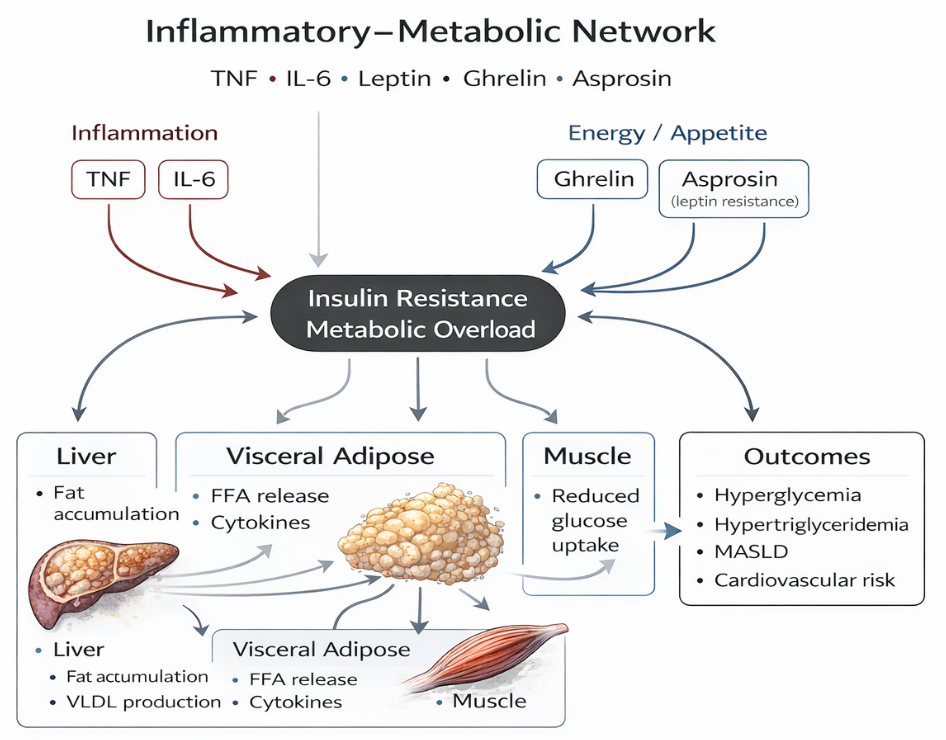
Asprosin does not act alone, but interacts with other signals such as:
- leptin
- insulin
- ghrelin
- inflammatory cytokines
Together, these signals shape appetite, energy balance, and metabolic regulation.
Research Perspectives
Asprosin is an active area of research.
Current studies are exploring:
- its role in appetite regulation
- its contribution to insulin resistance
- interactions with other metabolic hormones
- potential therapeutic approaches targeting asprosin signaling
Because it was identified relatively recently, its full role in human metabolism is still being defined.
Bottom Line
Asprosin is a fasting-induced hormone that links adipose tissue, liver, and brain in the regulation of energy balance.
When chronically elevated, it may contribute to:
- increased appetite
- excess glucose production
- insulin resistance
- ongoing metabolic stress
Asprosin is best understood as part of the broader hormonal network that drives metabolic syndrome and chronic metabolic disease.