Introduction
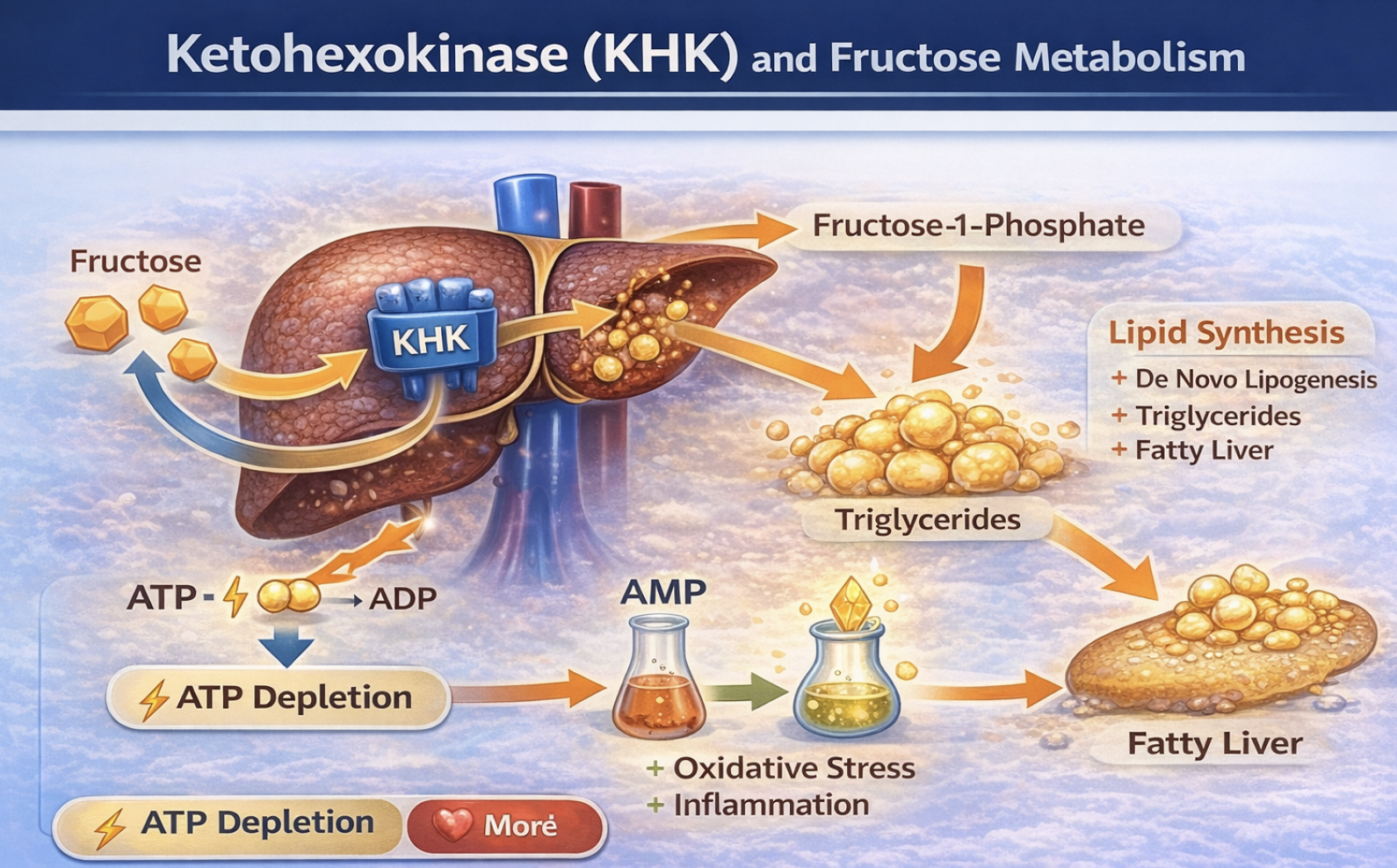
Ketohexokinase, usually abbreviated KHK, is one of the key enzymes involved in fructose metabolism. After fructose is absorbed from the intestine and delivered to the liver through the portal circulation, KHK catalyzes the first major step in its intracellular processing.
This step is metabolically important because it occurs rapidly and uses cellular ATP. Unlike the early stages of glucose metabolism, which are tightly regulated, fructose metabolism through KHK proceeds with relatively little feedback restraint.
For this reason, KHK occupies a central place in scientific discussions of fructose, ATP depletion, uric acid production, de novo lipogenesis, and fatty liver disease.
What Is KHK?
Ketohexokinase is an enzyme that phosphorylates fructose, converting it into fructose-1-phosphate.
In simple terms, KHK helps trap fructose inside the cell and directs it into downstream metabolic pathways.
This reaction can be summarized as:
Fructose + ATP → Fructose-1-phosphate + ADP
Because ATP is consumed in the process, high fructose exposure can temporarily lower intracellular ATP levels, especially in hepatocytes.
Where KHK Is Found
KHK is expressed in several tissues, but it is particularly important in organs that play major roles in fructose handling.
These include:
- the liver
- the small intestine
- the kidney
Among these, the liver is the most important site in the context of metabolic disease because it receives fructose directly from the <a href="/metabolic-disease/portal-vein-liver">portal circulation</a> shortly after absorption.
KHK and Fructose Metabolism
After fructose enters the body through the intestinal transporter GLUT5, it travels to the liver. There, KHK rapidly converts fructose into fructose-1-phosphate.
This step differs from glucose metabolism in an important way. Glucose passes through regulatory checkpoints that help control how quickly it is processed. Fructose metabolism through KHK largely bypasses those early controls.
As a result:
- fructose can be metabolized quickly
- ATP can be consumed rapidly
- downstream substrates may enter pathways linked to lipid synthesis
This is one reason why fructose metabolism has attracted so much attention in metabolic research.
ATP Depletion
One of the best-known consequences of rapid KHK activity is temporary ATP depletion.
Because KHK uses ATP to phosphorylate fructose, high fructose exposure may lower intracellular ATP levels for a period of time. When this happens repeatedly or intensely, cells may experience transient energy stress.
This process is linked to:
- increased AMP generation
- activation of energy-sensing pathways
- breakdown of adenine nucleotides
This is why KHK is closely connected to the broader topic of ATP depletion.
KHK and Uric Acid
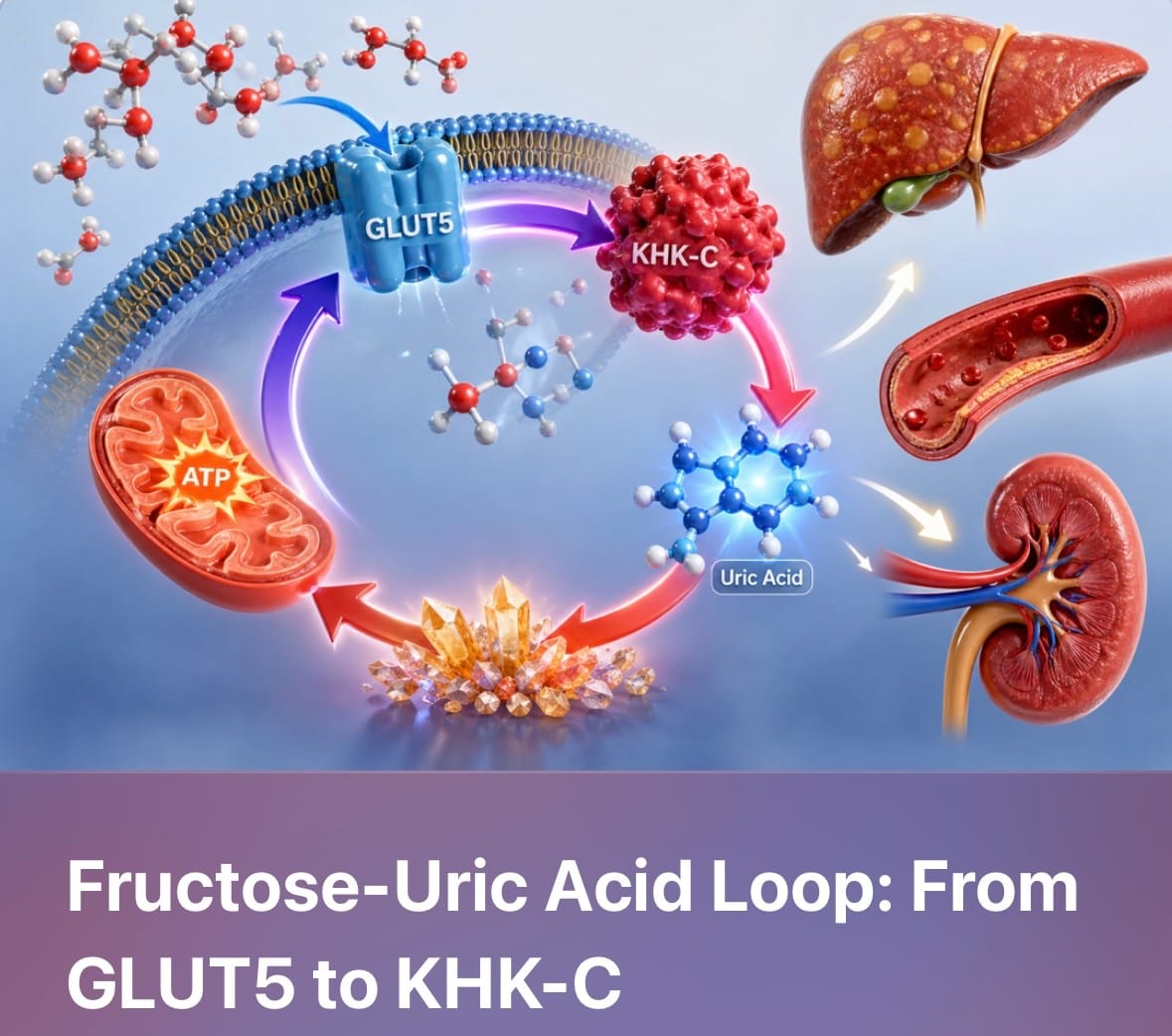
As ATP levels fall and AMP rises, nucleotide breakdown may increase, eventually generating uric acid.
This connection has made KHK central to hypotheses linking fructose exposure with:
- increased uric acid production
- oxidative stress
- inflammatory signaling
- metabolic dysfunction
Although the precise role of uric acid in human metabolic disease remains under active investigation, the KHK–ATP–uric acid pathway is one of the most widely discussed mechanisms in fructose biology.
KHK and Lipid Synthesis
KHK is also relevant to hepatic lipid metabolism.
Once fructose enters downstream pathways, some of its metabolic intermediates may contribute to de novo lipogenesis, the synthesis of fatty acids from carbohydrate substrates.
These fatty acids can then be assembled into triglycerides.
The consequences may include:
- higher hepatic triglyceride production
- increased VLDL export
- accumulation of fat within hepatocytes
This helps explain why KHK is connected to:
KHK as a Research Target
Because KHK lies near the beginning of the fructose metabolic pathway, it has become a target of scientific interest.
Researchers have asked whether reducing KHK activity might:
- limit ATP depletion
- reduce uric acid generation
- decrease hepatic lipid synthesis
- protect against metabolic stress
This does not mean KHK alone explains metabolic disease. Diet, total caloric load, insulin signaling, adiposity, and genetic susceptibility all matter. But KHK is an important mechanistic node because it sits so early in the fructose pathway.
Evolutionary Perspective
From an evolutionary perspective, rapid fructose handling may once have been adaptive.
In seasonal environments where fruit became available before periods of scarcity, efficient conversion of fructose into stored energy may have improved survival.
In the modern world, however, frequent exposure to sweetened beverages and refined sugars may activate this same pathway continuously rather than intermittently. In populations suddenly exposed to high KHK activity, a sweet drink is rapidly turned into a liver-fat problem.
That is one reason KHK is relevant to the broader idea of the thrifty pathway and evolutionary mismatch.
Clinical Relevance
KHK is not a routine clinical lab test, but understanding it helps explain why fructose is metabolically distinct from glucose.
In practical terms, the KHK pathway helps connect dietary fructose to:
- hepatic ATP use
- uric acid generation
- triglyceride production
- fatty liver
- insulin resistance
For clinicians and patients alike, KHK provides a biochemical bridge between sweetened modern diets and downstream metabolic disease.
Summary
Ketohexokinase is the key enzyme that initiates intracellular fructose metabolism by converting fructose to fructose-1-phosphate. Because this step is rapid and ATP-dependent, KHK plays a major role in the pathways linking fructose to ATP depletion, uric acid production, triglyceride synthesis, and fatty liver disease.
Understanding KHK helps clarify why fructose metabolism differs from glucose metabolism and why modern patterns of sugar exposure may contribute to metabolic overload.