Introduction
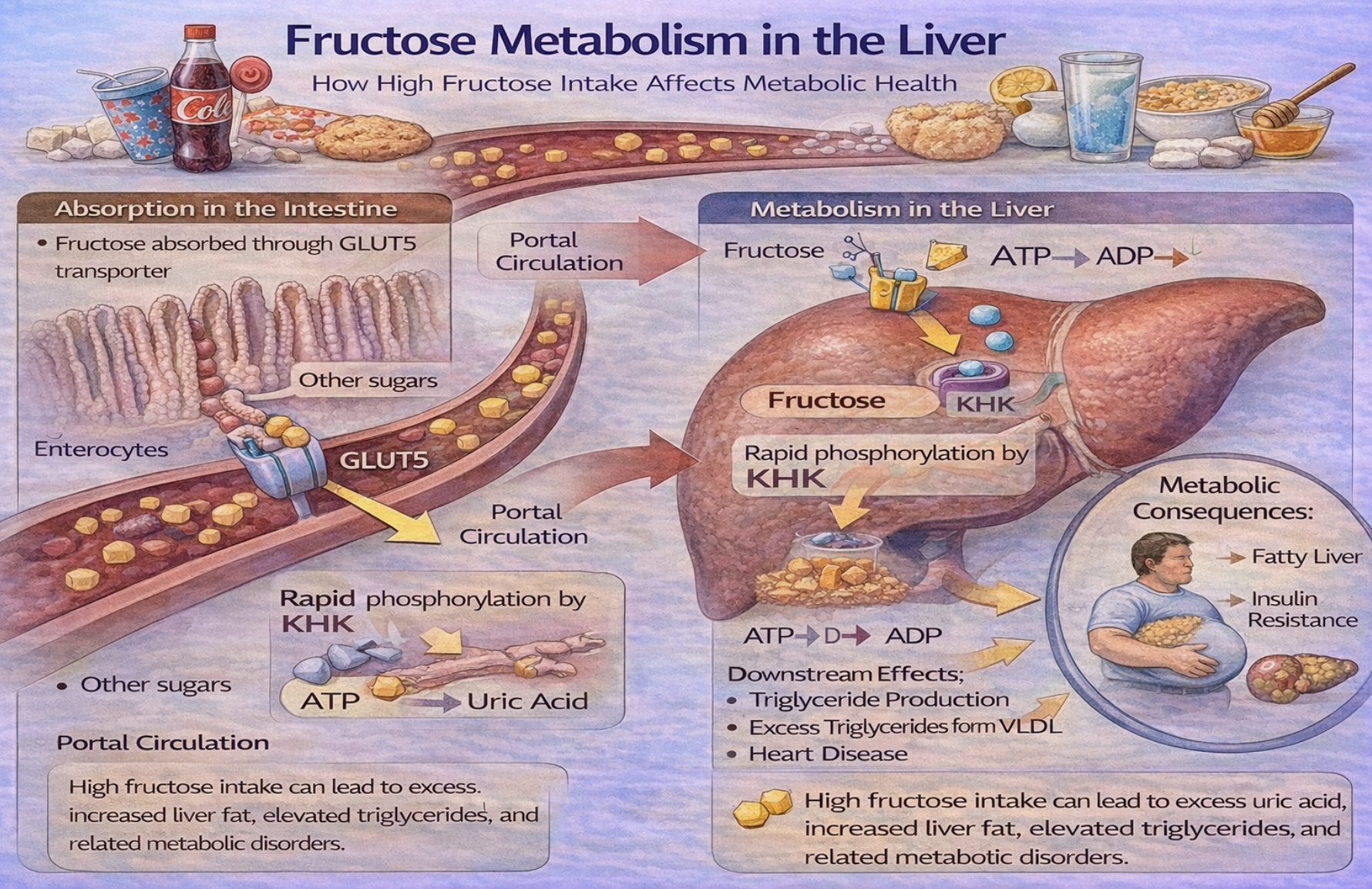
Fructose is a naturally occurring sugar found in fruit, honey, and certain vegetables. In modern diets, however, fructose is frequently consumed in much larger quantities through added sugars such as sucrose and high-fructose corn syrup.
These sugars are widely used in beverages, desserts, processed foods, and sweetened products.
Although fructose and glucose share the same chemical formula, their metabolic pathways differ in important ways.
Understanding how fructose is processed in the body helps explain why researchers have become increasingly interested in its role in metabolic health.
Absorption in the Intestine
After ingestion, fructose is absorbed in the small intestine through specialized transport proteins located in intestinal cells.
The primary transporter responsible for fructose uptake is GLUT5, which facilitates the movement of fructose molecules from the intestinal lumen into enterocytes.
From there, fructose enters the portal circulation, the vascular system that carries nutrients directly from the intestine to the liver.
Because of this pathway, the liver receives much of the fructose consumed in the diet shortly after ingestion.
The Liver as the Primary Site of Fructose Metabolism
Once fructose reaches the liver, it is rapidly metabolized.
The first major step is catalyzed by the enzyme ketohexokinase (KHK), which phosphorylates fructose to form fructose-1-phosphate. This reaction uses cellular ATP and occurs quickly compared with the early steps of glucose metabolism.
Because this pathway bypasses some of the regulatory checkpoints present in glucose metabolism, large amounts of fructose can be processed rapidly by liver cells.
Downstream metabolic intermediates may then enter pathways involved in energy production or lipid synthesis.
ATP Depletion and Uric Acid
Rapid phosphorylation of fructose can temporarily reduce intracellular ATP levels within hepatocytes.
When ATP levels decline, the breakdown of adenine nucleotides may increase, producing uric acid as a metabolic by-product.
Researchers have proposed that this process may contribute to oxidative stress, inflammation, and other metabolic changes under conditions of high fructose exposure.
The role of uric acid in metabolic disease remains an area of active investigation.
Fructose and Lipid Synthesis
Another important consequence of fructose metabolism is its potential contribution to de novo lipogenesis, the synthesis of fatty acids within the liver.
When excess carbohydrate substrates are available, the liver may convert these molecules into triglycerides. These triglycerides can accumulate within liver cells or be exported into the bloodstream as very-low-density lipoproteins (VLDL).
Elevated triglyceride levels and liver fat accumulation are frequently observed in individuals with metabolic syndrome and fatty liver disease.
Fructose in the Modern Diet
Historically, humans consumed fructose primarily through whole foods such as fruit. In those contexts, fructose intake was typically modest and accompanied by fiber, water, and other nutrients that slowed absorption.
Modern food systems, however, often deliver fructose in concentrated forms through sweetened beverages and processed foods.
This change in exposure patterns has prompted researchers to investigate whether large and frequent doses of fructose may influence metabolic pathways in ways that differ from traditional dietary contexts.
Ongoing Research
The relationship between fructose and metabolic disease remains an active area of scientific study.
Some researchers emphasize the role of overall caloric excess, while others focus on specific metabolic pathways influenced by fructose metabolism.
Internets.com presents these topics with the goal of clarifying the biological mechanisms involved and summarizing the evolving scientific discussion.
Next Topics
Readers interested in the biochemical details of this pathway may explore:
• GLUT5 Transport
• Ketohexokinase (KHK) Pathway
• ATP Depletion and Uric Acid
• Fructose and Fatty Liver Disease
These pages examine the individual components of fructose metabolism in greater depth.