Introduction
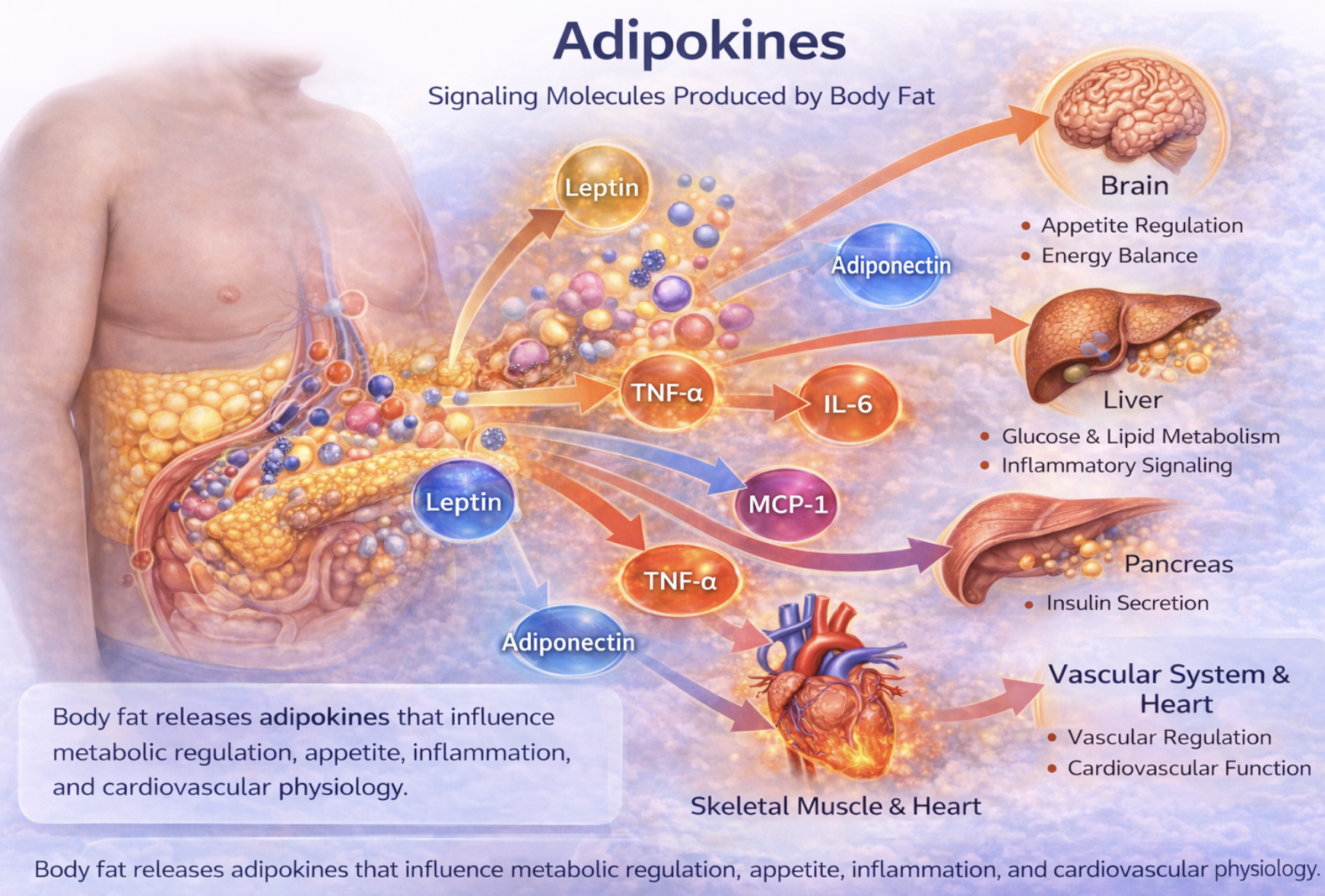
Adipose tissue, commonly known as body fat, was once considered a passive storage depot for excess energy. Modern research has shown that adipose tissue functions as an active endocrine organ, producing a wide range of signaling molecules that influence metabolism, appetite, inflammation, and cardiovascular physiology.
These signaling molecules are known collectively as adipokines.
Adipokines allow adipose tissue to communicate with other organs, including the liver, pancreas, skeletal muscle, brain, and vascular system. Through these signals, adipose tissue participates in regulating energy balance and metabolic homeostasis.
When adipose tissue expands—particularly visceral fat—adipokine signaling patterns can change in ways that contribute to metabolic disease.
Adipose Tissue as an Endocrine Organ
Adipose tissue contains several types of cells, including:
• adipocytes (fat cells)
• immune cells
• vascular cells
• connective tissue cells
Together these cells produce numerous hormones and signaling molecules. These substances influence multiple physiological processes, including:
• insulin sensitivity
• lipid metabolism
• appetite regulation
• inflammatory responses
• vascular function
Through these mechanisms, adipose tissue plays a central role in metabolic regulation.
Leptin: Regulation of Appetite and Energy Balance
One of the first adipokines discovered was leptin, a hormone produced primarily by adipocytes.
Leptin helps regulate appetite and energy balance by signaling to the brain—particularly the hypothalamus—about the body’s energy stores. When fat stores increase, leptin levels rise, signaling the brain to reduce appetite and increase energy expenditure.
However, in individuals with obesity, the body may develop leptin resistance, in which the brain becomes less responsive to leptin signals. As a result, appetite regulation becomes impaired despite high circulating leptin levels.
Adiponectin: Insulin Sensitivity and Metabolic Protection
Another important adipokine is adiponectin.
Unlike many other adipokines, adiponectin levels tend to decrease as adiposity increases. Higher adiponectin levels are generally associated with improved insulin sensitivity and reduced inflammation.
Adiponectin influences several metabolic processes, including:
• fatty acid oxidation
• glucose metabolism
• anti-inflammatory signaling
• vascular protection
Lower adiponectin levels are commonly observed in individuals with obesity, insulin resistance, and metabolic syndrome.
Pro-Inflammatory Adipokines
As adipose tissue expands—particularly visceral adipose tissue—immune cells begin to accumulate within fat tissue. These immune cells release pro-inflammatory cytokines, which act as adipokines that influence metabolic physiology.
Important inflammatory adipokines include:
• tumor necrosis factor-alpha (TNF-α)
• interleukin-6 (IL-6)
• monocyte chemoattractant protein (MCP-1)
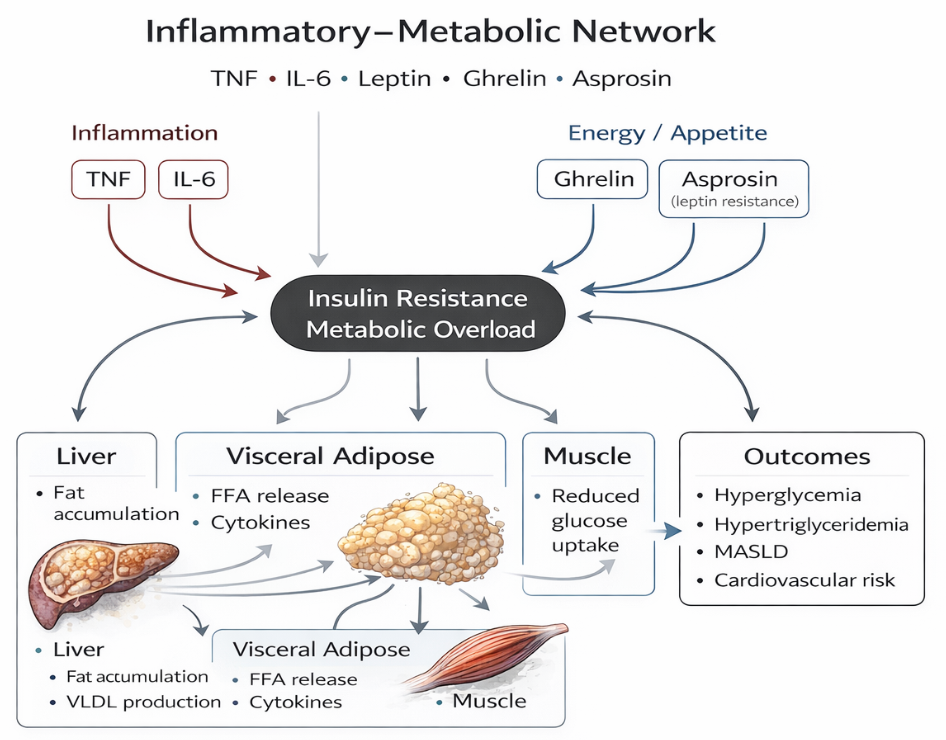
These molecules contribute to chronic low-grade inflammation and may interfere with insulin signaling pathways.
Visceral Adipose Tissue and Metabolic Signaling
Visceral adipose tissue produces a different pattern of adipokines than subcutaneous fat.
Visceral fat tends to release higher levels of inflammatory cytokines and free fatty acids into the portal circulation, which delivers these signals directly to the liver.
Because of this anatomical arrangement, visceral adiposity can strongly influence hepatic metabolism, contributing to conditions such as:
• fatty liver disease
• insulin resistance
• dyslipidemia
These metabolic disturbances are key components of metabolic syndrome.
Adipokines and Cardiovascular Health
Adipokines also influence cardiovascular physiology.
Some adipokines affect vascular function by regulating endothelial signaling and inflammatory pathways. Chronic inflammatory signaling originating from adipose tissue may contribute to endothelial dysfunction and atherosclerosis.
These interactions help explain why visceral adiposity is strongly associated with increased cardiovascular risk.
Metabolic Integration
Adipokine signaling illustrates how metabolic regulation involves multiple interacting systems.
Adipose tissue communicates with:
• the liver through portal circulation
• the pancreas through hormonal signaling
• skeletal muscle through metabolic pathways
• the brain through appetite-regulating hormones
These interactions create a complex metabolic network that regulates energy balance and metabolic health.
When this network becomes disrupted—through excess adiposity, inflammation, or insulin resistance—metabolic disease can develop.
Related Topics
Readers interested in exploring the metabolic processes discussed on this page may also consult:
• Visceral Fat and Metabolic Health
• Insulin Resistance
• Inflammation and Metabolic Disease
• Metabolic Syndrome
These articles examine additional aspects of adipose tissue biology and metabolic signaling.