Introduction
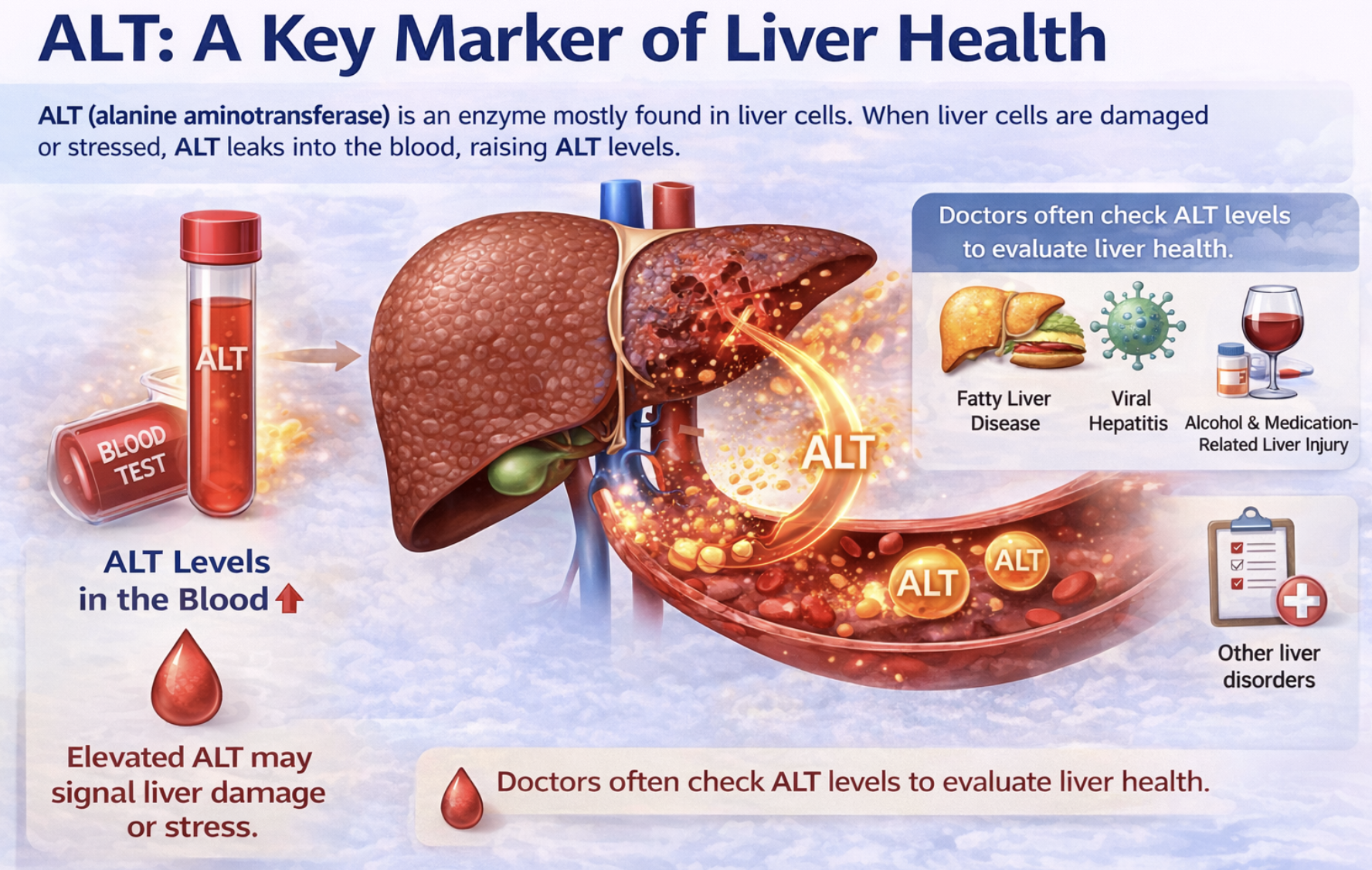
ALT, or alanine aminotransferase, is an enzyme found primarily in liver cells. Doctors often measure ALT levels in blood tests to evaluate liver health.
Under normal conditions, ALT remains mostly inside liver cells. When liver cells become damaged or stressed, ALT can leak into the bloodstream, causing blood levels to rise.
Because of this relationship, ALT is commonly used as a marker of liver injury or liver stress.
What ALT Does in the Body
ALT plays a role in amino acid metabolism. Specifically, it helps convert the amino acid alanine into molecules that can participate in energy metabolism.
Although ALT activity occurs in several tissues, it is most concentrated in the liver. For this reason, elevated ALT levels often reflect processes occurring within hepatic cells.
Why ALT Is Measured
Doctors frequently measure ALT as part of a liver function panel or routine metabolic blood test.
The ALT test helps clinicians evaluate possible liver conditions such as:
• fatty liver disease
• viral hepatitis
• medication-related liver injury
• alcohol-related liver disease
• other liver disorders
Because the liver plays a central role in metabolism, ALT levels can also reflect broader metabolic disturbances.
Normal ALT Levels
Normal ALT levels vary somewhat depending on laboratory standards, but typical reference ranges are approximately:
• Men: about 10–40 units per liter (U/L)
• Women: about 7–35 units per liter (U/L)
Mild elevations may occur for many reasons, and a single measurement does not necessarily indicate a serious problem. Physicians usually interpret ALT levels alongside other clinical information and laboratory tests.
ALT and Fatty Liver Disease
One of the most common causes of mildly elevated ALT levels today is fatty liver disease.
When excess fat accumulates within liver cells, metabolic stress can damage hepatocytes and cause ALT to leak into the bloodstream.
Because fatty liver disease is closely associated with metabolic syndrome, elevated ALT levels often appear alongside conditions such as:
• insulin resistance
• obesity
• elevated triglycerides
• metabolic syndrome
For this reason, ALT levels sometimes provide clues about broader metabolic health.
ALT and Metabolic Syndrome
Metabolic syndrome involves several abnormalities related to energy metabolism, including insulin resistance and lipid disturbances.
These metabolic changes can affect liver metabolism and contribute to the development of fatty liver disease. As liver fat increases, ALT levels may rise.
Because of this relationship, ALT can sometimes serve as an indirect indicator of metabolic stress.
ALT vs AST
ALT is often measured alongside another liver enzyme called AST (aspartate aminotransferase).
Both enzymes increase when liver cells are injured, but ALT is considered more specific to the liver. AST is also found in other tissues such as muscle and the heart.
Doctors often evaluate the AST/ALT ratio to help interpret possible causes of liver enzyme elevation.
When ALT Levels Are Elevated
Elevated ALT levels may result from several conditions.
Common causes include:
• fatty liver disease
• viral hepatitis
• alcohol-related liver injury
• medication effects
• metabolic syndrome
Because many factors can influence ALT levels, doctors typically evaluate results in the context of other tests and medical history.
Improving Liver Health
When ALT levels are elevated due to metabolic factors such as fatty liver disease, improving metabolic health may help normalize enzyme levels.
Common approaches include:
• improving diet quality
• increasing physical activity
• reducing excess body weight
• improving insulin sensitivity
• addressing metabolic risk factors
Because liver metabolism is closely linked to overall metabolic health, improvements in metabolic physiology often lead to improvements in liver enzyme levels.
Related Topics
Readers interested in learning more about liver metabolism may explore:
• Fatty Liver Disease (MASLD)
• FIB-4: A Simple Test for Liver Fibrosis
• De Novo Lipogenesis
• Insulin Resistance
These articles explain how metabolic pathways influence liver health.
Summary
ALT is an enzyme found primarily in liver cells and is commonly measured in blood tests to evaluate liver health. Elevated ALT levels may signal liver injury or metabolic stress, particularly when associated with fatty liver disease or metabolic syndrome.
Understanding ALT helps provide insight into how liver metabolism interacts with broader metabolic health.