Introduction
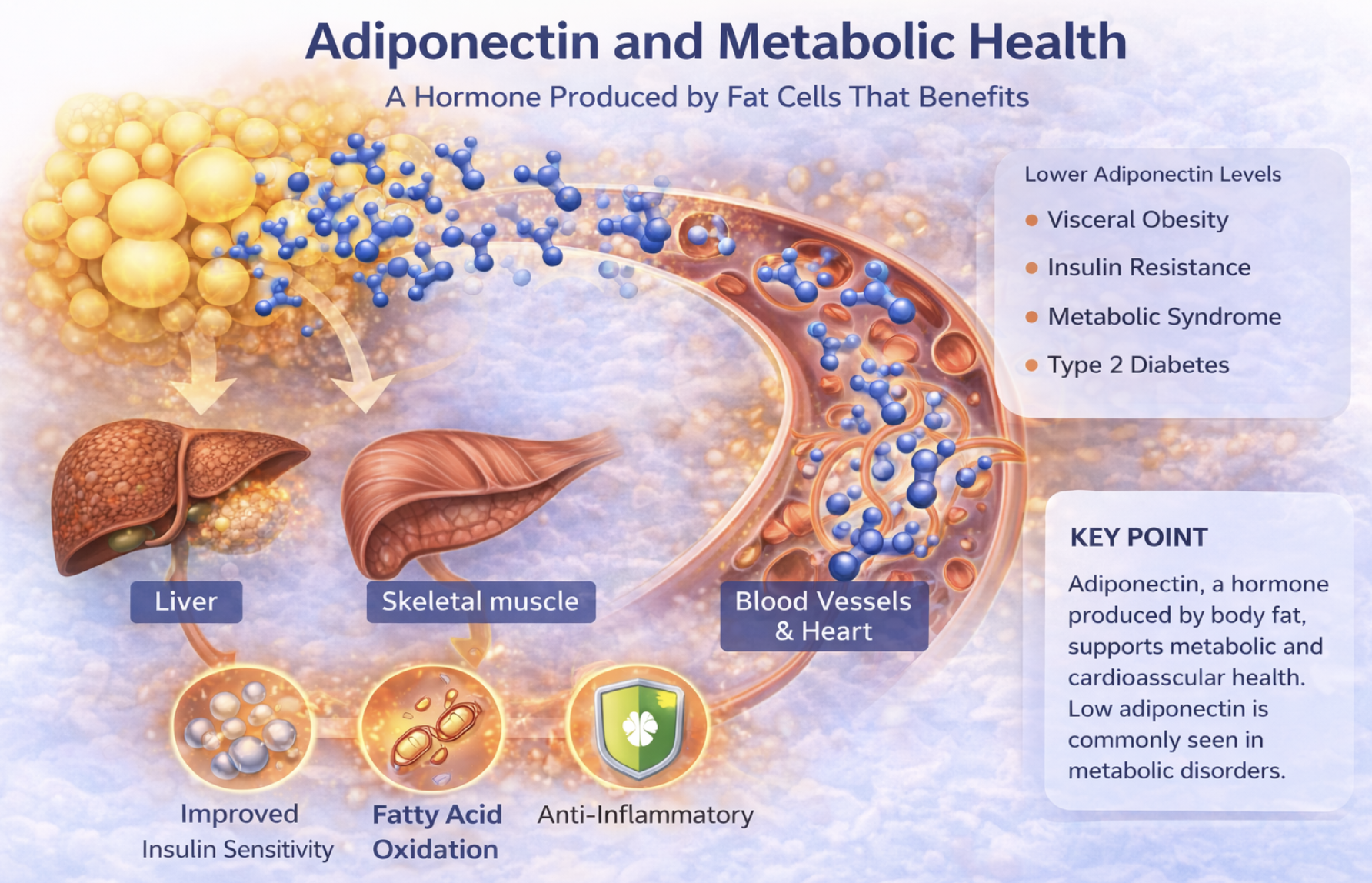
Adiponectin is a hormone produced by adipose tissue that plays an important role in metabolic regulation. Unlike several other adipokines associated with inflammation and metabolic dysfunction, adiponectin is generally considered protective.
Higher levels of adiponectin are associated with improved insulin sensitivity, reduced inflammation, and healthier lipid metabolism. Conversely, low adiponectin levels are frequently observed in individuals with obesity, insulin resistance, metabolic syndrome, and type 2 diabetes.
Understanding the role of adiponectin helps illustrate how adipose tissue can influence metabolic health through hormonal signaling.
Adiponectin Production
Adiponectin is produced primarily by adipocytes, the cells responsible for storing fat within adipose tissue.
After being released into the bloodstream, adiponectin circulates throughout the body and interacts with receptors in several organs, including:
• the liver
• skeletal muscle
• vascular tissue
• the heart
Through these interactions, adiponectin influences multiple metabolic pathways related to glucose regulation, lipid metabolism, and inflammation.
Effects on Glucose Metabolism
One of the most important functions of adiponectin is its effect on insulin sensitivity.
Adiponectin enhances the ability of tissues such as skeletal muscle and the liver to respond to insulin. By improving insulin signaling, adiponectin helps regulate glucose uptake and maintain stable blood glucose levels.
This effect is one reason why low adiponectin levels are commonly associated with insulin resistance and metabolic syndrome.
Fatty Acid Oxidation
Adiponectin also influences lipid metabolism by promoting fatty acid oxidation, the process through which fatty acids are broken down to produce energy.
By stimulating this pathway, adiponectin helps reduce lipid accumulation in tissues such as the liver and skeletal muscle. This effect can help protect against conditions like fatty liver disease and metabolic dysfunction.
Anti-Inflammatory Effects
In addition to its metabolic functions, adiponectin has anti-inflammatory properties.
Adiponectin signaling can reduce the production of inflammatory cytokines and may help counteract some of the inflammatory effects associated with visceral adiposity.
Because chronic low-grade inflammation is a key feature of metabolic syndrome, adiponectin’s anti-inflammatory activity may play an important protective role.
Relationship to Body Fat
One of the unusual features of adiponectin is that its levels tend to decrease as body fat increases, particularly with visceral adiposity.
This pattern contrasts with many other adipokines, which increase with expanding adipose tissue.
Lower adiponectin levels are commonly observed in individuals with:
• visceral obesity
• insulin resistance
• metabolic syndrome
• fatty liver disease
This relationship suggests that adiponectin may serve as a marker of metabolic health.
Cardiovascular Effects
Adiponectin may also influence cardiovascular physiology.
Research suggests that adiponectin can improve endothelial function and reduce inflammatory signaling within blood vessels. These effects may help protect against atherosclerosis and cardiovascular disease.
For this reason, adiponectin levels have been studied as a potential indicator of cardiovascular risk.
Research Perspectives
Researchers continue to investigate how adiponectin influences metabolic health and whether therapies that modify adiponectin signaling could improve metabolic disease outcomes.
Areas of ongoing research include:
• interactions between adiponectin and insulin signaling pathways
• genetic influences on adiponectin production
• the role of adiponectin in cardiovascular disease
• the relationship between adiponectin and liver metabolism
These investigations help clarify how adipose tissue contributes to systemic metabolic regulation.
Related Topics
Readers interested in exploring adipose tissue signaling may also consult:
• Adipokines: Hormones of Adipose Tissue
• Visceral Adiposity and Inflammatory Signaling
• Leptin Resistance and Energy Regulation
• Insulin Resistance
These articles examine the broader metabolic signaling networks that regulate energy balance and metabolic health.