Introduction
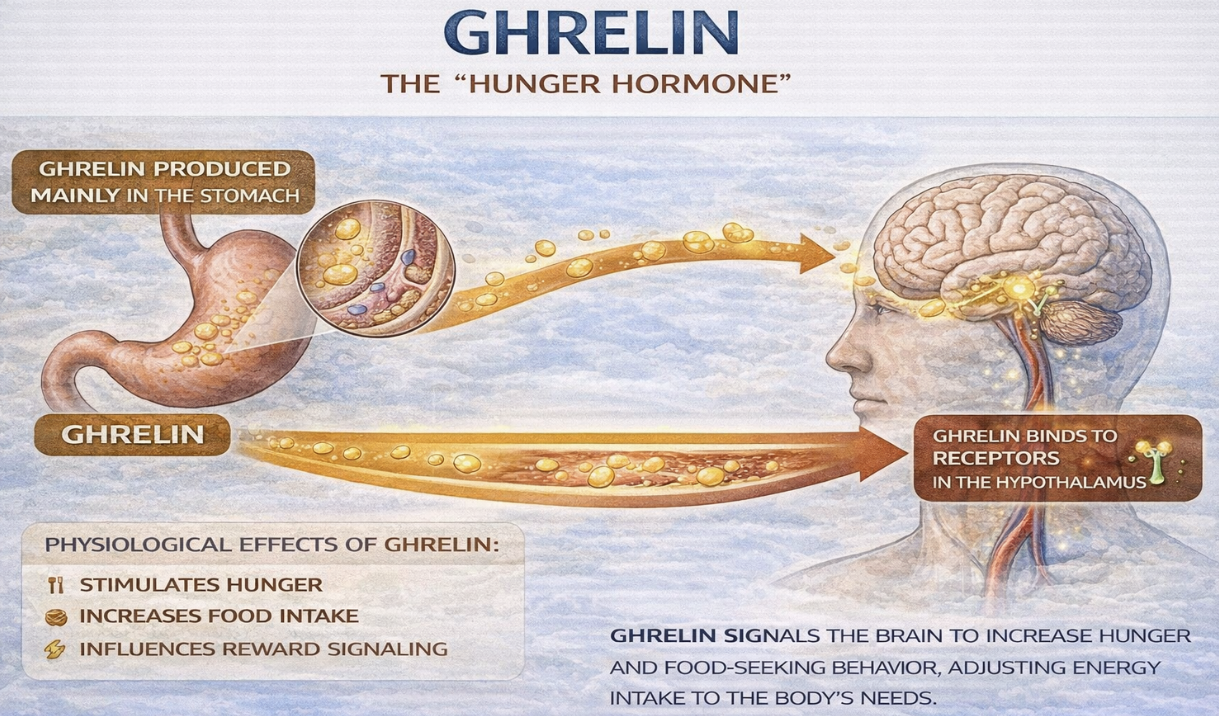
Energy balance in the human body is regulated by complex signaling systems that coordinate appetite, metabolism, and energy expenditure. One of the most important hormones involved in appetite regulation is ghrelin, a hormone produced primarily in the stomach.
Ghrelin is often described as a hunger signal. When the stomach is empty, ghrelin levels tend to rise, signaling the brain that food intake is needed. After eating, ghrelin levels usually decline.
In theory, this system helps the body match food intake to energy needs. In modern metabolic disease, however, appetite regulation may become distorted by interactions among ghrelin, insulin, leptin, nutrient exposure, sleep disruption, and chronic metabolic stress.
Understanding ghrelin helps explain why hunger is influenced by biology and internal signaling, not simply by willpower.
Discovery of Ghrelin
Ghrelin was identified in the late 1990s as a peptide hormone that binds to the growth hormone secretagogue receptor. Researchers found that it stimulated growth hormone release, but it soon became clear that ghrelin also played a major role in appetite regulation and energy balance.
This discovery helped establish ghrelin as one of the body’s key signals linking the gastrointestinal tract to the brain.
How Ghrelin Works
Ghrelin is produced primarily by specialized cells in the stomach, although smaller amounts are produced elsewhere in the body.
Once released into the bloodstream, ghrelin acts on the hypothalamus and other brain regions involved in appetite and reward. Ghrelin signaling normally produces several physiological effects:
• stimulation of hunger
• promotion of food seeking and meal initiation
• modulation of growth hormone release
• interaction with reward pathways related to eating
Through these mechanisms, ghrelin helps the body respond to fasting and maintain energy intake.
Ghrelin and Meal Timing
One of the defining features of ghrelin is its relationship to meal timing.
Ghrelin levels often rise before meals and fall after eating. This pattern suggests that ghrelin participates in the anticipation of food intake as well as in the physiological response to fasting.
In healthy metabolic regulation, this rise and fall helps coordinate feeding behavior. However, meal patterns based on frequent snacking, liquid calories, and highly processed foods may alter normal appetite signaling.
Interaction with Leptin and Insulin
Ghrelin does not operate independently. It interacts with other hormonal systems involved in energy balance, especially leptin and insulin.
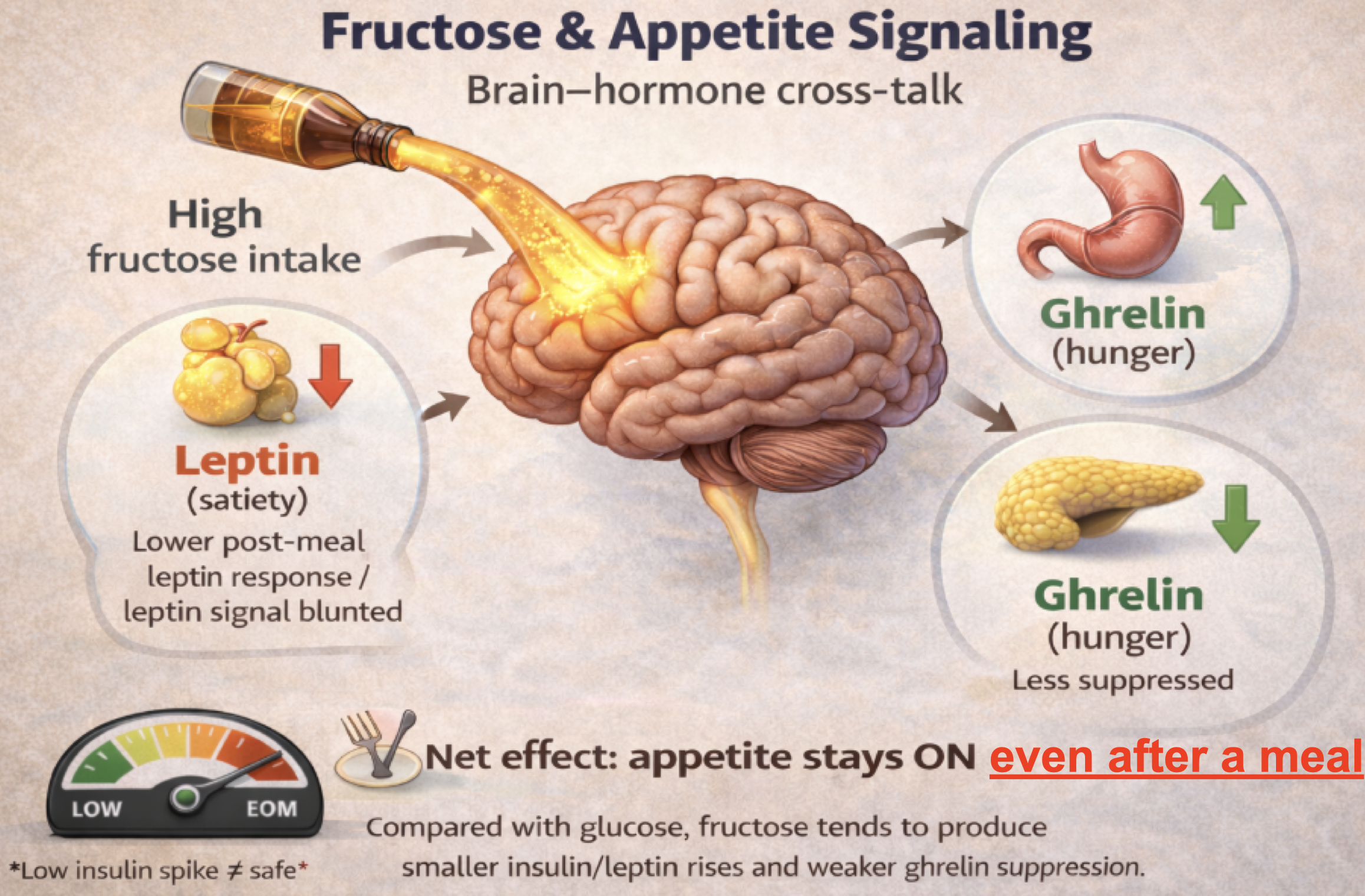
Leptin generally signals energy sufficiency, while ghrelin signals the need for intake. Insulin also provides information about nutrient availability and metabolic state.
These hormonal systems normally work together to regulate hunger, satiety, and energy storage. When insulin resistance, leptin resistance, or chronic overnutrition develop, this coordination may become less effective.
As a result, hunger and satiety signaling may become poorly matched to actual energy needs.
Ghrelin in Obesity and Metabolic Disease
Ghrelin regulation may be altered in obesity and related metabolic disorders.
In some individuals, hunger signaling may remain active despite excess energy stores. In others, post-meal suppression of ghrelin may be less effective, or eating behavior may be increasingly shaped by reward pathways rather than normal physiological feedback alone.
These disturbances do not mean that ghrelin acts alone. Rather, they illustrate how appetite regulation can become dysregulated in a broader metabolic environment characterized by:
• insulin resistance
• leptin resistance
• visceral adiposity
• chronic low-grade inflammation
• frequent exposure to calorie-dense foods
Ghrelin and Food Reward
Ghrelin influences not only hunger but also the motivational aspects of eating.
It interacts with brain pathways involved in reward and reinforcement, which may increase the appeal of energy-dense foods. This may be particularly relevant in modern food environments where highly palatable foods are widely available.
Thus, ghrelin may help explain why appetite is shaped by both metabolic need and food-seeking behavior.
Role of Sleep and Stress
Ghrelin levels are also influenced by sleep and stress.
Sleep deprivation has been associated with higher ghrelin levels and increased hunger in some studies. Stress and disruption of normal circadian rhythms may also alter appetite-regulating hormones.
This interaction suggests that appetite regulation is affected not only by food itself, but also by broader physiological stressors.
Implications for Metabolic Disease
Altered ghrelin signaling may contribute to several metabolic conditions, including:
• obesity
• metabolic syndrome
• insulin resistance
• fatty liver disease
Because ghrelin helps regulate hunger and meal initiation, disturbances in this system may make weight regulation more difficult, especially in environments dominated by highly processed foods and frequent caloric exposure.
For this reason, ghrelin is often considered part of the broader hormonal network involved in chronic metabolic disease.
Research Perspectives
Researchers continue to investigate ghrelin and its role in appetite regulation, obesity, and metabolic disease.
Areas of study include:
• interactions between ghrelin and leptin
• ghrelin’s effects on reward pathways
• the impact of sleep and circadian disruption
• potential therapies targeting appetite-regulating hormones
Bottom Line
Understanding ghrelin helps clarify how hunger is biologically regulated and why appetite control becomes more complex in modern metabolic disease.