Introduction
Modern food systems rely on a variety of sweetening agents to enhance flavor, preserve products, and improve texture. Among these sweeteners, high-fructose corn syrup (HFCS) has become one of the most widely used ingredients in many processed foods and beverages.
High-fructose corn syrup is produced through industrial processing of corn starch and is commonly used in soft drinks, packaged desserts, sauces, and many other manufactured foods. Its use expanded rapidly during the late twentieth century as food manufacturers adopted new sweetening technologies.
Understanding how HFCS is produced and how it compares with traditional sugars helps clarify its role in modern dietary patterns.
From Corn Starch to Sweetener
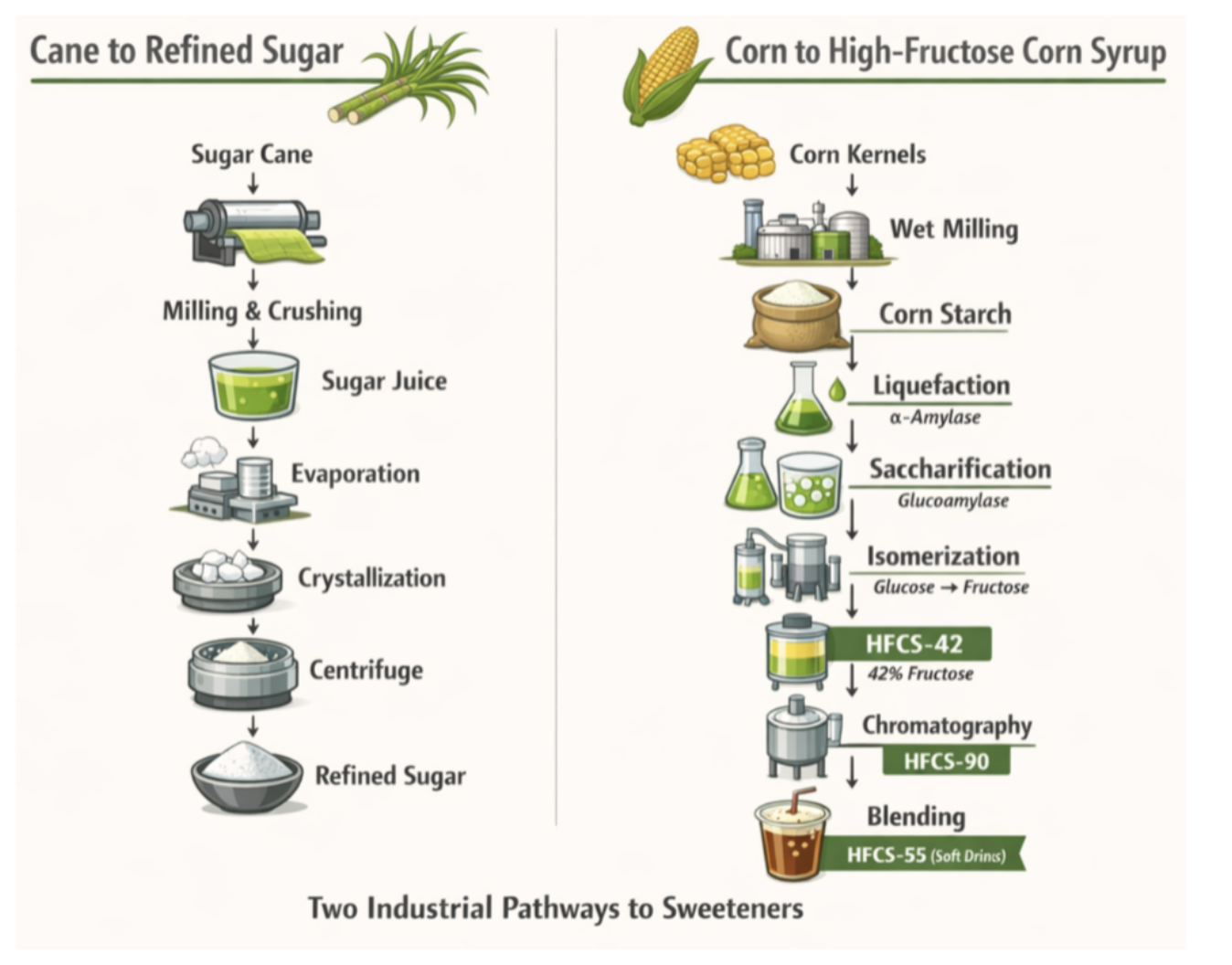
High-fructose corn syrup is derived from corn starch, a carbohydrate composed of long chains of glucose molecules.
The manufacturing process typically involves several enzymatic steps:
- Corn starch is first broken down into glucose molecules.
- Some of this glucose is then converted into fructose using specialized enzymes.
- The resulting mixture of glucose and fructose is adjusted to achieve the desired sweetness level.
Different formulations of HFCS contain varying proportions of fructose and glucose. One common form used in beverages contains approximately 55 percent fructose and 45 percent glucose, while another widely used formulation contains about 42 percent fructose.
Comparison with Sucrose
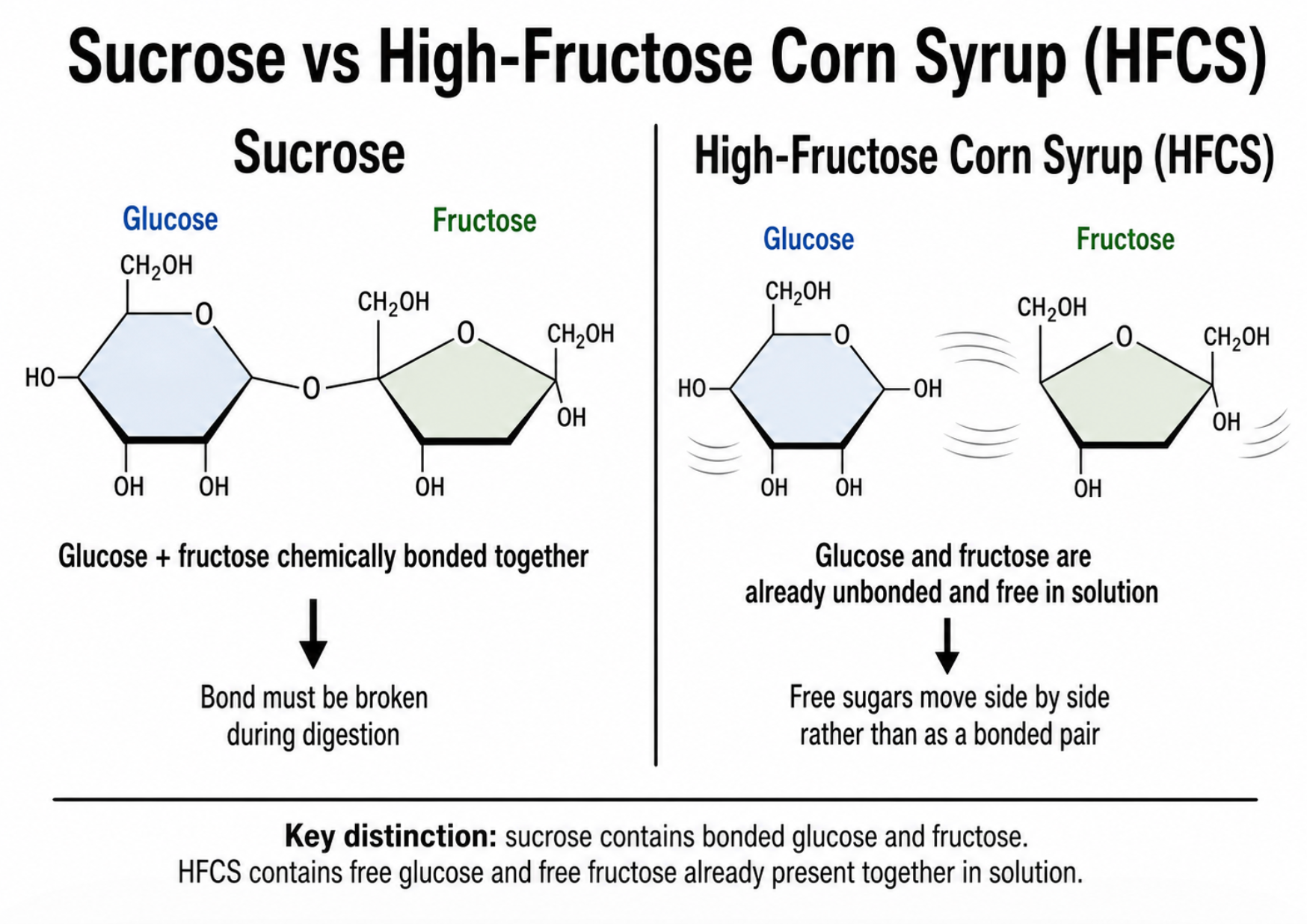
HFCS is often compared with sucrose, the common table sugar produced from sugarcane or sugar beets.
Sucrose is composed of one molecule of glucose bound to one molecule of fructose. During digestion, the bond between these molecules is broken, releasing free glucose and fructose.
Industrial Advantages
High-fructose corn syrup gained widespread adoption in the food industry for several practical reasons.
These include:
• relatively low production cost
• ease of transport and storage in liquid form
• stability in beverages and processed foods
• consistent sweetness and flavor
Because HFCS is easily incorporated into liquid products, it became particularly common in soft drinks and sweetened beverages.
The growth of the beverage industry played a major role in the expansion of HFCS consumption during the late twentieth century.
Sweetened Beverages and Sugar Intake
Sweetened beverages represent one of the largest sources of added sugars in many modern diets.
Unlike solid foods, beverages can be consumed quickly and in large quantities without producing the same level of satiety. This characteristic may contribute to increased total caloric intake in some individuals.
Beverages sweetened with HFCS or sucrose often deliver substantial amounts of rapidly absorbed sugars. These sugars enter metabolic pathways discussed elsewhere on this site, including hepatic fructose metabolism and lipid synthesis.
Because of these properties, sweetened beverages have become a focus of research examining the dietary factors associated with metabolic disease.
Global Variation
Patterns of sweetener use vary across different regions of the world.
In the United States, HFCS has historically been widely used in many processed foods and beverages. In other regions, sucrose remains the dominant added sugar.
Despite these differences, total added sugar consumption remains an important factor in dietary patterns worldwide.
As food manufacturing and distribution systems expand globally, the availability of sweetened products continues to increase in many countries.
Research Perspectives
Scientific research examining added sugars and metabolic health continues to evolve. Researchers study how different types of sugars interact with metabolic pathways related to insulin signaling, lipid synthesis, and energy regulation.
Many studies emphasize the importance of overall dietary patterns, including total caloric intake, nutrient composition, and the degree of food processing.
Understanding how industrial sweeteners are incorporated into modern diets helps provide context for the biological mechanisms explored in other sections of this site.
Related Topics
Readers interested in the metabolic pathways influenced by dietary sugars may also explore:
• Fructose Metabolism
• De Novo Lipogenesis
• Ultra-Processed Foods and the Modern Diet
• Sugar Consumption and the Global Dietary Transition