Introduction
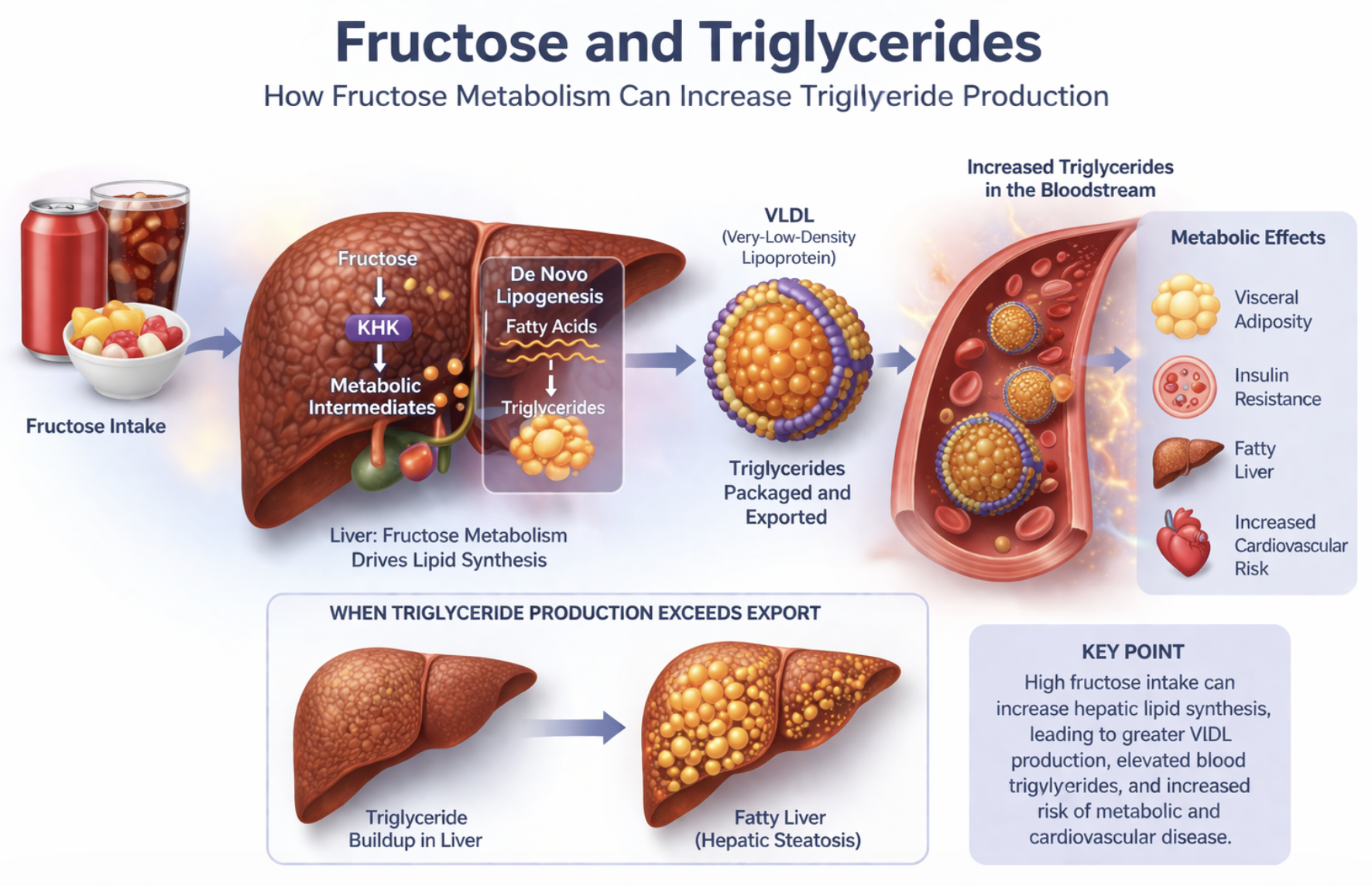
Triglycerides are a major form of stored energy in the human body. They circulate in the bloodstream within lipoprotein particles and are transported to tissues where they can be used for energy or stored in adipose tissue.
Although triglycerides are essential for normal metabolism, persistently elevated triglyceride levels are frequently associated with metabolic disorders such as insulin resistance, fatty liver disease, and metabolic syndrome.
Because fructose is metabolized primarily in the liver and can contribute to hepatic lipid synthesis, researchers have examined how fructose metabolism may influence triglyceride production.
Hepatic Lipid Synthesis
One pathway connecting fructose metabolism with triglyceride production involves de novo lipogenesis, the synthesis of fatty acids from carbohydrate substrates.
When excess carbohydrates are present in the liver, metabolic intermediates can be converted into fatty acids. These fatty acids are then assembled into triglycerides.
Several factors influence this process, including:
• total caloric intake
• carbohydrate consumption
• insulin signaling
• hepatic metabolic regulation
In conditions of metabolic excess, the liver may increase triglyceride synthesis.
Fructose Metabolism and Lipogenesis
Fructose enters hepatic metabolism through a pathway that begins with the enzyme ketohexokinase (KHK). Downstream metabolic intermediates can enter pathways involved in energy production or lipid synthesis.
Because fructose metabolism bypasses certain regulatory steps that control glucose metabolism, these intermediates may enter lipogenesis pathways relatively rapidly when fructose intake is high.
The resulting fatty acids are incorporated into triglycerides within hepatocytes.
Triglyceride Export
Triglycerides synthesized in the liver do not remain exclusively within liver cells.
Many of these lipids are packaged into very-low-density lipoprotein (VLDL) particles and released into the bloodstream. VLDL particles transport triglycerides to tissues throughout the body.
Elevated VLDL production contributes to increased circulating triglyceride levels, a common feature of metabolic syndrome.
Interaction with Fatty Liver
When triglyceride production within the liver exceeds the liver’s ability to export or oxidize lipids, triglycerides begin to accumulate within hepatocytes.
This accumulation produces hepatic steatosis, the defining feature of fatty liver disease.
Fatty liver disease frequently occurs alongside elevated circulating triglycerides, reflecting the broader disturbances in hepatic lipid metabolism.
Triglycerides and Metabolic Syndrome
Elevated triglycerides represent one of the diagnostic criteria for metabolic syndrome.
In individuals with metabolic syndrome, triglyceride levels often rise in combination with other metabolic abnormalities such as:
• reduced HDL cholesterol
• insulin resistance
• visceral adiposity
• impaired glucose regulation
These metabolic disturbances interact to increase cardiometabolic risk.
Cardiovascular Implications
Triglyceride metabolism is closely connected with cardiovascular disease.
Triglyceride-rich lipoproteins influence the formation of other lipoprotein particles, including small dense LDL, which can contribute to the development of atherosclerotic plaque.
For this reason, elevated triglycerides are often viewed as part of a broader lipid pattern associated with cardiovascular risk.
Metabolic Context
Triglyceride production reflects the integrated function of several metabolic systems, including liver metabolism, insulin signaling, and adipose tissue regulation.
Because fructose metabolism interacts with hepatic lipid synthesis pathways, it represents one component of the broader metabolic environment influencing triglyceride levels.
Understanding these interactions helps clarify how dietary patterns may influence lipid metabolism and cardiometabolic health.
Related Topics
Readers interested in the metabolic processes discussed on this page may also explore:
• De Novo Lipogenesis
• Fructose Metabolism
• Triglycerides and Cardiovascular Risk
• Fatty Liver Disease (MASLD)
These pages examine additional aspects of hepatic metabolism and lipid regulation.