Introduction
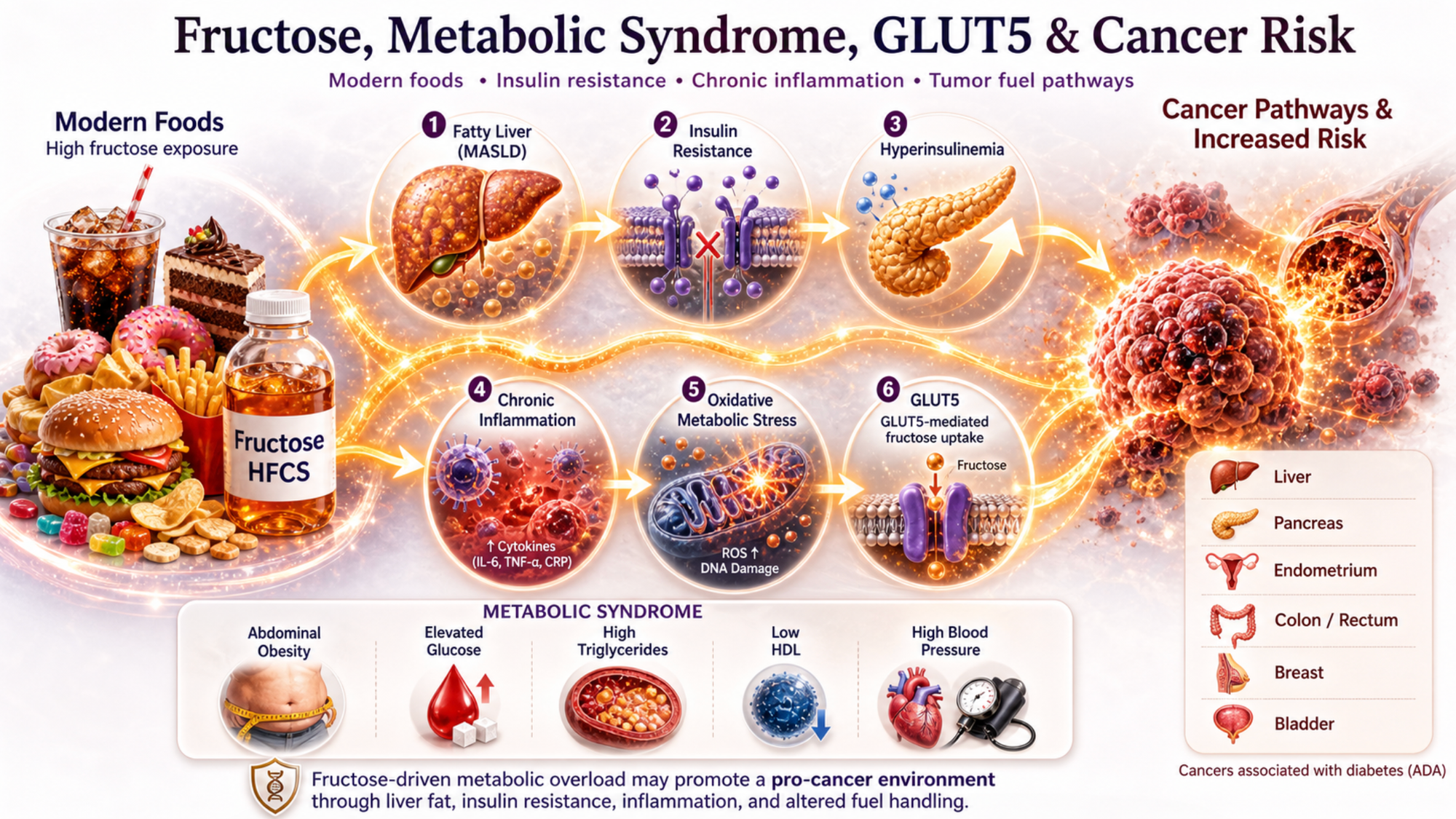
Cancer cells differ from normal cells in several aspects of metabolism. Many tumors exhibit altered patterns of energy production and nutrient utilization that support rapid cellular growth and proliferation.
The American Diabetes Association, while not linking fructose with cancers is linking Type 2 diabetes to cancers, "Researchers are still trying to learn more about the link between type 2 diabetes and certain cancers, including:
- liver
- pancreas
- uterus
- colon
- breast
- bladder"
Researchers studying cancer biology have increasingly examined how different nutrients influence cellular metabolism within tumor environments. Because fructose can enter metabolic pathways involved in energy production and lipid synthesis, scientists have explored whether fructose metabolism may influence certain aspects of cancer cell metabolism.
Although this area of research is still developing, studying the interaction between nutrient metabolism and cellular growth helps expand understanding of how metabolic environments influence disease processes.
Metabolic Reprogramming in Cancer
One of the defining features of many cancers is metabolic reprogramming. Tumor cells often adjust their metabolic pathways in order to generate energy and cellular building blocks required for rapid growth.
These adaptations can include:
• increased glucose uptake
• changes in mitochondrial metabolism
• increased synthesis of nucleotides and lipids
• altered amino acid metabolism
These metabolic changes support cell division and the production of new cellular components.
Sugar Metabolism and Cellular Growth
Both glucose and fructose are simple sugars that can enter cellular metabolic pathways.
In normal physiology, glucose metabolism is tightly regulated by hormonal and cellular signaling mechanisms. Fructose metabolism follows a somewhat different biochemical pathway that is largely processed in the liver.
In experimental settings, researchers have studied how cancer cells may utilize different sugars as metabolic substrates. Some laboratory studies suggest that certain tumor cells may metabolize fructose under specific conditions.
However, the biological significance of these findings in human disease remains an area of ongoing investigation.
Lipid Synthesis and Cell Proliferation
Rapidly dividing cells require substantial amounts of lipids to build new cellular membranes.
Metabolic pathways that produce fatty acids and other lipid molecules therefore play important roles in cellular growth. Because fructose metabolism can contribute intermediates that feed into de novo lipogenesis, researchers have explored whether these pathways might influence tumor cell metabolism.
These studies form part of a broader field examining how nutrient availability interacts with cellular growth signaling pathways.
Insulin Signaling and Growth Pathways
Another area of research involves the interaction between metabolic hormones and cellular growth signals.
Hormonal systems that regulate metabolism—such as insulin signaling—also interact with pathways that influence cell growth and proliferation. When insulin levels are elevated for prolonged periods, these signaling pathways may influence cellular metabolism and growth regulation.
For this reason, researchers studying cancer metabolism often examine the broader metabolic environment in which cells exist.
The Metabolic Environment
Cancer biology increasingly recognizes the importance of the metabolic environment surrounding cells.
Factors such as nutrient availability, hormonal signaling, inflammatory pathways, and energy metabolism all influence cellular behavior. These factors can vary widely depending on diet, metabolic health, and systemic physiology.
Understanding how these environmental conditions influence cellular metabolism is an important area of ongoing research.
Scientific Perspective
The relationship between dietary sugars and cancer remains a complex topic.
Most cancer research focuses on genetic mutations and cellular signaling pathways that drive tumor formation. Nutrient metabolism is increasingly studied as a contributing factor that may influence how cancer cells grow and survive within their metabolic environment.
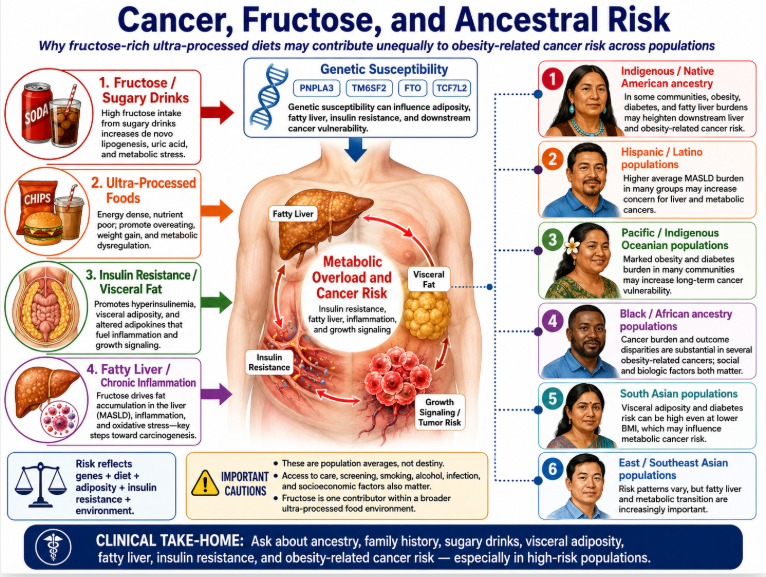
Current research emphasizes the importance of studying these processes carefully and within the broader context of metabolic physiology.
A Systems View
The discussion of fructose and cancer metabolism illustrates how metabolic pathways intersect with many areas of biology.
The liver, endocrine signaling systems, inflammatory pathways, and cellular metabolic networks all interact within the broader metabolic environment of the body.
Studying these interactions helps researchers understand how metabolism influences health and disease across multiple biological systems.
Related Topics
Readers interested in exploring the metabolic pathways discussed on this page may also consult:
• Insulin Signaling and Glucose Regulation
• Inflammation and Metabolic Disease
• The American Diabetes Association linking diabetes to cancers
These pages examine the metabolic systems that influence the broader cellular environment.