Introduction
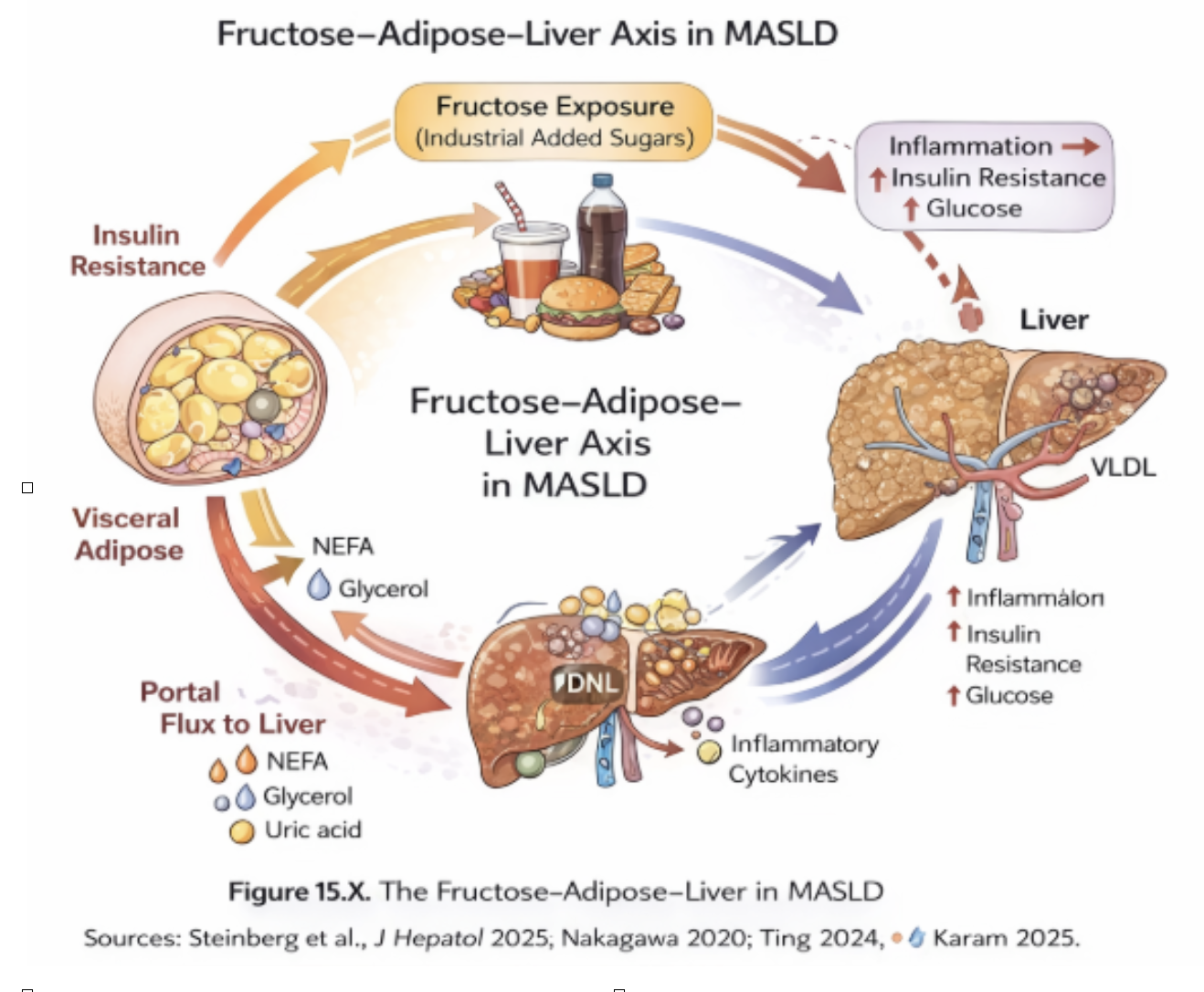
Metabolic dysfunction–associated steatotic liver disease (MASLD) is one of the most common liver disorders worldwide. The condition occurs when excess fat accumulates within liver cells in individuals who have metabolic risk factors such as obesity, insulin resistance, dyslipidemia, or type 2 diabetes.
In many cases MASLD develops silently, producing few symptoms during its early stages. It is often discovered incidentally during imaging studies or routine laboratory testing.
Despite its subtle onset, fatty liver disease has important implications for metabolic health and is increasingly recognized as a key indicator of systemic metabolic dysfunction.
What Is Liver Fat?
The liver normally contains small amounts of fat as part of its metabolic activity. However, when triglycerides accumulate beyond normal levels within liver cells, this condition is referred to as hepatic steatosis, or fatty liver.
This accumulation occurs when the balance between lipid production, lipid oxidation, and lipid export becomes disrupted.
Several metabolic pathways contribute to this process:
• increased delivery of fatty acids from adipose tissue
• increased synthesis of fatty acids within the liver
• reduced oxidation of fatty acids
• impaired export of triglycerides from the liver
When these processes favor fat accumulation, liver steatosis may develop.
The Liver and Energy Metabolism
The liver plays a central role in managing nutrients absorbed from the intestine. After a meal, carbohydrates, fats, and proteins enter the portal circulation and are delivered directly to the liver.
The liver then determines how these nutrients are processed, stored, or distributed throughout the body.
Under conditions of chronic caloric excess, the liver may convert surplus carbohydrates into fatty acids through a process known as de novo lipogenesis. These fatty acids can then be stored as triglycerides within hepatocytes.
Over time, this accumulation may contribute to metabolic dysfunction.
MASLD and Metabolic Syndrome
Fatty liver disease frequently appears alongside other features of metabolic syndrome.
Individuals with MASLD often show:
• insulin resistance
• elevated triglycerides
• reduced HDL cholesterol
• abdominal obesity
• hypertension
Because of these associations, many researchers now view MASLD as part of a broader metabolic disorder rather than a purely liver-specific disease.
The presence of liver fat may therefore serve as an early marker of systemic metabolic stress.
Disease Progression
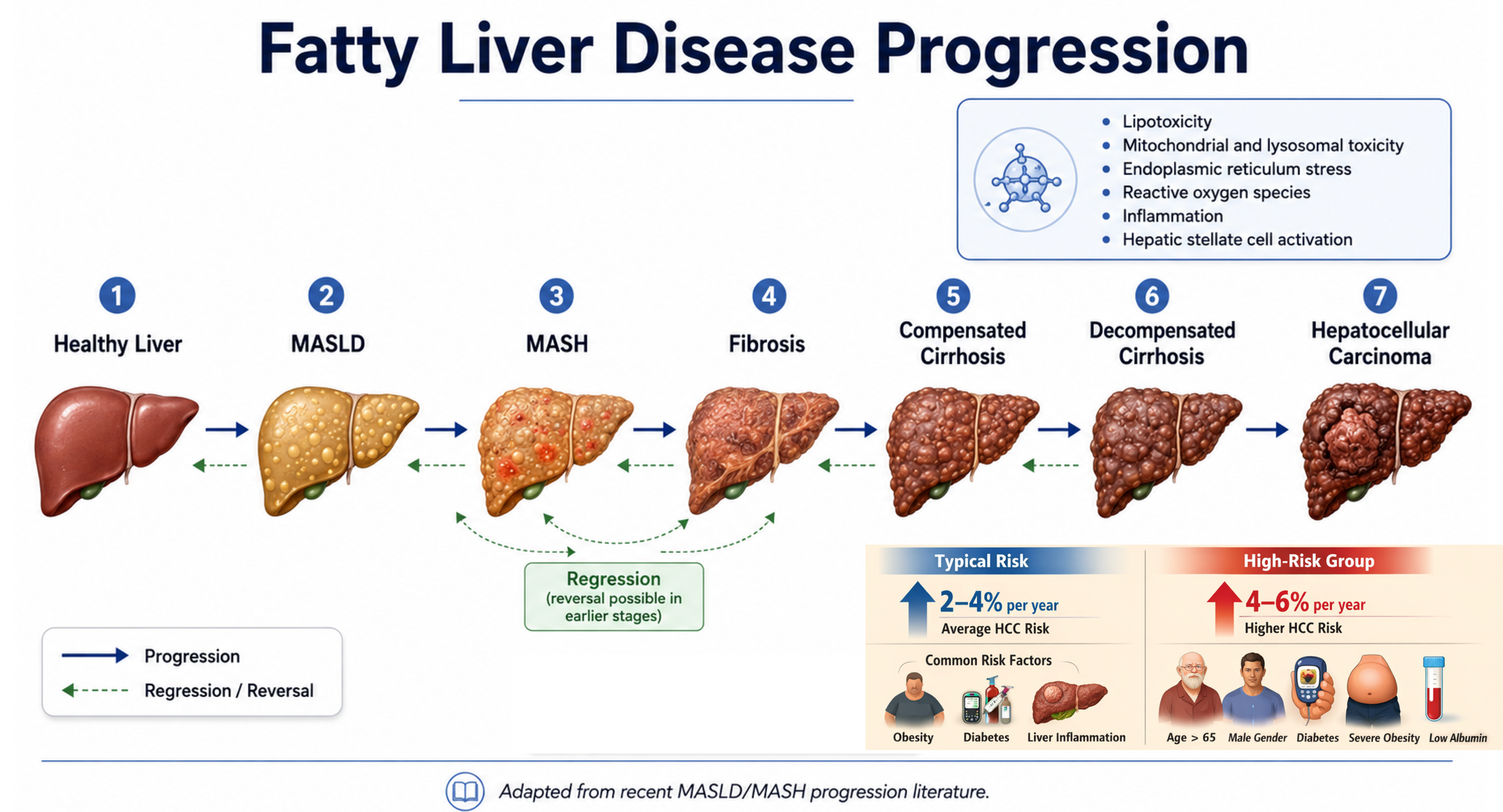
In many individuals, liver steatosis remains relatively stable. However, in some cases fatty liver can progress to more severe stages of liver injury.
Possible stages include:
- Simple steatosis – fat accumulation without significant inflammation
- Steatohepatitis – inflammation and liver cell injury
- Fibrosis – development of scar tissue
- Cirrhosis – advanced scarring that disrupts liver structure and function
Progression occurs gradually and varies among individuals. However, there is now literature showing an increased link of cirrhosis casued by MASLD and cancers of the liver
Global Prevalence
MASLD has become increasingly common in many regions of the world. Rising rates of obesity, insulin resistance, and metabolic syndrome have contributed to the growing prevalence of fatty liver disease.
In some countries, estimates suggest that roughly one quarter of adults may have some degree of liver steatosis.
Because the condition often produces few symptoms in early stages, many individuals may remain unaware of the disease until it is detected through imaging or laboratory testing.
Prevention and Management
Management of MASLD typically focuses on addressing the metabolic factors that contribute to liver fat accumulation.
Common approaches include:
• weight reduction when appropriate
• improved diet quality
• increased physical activity
• management of blood glucose and lipid levels
In many individuals, even modest improvements in metabolic health can reduce liver fat and improve liver function.
Related Topics
Readers interested in the broader metabolic context of fatty liver disease may wish to explore:
• GLUT 5
These topics examine the metabolic processes that often accompany MASLD.