Adiposity in the Modern Metabolic Environment

What is obesity?
Obesity is a condition in which excess body fat accumulates to a degree that affects health.
It is often described using body mass index (BMI), but BMI is only a rough screening tool. Obesity is not just a matter of body weight. It reflects a deeper state of altered fat storage, hormonal signaling, inflammation, and metabolic stress.
In the modern era, obesity is strongly associated with:
- insulin resistance
- Type 2 diabetes
- fatty liver disease
- hypertension
- dyslipidemia
- cardiovascular disease
- sleep apnea
More than excess weight
Obesity is often discussed as if it simply means “too much weight.”
That is incomplete.
The more important issue is excess adiposity, especially when fat is stored in metabolically harmful ways.
Two people can weigh the same and have very different metabolic risk depending on:
- where fat is stored
- how much visceral fat is present
- how much liver fat is present
- how much insulin resistance has developed
This is why obesity is best understood as a metabolic condition, not a cosmetic one.
The modern food environment
The global rise in obesity has occurred alongside major changes in food systems.
These include:
- refined carbohydrates
- sugary beverages
- ultra-processed foods
- frequent eating patterns
- large portion sizes
- reduced satiety from liquid calories and refined foods
Modern foods are often:
- rapidly absorbed
- low in fiber
- easy to consume repeatedly
- heavily marketed
This creates a sustained environment of metabolic overload.
👉 See: The Modern Diet
Obesity and insulin resistance
Obesity is closely linked to insulin resistance.
As adipose tissue expands:
- fat storage becomes less stable
- inflammatory signaling rises
- fatty acids spill into the circulation
- insulin signaling becomes less effective
This contributes to:
- elevated fasting glucose
- rising triglycerides
- liver fat accumulation
- worsening metabolic syndrome
👉 See: Insulin Resistance
Why fat distribution matters
Not all body fat has the same biological effect.
This is one of the most important clinical ideas in obesity.
Central obesity
Central obesity refers to excess fat accumulation around the abdomen.
It is often visible externally and is strongly associated with metabolic syndrome.
👉 See: Central Obesity
Visceral adiposity
Visceral adiposity refers to fat stored deep within the abdomen around internal organs.
This is one of the most metabolically harmful fat depots in the body.
It contributes to:
- insulin resistance
- inflammation
- fatty liver
- hypertension
- cardiovascular disease
👉 See: Visceral Adiposity and Inflammatory Signaling
Obesity and fatty liver
Obesity is strongly linked to metabolic dysfunction–associated steatotic liver disease (MASLD).
Excess energy intake — especially from refined carbohydrates and fructose — promotes:
- liver fat accumulation
- triglyceride production
- insulin resistance
In many patients, fatty liver is one of the earliest internal signs of obesity-related metabolic dysfunction.
👉 See: Fatty Liver
Obesity and inflammation
Obesity is also an inflammatory condition.
As adipose tissue expands, especially visceral fat, it produces more inflammatory mediators such as:
- TNF
- interleukin-6
- other adipokines and cytokines
This helps explain why obesity is so often linked to:
- insulin resistance
- vascular disease
- worsening metabolic syndrome
👉 See: Inflammation
👉 See: TNF
👉 See: Interleukin-6
Obesity and cardiovascular disease
Obesity increases cardiovascular risk through several pathways:
- hypertension
- dyslipidemia
- insulin resistance
- inflammation
- fatty liver
- altered cardiac structure and function
It contributes not only to atherosclerotic disease, but also to:
- heart failure with preserved ejection fraction (HFpEF)
- sleep apnea-related cardiovascular stress
👉 See: Cardiovascular Disease
👉 See: HFpEF
👉 See: Sleep Apnea
Fructose and obesity
Fructose is not the only cause of obesity, but it is an important contributor in the modern diet.
High fructose intake can promote:
- increased liver fat
- triglyceride overproduction
- insulin resistance
- uric acid generation
- visceral fat accumulation
This is one reason sugary beverages and processed foods are so important clinically.
👉 See: Fructose Metabolism
👉 See: Hyperuricemia
Why obesity matters clinically
Obesity matters not just because of body size, but because it often reflects:
- disrupted appetite regulation
- abnormal fat distribution
- liver-centered metabolic dysfunction
- chronic inflammatory signaling
- increased risk of multiple disease states
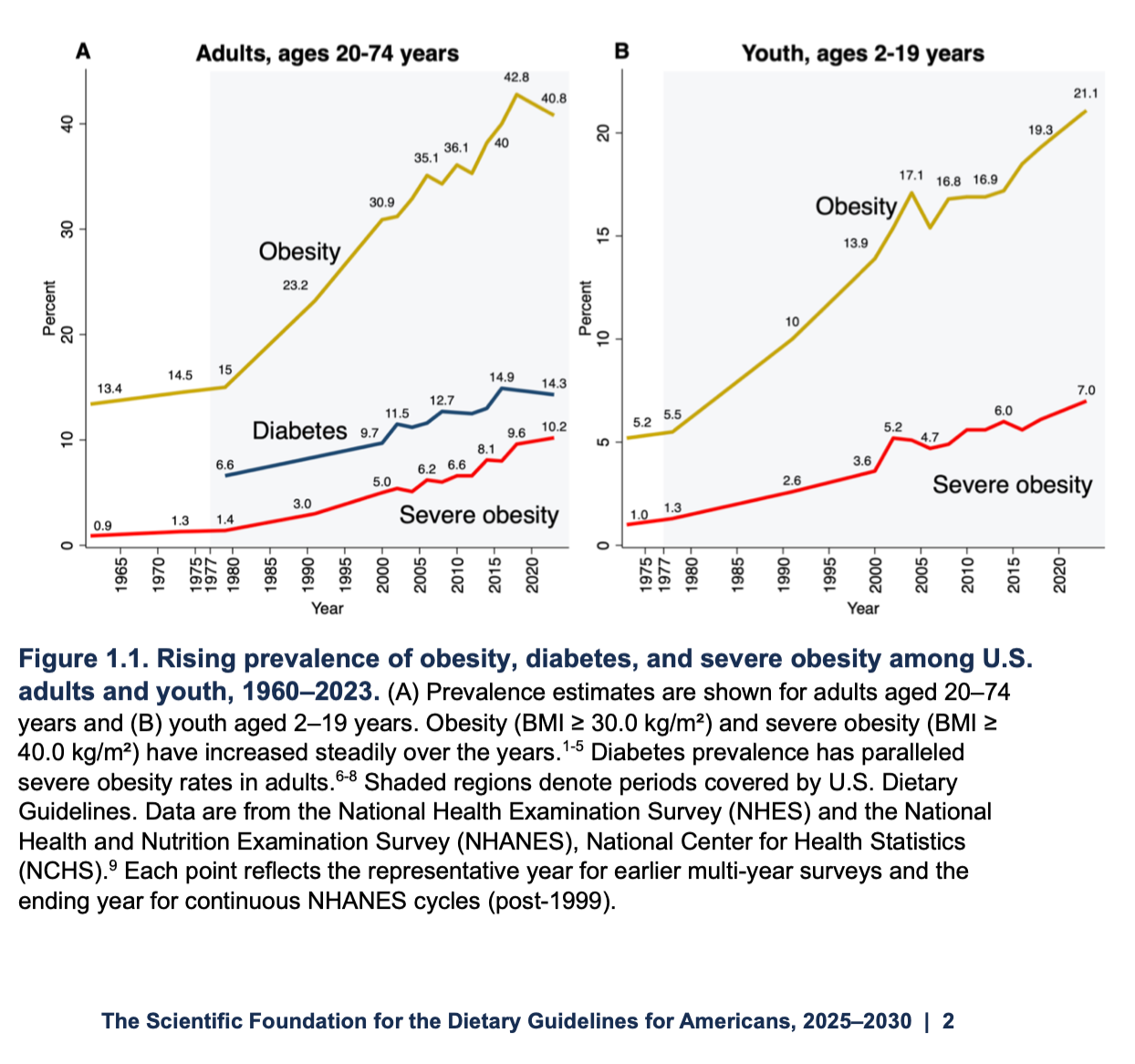
For this reason, obesity should not be treated as a stand-alone diagnosis. It is usually part of a broader metabolic pattern. For example, the link to diabetes is illustrated below in the Scientific Foundation for the USDA Dietary Guidelines for Americans.
Treatment and improvement
Treatment of obesity requires more than telling patients to eat less.
Useful strategies often include:
- reducing sugary beverages
- lowering refined carbohydrate intake
- improving diet quality
- restoring structured meal patterns
- increasing physical activity
- improving sleep
- addressing insulin resistance and metabolic disease directly
- pharmacologic treatment in selected patients
The most effective approaches reduce metabolic overload, not just body weight.
Bottom line
Obesity is not simply excess weight. It is a condition of excess adiposity that often reflects deeper metabolic dysfunction.
Its health impact depends strongly on:
- where fat is stored
- how inflamed adipose tissue becomes
- how much liver and visceral fat are present
- how much insulin resistance has developed
That is why obesity is best understood as a major clinical expression of modern metabolic disease.
Related pages
Visceral Adiposity and Inflammatory Signaling
Metabolic Syndrome
Insulin Resistance
Fatty Liver
Type 2 Diabetes
Hypertension
Sleep Apnea
HFpEF
Cardiovascular Disease
Hyperuricemia