Introduction
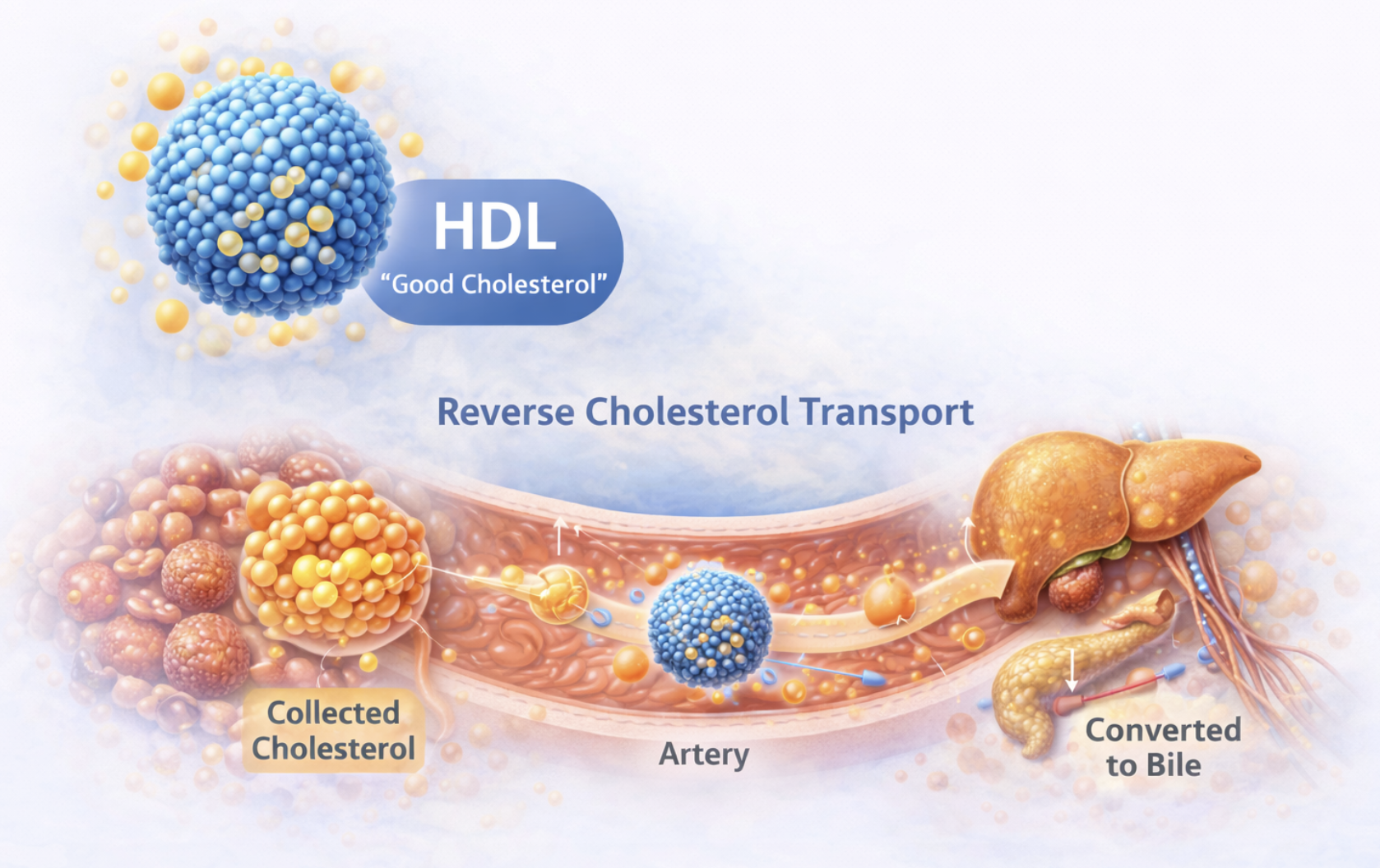
High-density lipoprotein (HDL) cholesterol is one of the key components measured in routine lipid panels used to assess cardiovascular risk. HDL particles play an important role in lipid transport and are involved in removing excess cholesterol from tissues and transporting it back to the liver.
For many years, HDL cholesterol was widely referred to as “good cholesterol.” Higher levels of HDL cholesterol were generally associated with lower rates of cardiovascular disease, while lower levels were associated with increased risk.
Although modern research has shown that HDL metabolism is more complex than originally thought, HDL levels remain an important marker of metabolic health and cardiovascular risk.
What Is HDL?
HDL stands for high-density lipoprotein, a class of particles that transport cholesterol and other lipids through the bloodstream.
Unlike triglycerides, which primarily transport stored energy, cholesterol plays structural and functional roles in the body. It is an essential component of cell membranes and serves as a precursor for steroid hormones and bile acids.
HDL particles help maintain lipid balance by participating in the transport and recycling of cholesterol within the body.
Reverse Cholesterol Transport
One of the most important functions of HDL particles is a process known as reverse cholesterol transport.
In this process:
- HDL particles collect excess cholesterol from tissues and macrophages.
- The cholesterol is transported through the bloodstream.
- The liver receives the cholesterol and can convert it into bile acids or eliminate it through bile.
This pathway helps prevent cholesterol from accumulating in blood vessel walls, which may reduce the development of atherosclerotic plaque.
HDL and Cardiovascular Risk
Low HDL cholesterol levels are commonly observed in individuals with metabolic syndrome and insulin resistance.
Typical HDL thresholds used in clinical evaluation include:
• Men: HDL below 40 mg/dL
• Women: HDL below 50 mg/dL
Low HDL levels frequently appear alongside other metabolic abnormalities, including:
• elevated triglycerides
• visceral adiposity
• insulin resistance
• fatty liver disease
Because of these associations, HDL levels often provide insight into the broader metabolic environment.
HDL and Metabolic Syndrome
In metabolic syndrome, the combination of elevated triglycerides and reduced HDL cholesterol forms part of the pattern known as atherogenic dyslipidemia.
This lipid pattern reflects disturbances in lipoprotein metabolism that occur in insulin-resistant states. When triglyceride-rich lipoproteins increase, HDL particles may be altered or cleared more rapidly from circulation.
As a result, HDL cholesterol levels often decline in individuals with metabolic syndrome.
Beyond HDL Levels
Although HDL cholesterol levels have long been associated with cardiovascular risk, recent research suggests that HDL function may be as important as HDL quantity.
HDL particles vary in size, composition, and biological activity. Some HDL particles are more effective at transporting cholesterol and influencing inflammatory pathways than others.
For this reason, modern research increasingly examines HDL particle function rather than focusing solely on HDL cholesterol concentration.
Lifestyle Factors and HDL
Several lifestyle factors influence HDL levels.
These include:
• physical activity
• body weight and fat distribution
• dietary patterns
• smoking status
• metabolic health
Regular physical activity and improvements in metabolic health are often associated with modest increases in HDL cholesterol levels.
HDL in the Broader Lipid System
HDL metabolism is closely connected with other lipoprotein pathways.
For example:
• elevated triglycerides can lower HDL levels
• changes in VLDL metabolism affect HDL particles
• insulin resistance alters lipoprotein balance
Because of these interactions, HDL should be interpreted alongside other lipid markers, including triglycerides and LDL cholesterol.
Related Topics
Readers interested in exploring lipid metabolism further may also consult:
• Triglycerides and Cardiovascular Risk
• Small Dense LDL and Atherosclerosis
• Metabolic Syndrome
• Insulin Resistance
These articles examine how lipid metabolism interacts with broader metabolic pathways.