Introduction
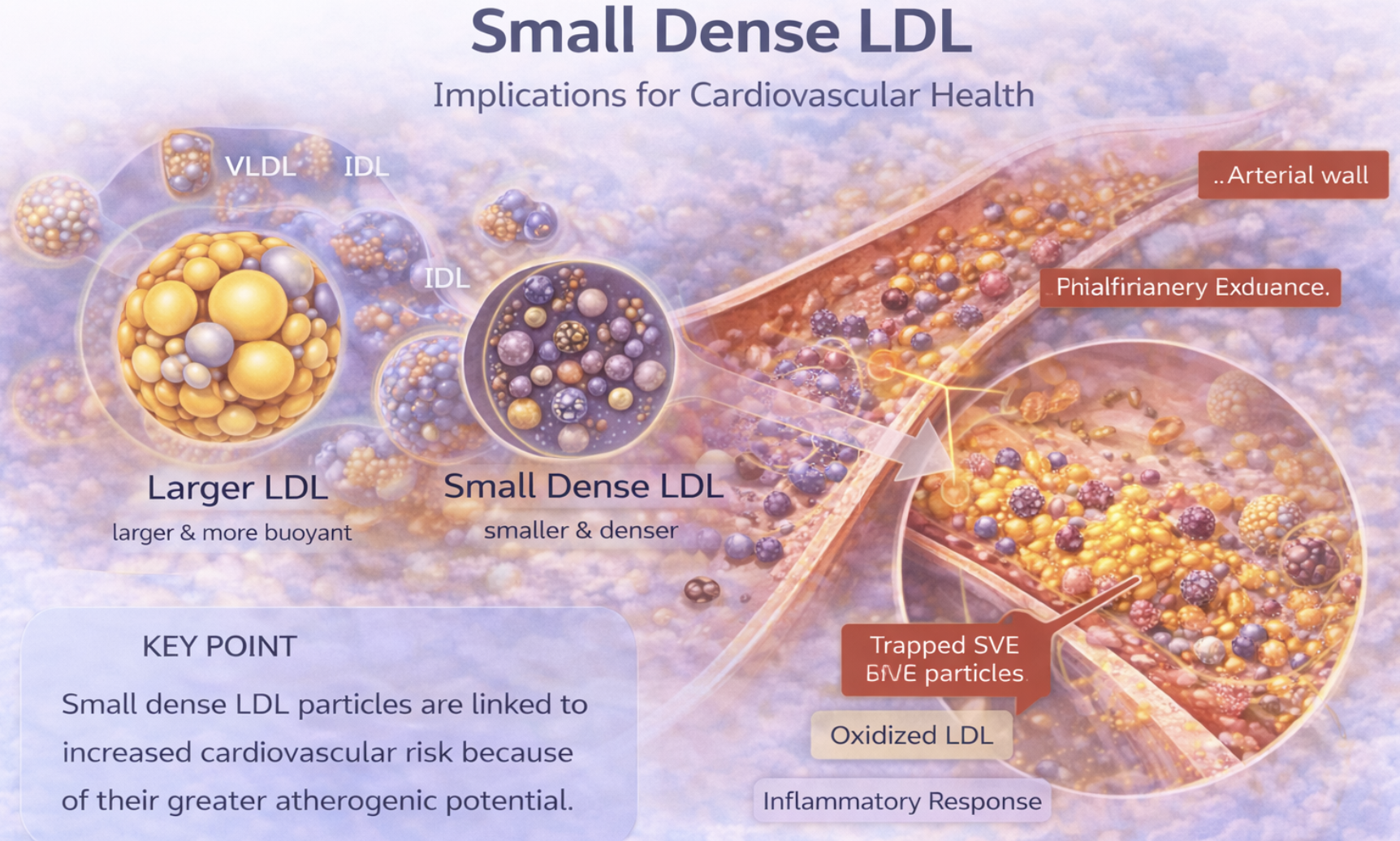
Low-density lipoprotein (LDL) cholesterol plays an important role in transporting cholesterol throughout the body. LDL particles deliver cholesterol to tissues where it is used for cell membranes, hormone synthesis, and other biological functions.
However, when LDL particles accumulate in excess within the bloodstream, they can contribute to the development of atherosclerosis, the buildup of plaque within arterial walls.
Research over the past several decades has shown that LDL particles vary in size and density. In particular, small dense LDL particles appear to be more strongly associated with cardiovascular disease than larger LDL particles.
Understanding how these particles form and how they interact with metabolic pathways helps clarify the relationship between lipid metabolism and heart disease.
LDL Particle Types
LDL particles are not all identical. They exist along a spectrum of sizes and densities.
Broadly speaking, LDL particles can be grouped into two general categories:
• larger, more buoyant LDL particles
• smaller, denser LDL particles
Small dense LDL particles contain less cholesterol per particle but circulate in greater numbers when present.
Because they differ in physical properties and metabolic behavior, these particles may interact differently with arterial walls.
Why Small Dense LDL Matters
Small dense LDL particles have several characteristics that may increase their atherogenic potential.
These include:
• increased ability to penetrate the arterial wall
• longer circulation time in the bloodstream
• greater susceptibility to oxidative modification
When LDL particles enter the arterial wall, they may become trapped within the vessel lining. Over time, this process can contribute to the formation of atherosclerotic plaque.
Oxidized LDL particles in particular can trigger inflammatory responses that accelerate plaque development.
Formation of Small Dense LDL
Small dense LDL particles often develop in metabolic conditions characterized by elevated triglycerides.
In individuals with atherogenic dyslipidemia, the liver produces increased numbers of triglyceride-rich lipoproteins such as VLDL. As triglycerides are removed from these particles in circulation, the resulting LDL particles may become smaller and denser.
This process frequently occurs in individuals with:
• insulin resistance
• metabolic syndrome
• visceral adiposity
• elevated triglycerides
For this reason, small dense LDL is often viewed as part of the broader metabolic disturbances associated with metabolic syndrome.
Insulin Resistance and Lipoprotein Metabolism
Insulin resistance plays a central role in the formation of small dense LDL.
When insulin signaling becomes impaired, the liver tends to produce larger quantities of triglyceride-rich lipoproteins. At the same time, enzymes that remodel lipoproteins in circulation alter the composition of LDL particles.
These changes shift the lipid profile toward the atherogenic pattern characterized by:
• elevated triglycerides
• reduced HDL cholesterol
• increased small dense LDL
This pattern is frequently observed in individuals with metabolic syndrome and type 2 diabetes.
Atherosclerosis
Atherosclerosis develops when lipoproteins accumulate within the inner lining of arteries.
Over time, this accumulation triggers inflammatory responses that lead to the formation of plaque. As plaques grow, they can narrow the arteries and reduce blood flow.
If a plaque ruptures, it can trigger the formation of a blood clot that blocks circulation entirely. This process can lead to heart attacks or strokes.
Because small dense LDL particles may enter the arterial wall more readily, they are thought to contribute significantly to this process.
Lipid Patterns and Cardiovascular Risk
The presence of small dense LDL is rarely evaluated in isolation. Instead, it usually appears as part of the broader lipid pattern associated with metabolic syndrome.
This pattern often includes:
• elevated triglycerides
• reduced HDL cholesterol
• increased numbers of small dense LDL particles
Together, these abnormalities reflect disturbances in metabolic regulation and are associated with increased cardiovascular risk.
Improving Lipid Profiles
Several lifestyle and metabolic factors influence lipoprotein patterns.
Interventions that may improve lipid metabolism include:
• improving diet quality, a return to the diet of your ancestors
• reducing added sugars intake, especially sugar beverages
• increasing physical activity
• reducing visceral adiposity
• improving insulin sensitivity
Lipid metabolism is closely linked to overall metabolic health. Addressing the underlying metabolic environment is essential for improving lipid profiles.
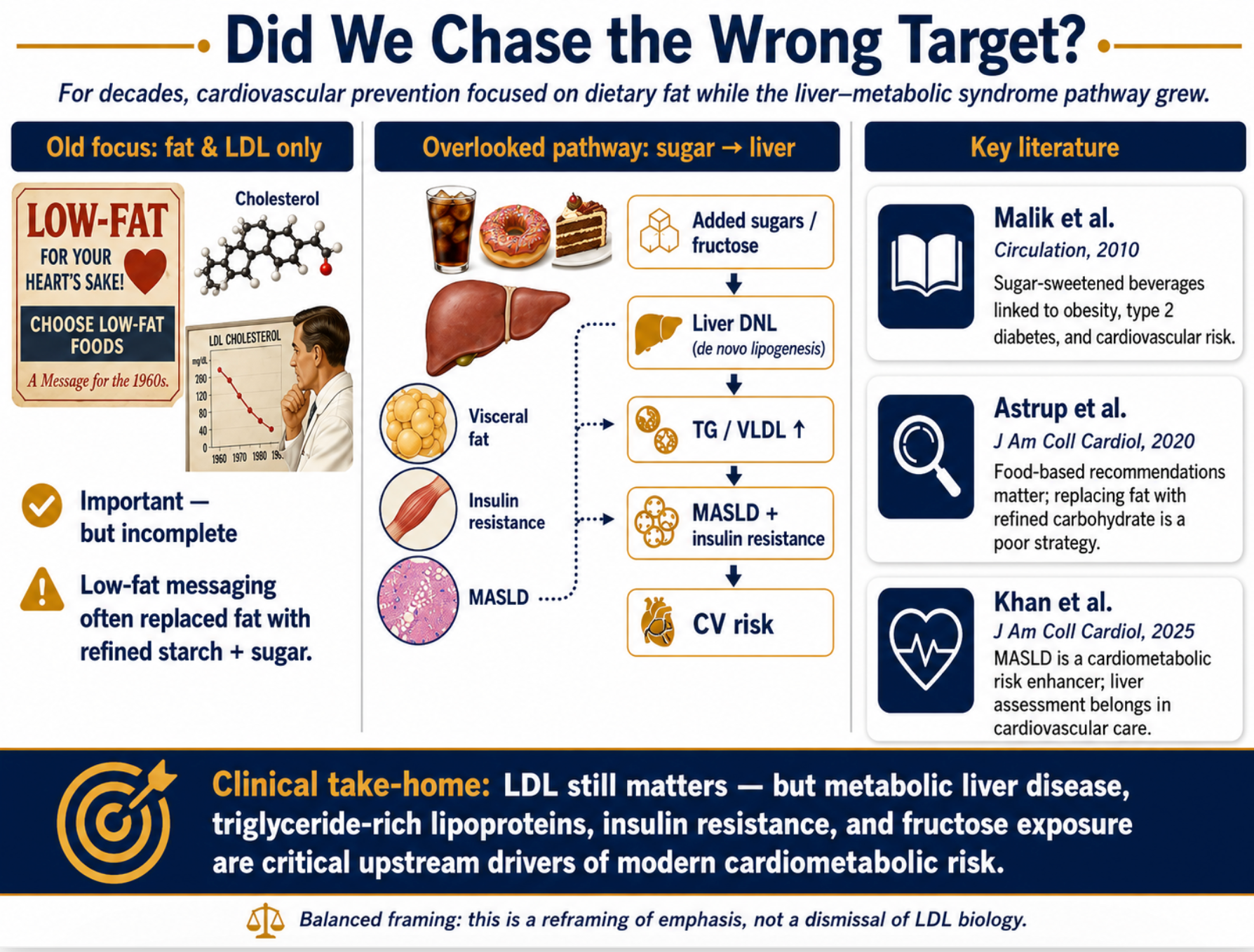
Dii we chase the wrong target for 60 years"
Related Topics
Readers interested in the metabolic processes discussed on this page may also explore:
• Triglycerides and Cardiovascular Risk
• HDL Cholesterol and Metabolic Health
• Metabolic Syndrome and Cardiovascular Disease
These articles examine how lipid metabolism interacts with broader metabolic pathways.