What is Type 2 diabetes?
Type 2 diabetes is a condition in which blood glucose levels are chronically elevated due to impaired regulation of insulin and glucose metabolism.
It is typically defined by:
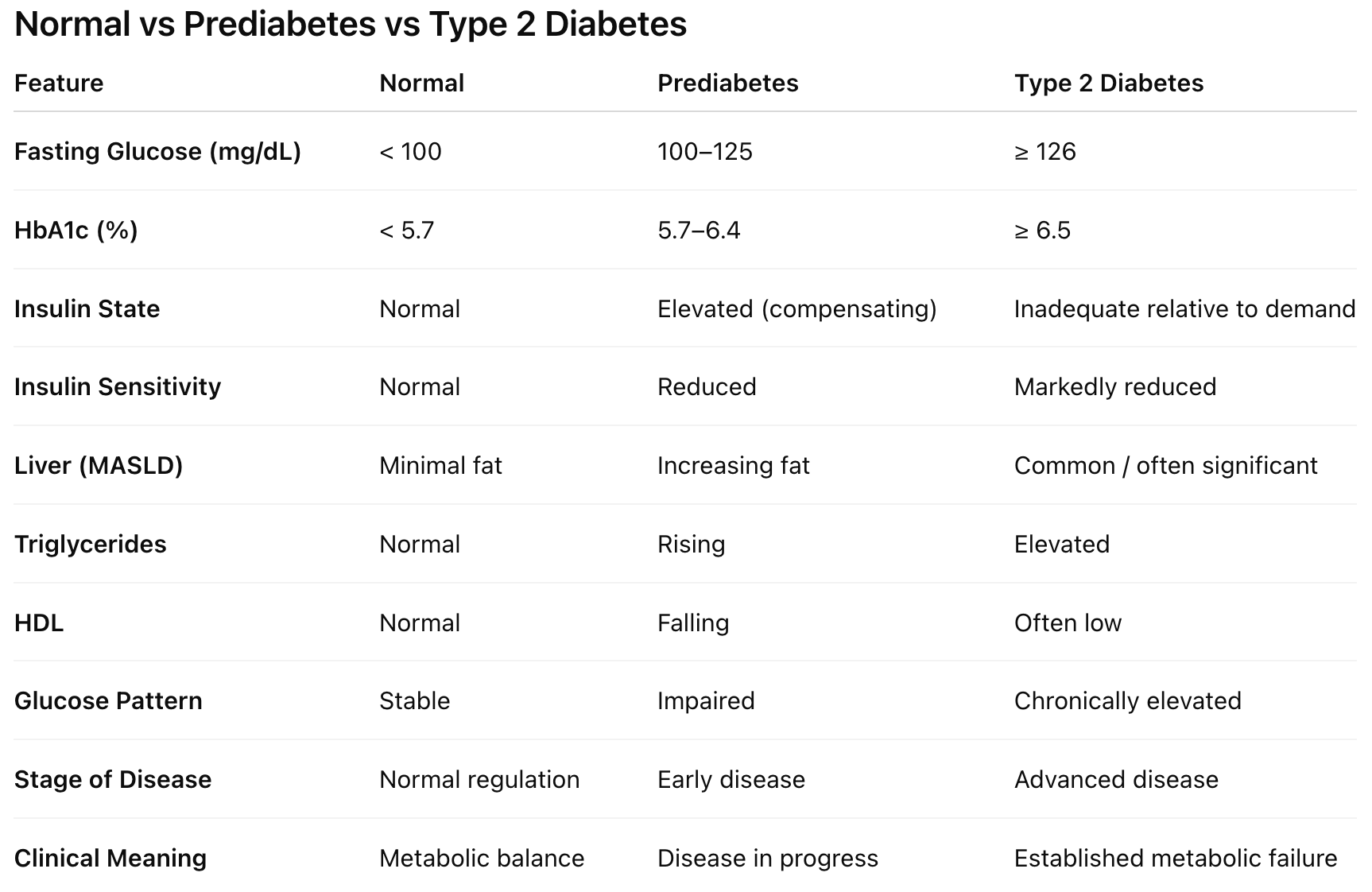
- fasting glucose: 126 mg/dL (7.0 mmol/L) or higher
- HbA1c: 6.5% or higher
- or elevated glucose on an oral glucose tolerance test
These thresholds define diagnosis. They do not mark the beginning of the disease.
A late-stage diagnosis
Type 2 diabetes is often identified when glucose levels cross a diagnostic threshold.
By this point:
- insulin resistance is already established
- liver fat is often present
- metabolic dysfunction has been developing for years
👉 Diabetes is not the beginning of the process—it is a later stage.
What is happening in the body
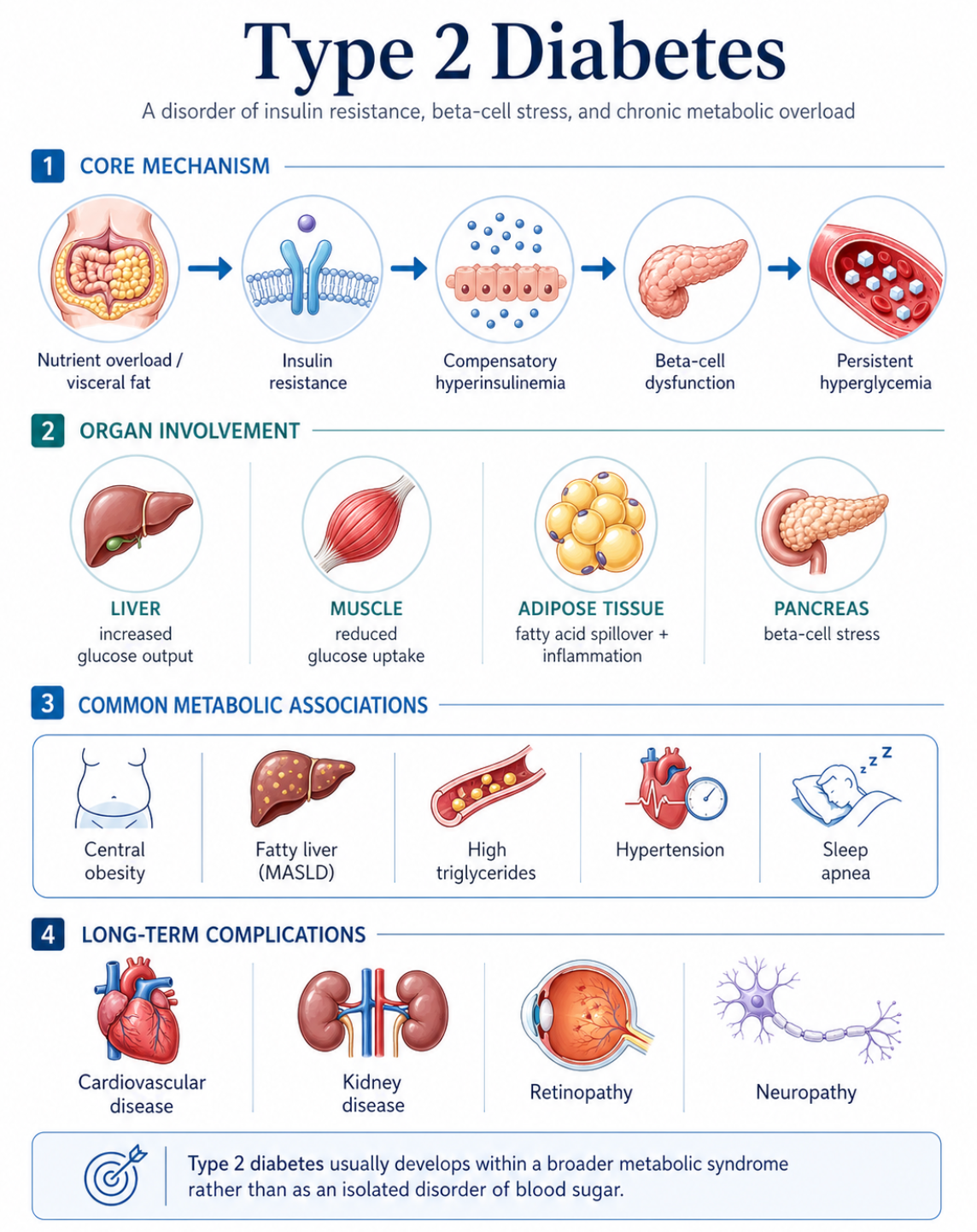
Type 2 diabetes reflects failure of normal metabolic regulation.
Key features include:
- persistent insulin resistance
- increased liver glucose production
- impaired glucose uptake in muscle
- elevated triglycerides
- chronic metabolic stress
These processes affect multiple organ systems simultaneously.
The role of the liver
The liver plays a central role.
In metabolic disease:
- liver fat accumulates
- insulin signaling becomes impaired
- glucose production continues when it should be suppressed
This leads to:
- elevated fasting glucose
- worsening hyperglycemia
Fatty liver is often present before and during diabetes.
Insulin resistance and compensation
In earlier stages:
- the pancreas increases insulin production
- this helps maintain glucose levels temporarily
Over time:
- insulin resistance worsens
- pancreatic compensation becomes insufficient
- glucose levels rise further
This transition marks progression from prediabetes to diabetes.
The progression pathway
Type 2 diabetes typically develops through stages:
- normal metabolism
- insulin resistance
- prediabetes
- diabetes
The underlying processes are continuous, not separate.
Relationship to fatty liver
Type 2 diabetes is closely linked to:
👉 metabolic dysfunction–associated steatotic liver disease (MASLD)
In many individuals:
- liver fat accumulation precedes diabetes
- insulin resistance develops alongside
- glucose rises later
This makes diabetes part of a broader metabolic condition.
Associated metabolic changes
Type 2 diabetes rarely occurs alone.
It is commonly associated with:
- elevated triglycerides
- reduced HDL cholesterol
- central obesity
- hypertension
- inflammation
These features together are often described as metabolic syndrome.
Clinical consequences
Chronic hyperglycemia leads to:
- vascular damage
- increased cardiovascular risk
- kidney disease
- nerve damage
- eye disease
These complications develop over time.
What drives Type 2 diabetes
The same drivers seen in earlier stages are present:
- refined carbohydrates
- sugary beverages
- frequent eating
- ultra-processed foods
These factors create:
- repeated glucose exposure
- high insulin demand
- sustained metabolic stress
Diagnosis does not define the disease
The diagnostic thresholds for diabetes are useful clinically.
However:
- the disease process begins earlier
- metabolic dysfunction exists before diagnosis
- complications may begin before formal diagnosis
👉 Diabetes is a measurable point in a longer process.
Treatment and reversal
Treatment focuses on:
- improving glucose control
- reducing metabolic stress
- lowering cardiovascular risk
Approaches include:
- dietary change
- weight reduction
- physical activity
- pharmacologic therapy
In some individuals, glucose levels can return to non-diabetic ranges with sustained intervention.
However:
👉 the underlying susceptibility often remains
Practical interpretation
Type 2 diabetes should be understood as:
👉 advanced metabolic disease
It reflects:
- long-standing insulin resistance
- liver involvement
- systemic metabolic dysfunction
Bottom line
Type 2 diabetes is not an isolated condition.
It is a late-stage manifestation of metabolic dysfunction involving:
- insulin resistance
- liver fat accumulation
- dysregulated glucose metabolism
Understanding this helps place diabetes within the broader context of metabolic disease.
Related pages
Prediabetes
Fasting Glucose
HbA1c
Insulin Resistance
Metabolic Syndrome
Renal Failure