Introduction
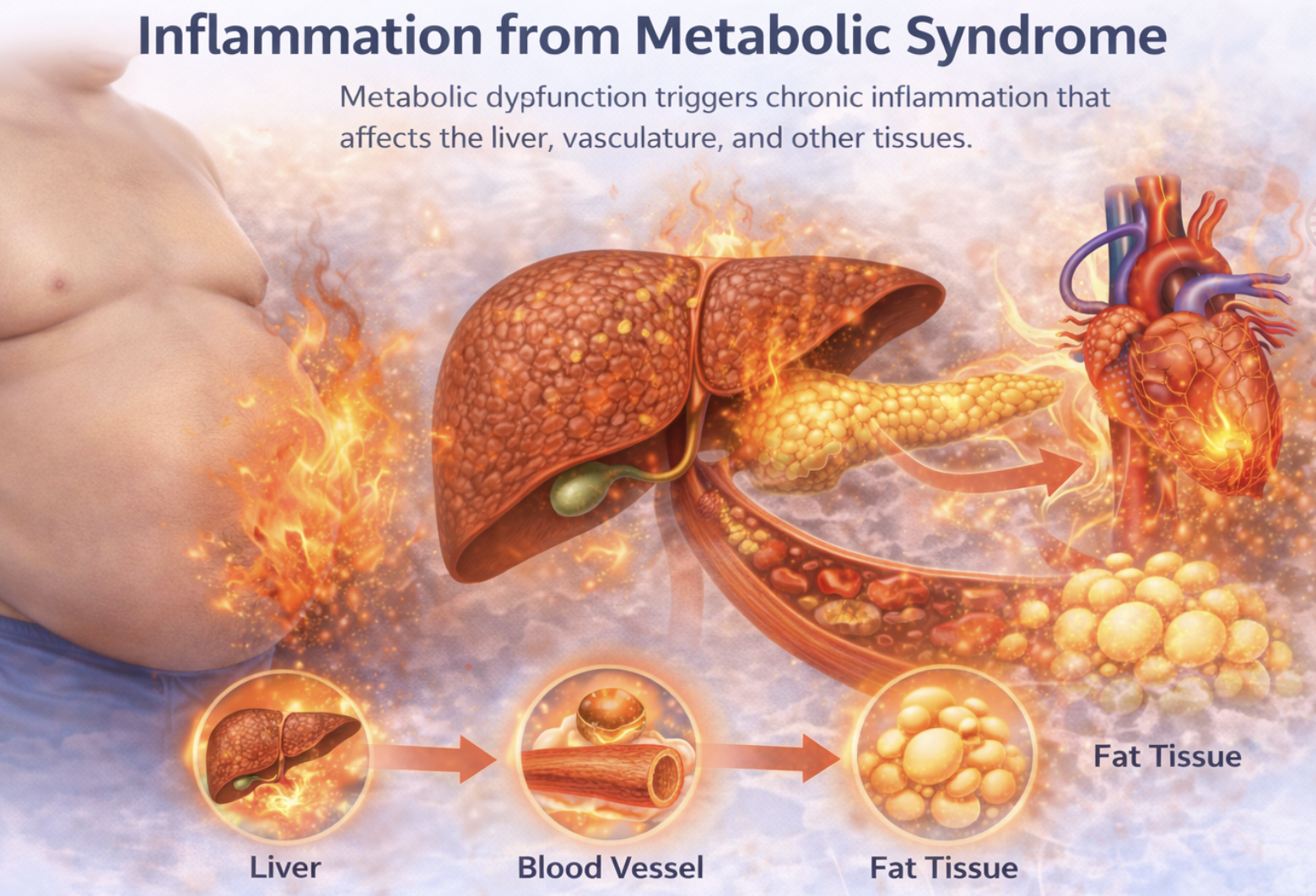
Inflammation is a fundamental biological process that helps the body respond to injury and infection. When tissues are damaged or exposed to harmful stimuli, the immune system activates a series of protective responses designed to eliminate threats and promote healing.
In metabolic disease, however, a different form of inflammation often develops. Instead of the intense, short-lived inflammation seen during infection or injury, metabolic disorders are frequently associated with chronic low-grade inflammation.
This persistent inflammatory signaling can influence metabolic pathways throughout the body and is increasingly recognized as an important component of metabolic syndrome, fatty liver disease, insulin resistance, and cardiovascular disease.
Acute vs. Chronic Inflammation
Inflammation occurs in several forms.
Acute inflammation is a rapid and short-term immune response that occurs when the body encounters infection, injury, or other immediate threats. This process involves immune cell activation, increased blood flow to affected tissues, and the release of signaling molecules that help repair damaged tissue.
Chronic inflammation, by contrast, develops slowly and can persist for long periods of time. Rather than protecting the body from an immediate threat, chronic inflammation often reflects ongoing metabolic stress or tissue dysfunction.
In metabolic disease, this chronic inflammatory state may influence several biological systems simultaneously.
Adipose Tissue and Inflammatory Signaling
Adipose tissue plays an important role in metabolic inflammation.
As adipose tissue expands—particularly visceral fat within the abdominal cavity—immune cells begin to accumulate within the fat tissue. These immune cells release inflammatory signaling molecules known as cytokines.
Examples of these molecules include:
• tumor necrosis factor (TNF)
• interleukin-6 (IL-6)
• other inflammatory mediators
These signals can interfere with insulin signaling pathways and contribute to the development of insulin resistance.
Because visceral adipose tissue produces particularly strong inflammatory signals, abdominal obesity is closely linked with metabolic inflammation.
The Liver and Inflammatory Pathways
The liver also participates in inflammatory regulation.
When metabolic stress develops—such as the accumulation of fat within hepatocytes—the liver may produce inflammatory proteins that circulate through the bloodstream.
One example is C-reactive protein (CRP), an acute-phase protein often measured in clinical settings as a marker of systemic inflammation.
Inflammatory processes within the liver can also influence lipid metabolism, glucose regulation, and vascular signaling.
Because of these effects, liver inflammation may contribute to broader cardiometabolic risk.
Inflammation and Insulin Resistance
Chronic inflammatory signaling can disrupt insulin signaling pathways within several tissues.
Cytokines produced by adipose tissue and immune cells may interfere with intracellular signaling cascades that normally allow cells to respond to insulin. When these pathways are disrupted, tissues become less sensitive to insulin’s metabolic effects.
This process contributes to insulin resistance, a key component of metabolic syndrome and type 2 diabetes.
As insulin resistance develops, the pancreas compensates by producing more insulin. Over time, this compensation may become insufficient, leading to elevated blood glucose levels.
Inflammation and Cardiovascular Disease
Inflammation also plays an important role in cardiovascular disease.
Inflammatory signaling can affect the endothelium, the thin layer of cells that lines blood vessels. Endothelial dysfunction may impair normal vascular regulation and promote the development of atherosclerotic plaque.
Within arterial walls, inflammatory processes can accelerate plaque formation and increase the likelihood that plaques will rupture. When rupture occurs, blood clots may form and obstruct blood flow, leading to heart attacks or strokes.
For this reason, chronic inflammation is now considered an important contributor to cardiovascular risk.
A Systemic Process
Metabolic inflammation illustrates how multiple organs interact during metabolic disease.
Adipose tissue, the liver, the vascular system, and immune signaling pathways form a network of metabolic communication. When this network becomes disrupted by metabolic overload, inflammatory signals may propagate throughout the body.
This systemic perspective helps explain why metabolic disorders often affect multiple organs simultaneously.
Research and Therapeutic Implications
Research into metabolic inflammation continues to expand. Scientists are investigating how dietary patterns, physical activity, and metabolic signaling pathways influence inflammatory responses.
Some therapies aimed at improving metabolic health may also reduce inflammatory signaling. Lifestyle interventions that improve insulin sensitivity and reduce visceral adiposity often lower markers of systemic inflammation.
Understanding the biological relationship between metabolism and inflammation may therefore provide new opportunities for preventing and treating metabolic disease.
Related Topics
Readers interested in the metabolic pathways discussed on this page may also explore:
• Visceral Fat and Metabolic Health
• Insulin Resistance
• Fatty Liver Disease (MASLD)
• Metabolic Syndrome and Cardiovascular Disease
These pages examine additional aspects of the metabolic processes associated with chronic inflammation.