Early Diabetes in Progress
What is prediabetes?
Prediabetes is a state in which blood glucose levels are elevated above normal but not yet in the range used to diagnose Type 2 diabetes.
In clinical terms, it is often defined as:
- fasting glucose: 100–125 mg/dL
- HbA1c: 5.7–6.4%
These thresholds are based on population risk. They do not represent a biological boundary between health and disease.
A transitional state, not a stable condition
Prediabetes is often described as a “risk state.”
In practice, it is better understood as:
👉 ongoing metabolic dysfunction that has not yet reached diagnostic thresholds for diabetes
The underlying processes are already present:
- insulin resistance
- increased liver glucose production
- rising triglycerides
- early liver fat accumulation
These changes do not begin at the moment glucose crosses a diagnostic line. They develop gradually over time.
What is happening in the body
In prediabetes:
- the liver releases more glucose than normal
- insulin becomes less effective
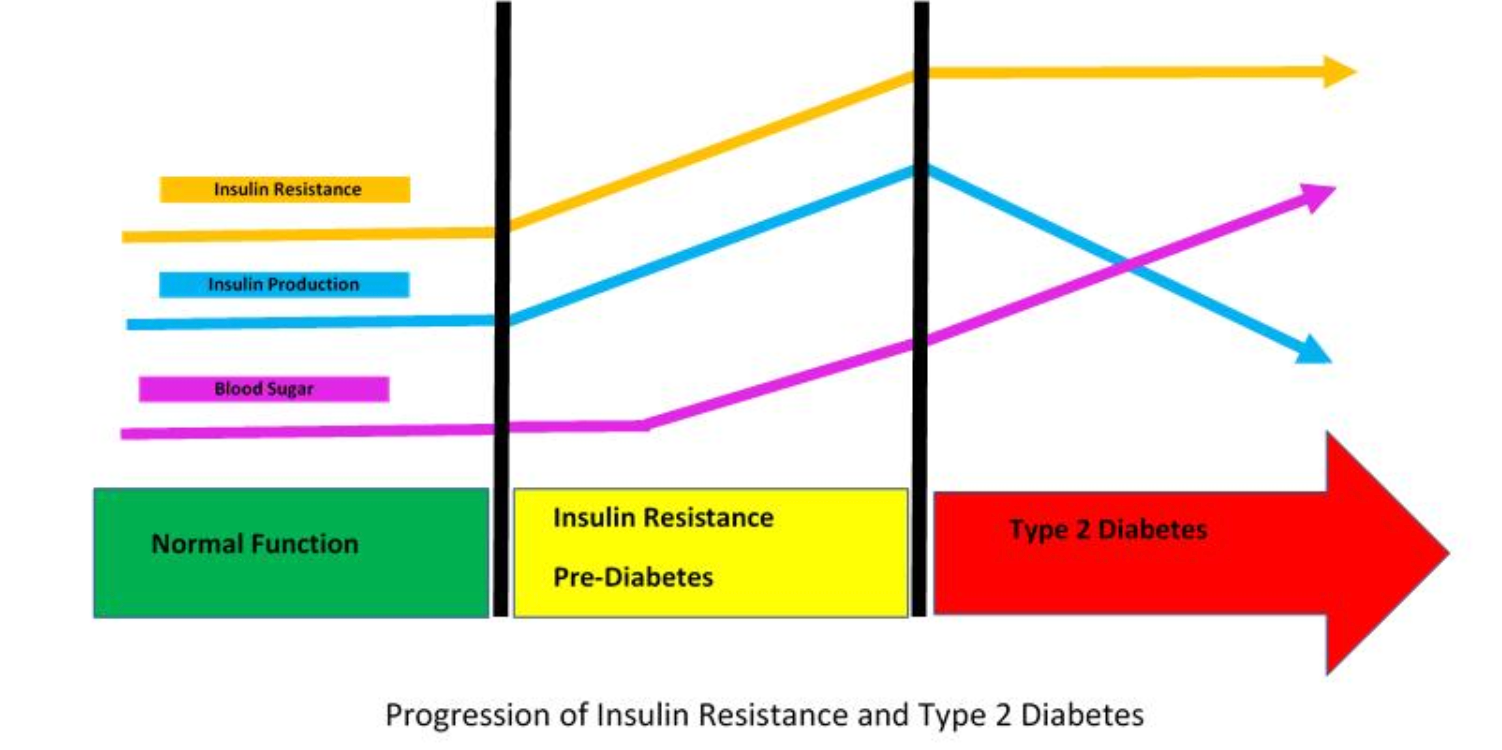
- the pancreas compensates by increasing insulin output
For a period of time, this compensation keeps glucose from rising further.
Over time, this balance becomes unstable.
Why fasting glucose rises
Fasting glucose reflects liver activity.
As metabolic stress increases:
- liver fat accumulates
- insulin signaling weakens
- glucose production becomes less regulated
This leads to:
- gradual elevation of fasting glucose
- progression toward diabetes
The role of insulin resistance
Insulin resistance is central.
It affects:
- muscle (reduced glucose uptake)
- liver (increased glucose output)
- adipose tissue (increased fat release and signaling changes)
These changes are already present in prediabetes.
Relationship to fatty liver
Prediabetes is strongly linked to:
👉 metabolic dysfunction–associated steatotic liver disease (MASLD)
In many individuals:
- liver fat accumulation occurs before glucose rises
- insulin resistance develops in parallel
- fasting glucose rises later
This means:
👉 prediabetes often reflects already established metabolic disease. Glucose rises later—the underlying metabolic disease develops much earlier.
Progression to diabetes
Without intervention, prediabetes frequently progresses to Type 2 diabetes.
Progression is driven by:
- continued metabolic overload
- worsening insulin resistance
- eventual failure of pancreatic compensation
The timeline varies, but the direction is consistent.
Why it matters clinically
Prediabetes is not benign.
It is associated with:
- increased cardiovascular risk
- early vascular changes
- metabolic syndrome
- fatty liver disease
These risks begin before diabetes is formally diagnosed.
Limitations of the definition
Prediabetes is defined by thresholds, but biology is continuous.
Important points:
- glucose levels rise gradually
- metabolic dysfunction precedes diagnosis
- “normal” values may still reflect early disease
The label “prediabetes” may underestimate the underlying process.
What drives prediabetes
The same factors that drive metabolic disease are already active:
- refined carbohydrates
- sugary beverages
- frequent eating patterns
- ultra-processed foods
These create:
- repeated glucose exposure
- high insulin demand
- sustained metabolic stress
Practical interpretation
Prediabetes should be viewed as:
👉 early diabetes in development
It indicates that:
- metabolic regulation is already impaired
- underlying disease processes are active
- progression is likely without change
Bottom line
Prediabetes is not a harmless warning.
It is a measurable stage of metabolic disease characterized by insulin resistance, liver involvement, and rising glucose levels.
The distinction between prediabetes and diabetes is based on thresholds, not on a fundamental difference in biology.
Related pages
Fasting Glucose
HbA1c
Insulin Resistance
Type 2 Diabetes
Metabolic Syndrome