Introduction
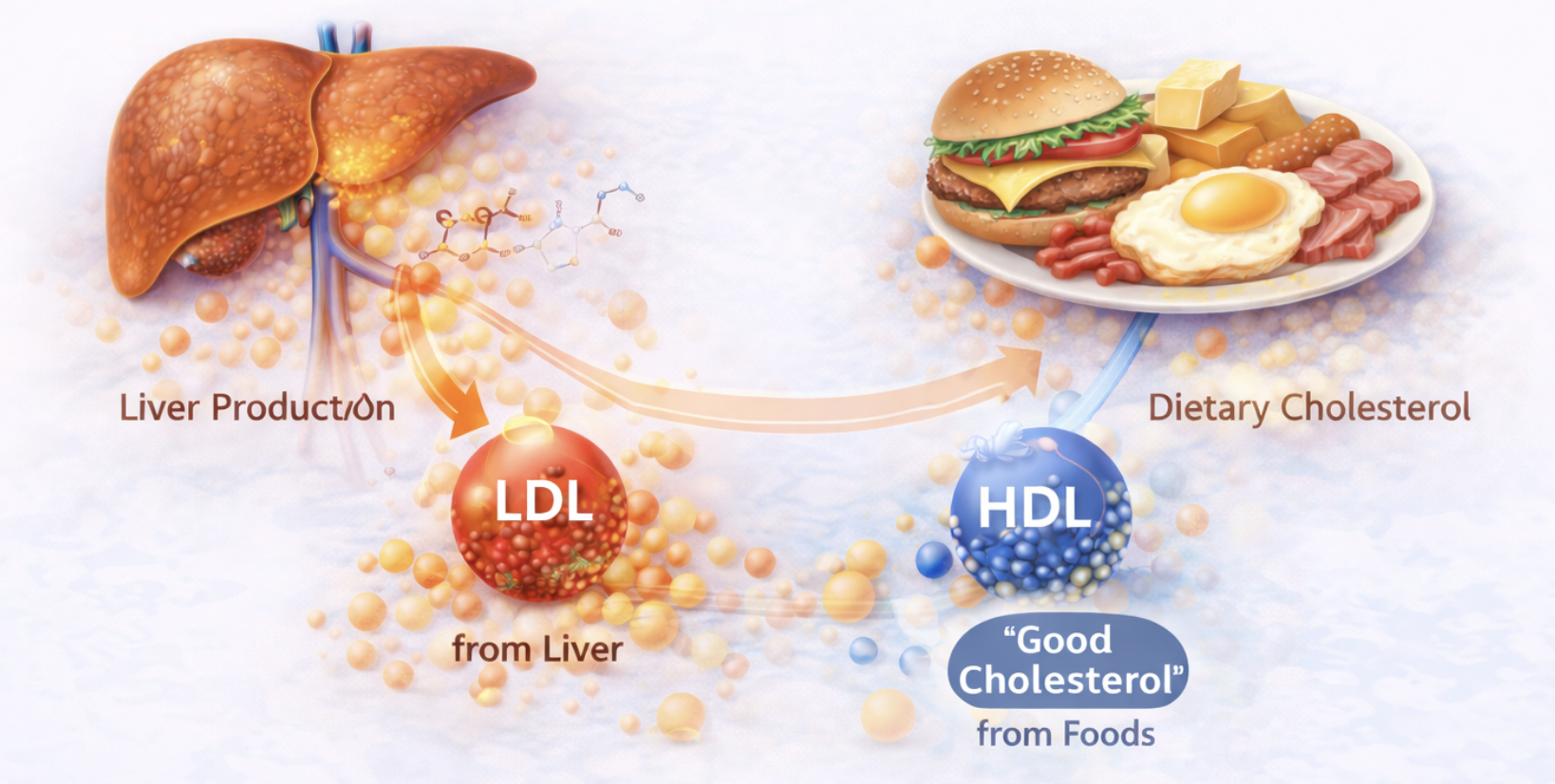
Cholesterol is a waxy, fat-like substance that circulates in the bloodstream and is present in every cell of the body. Although cholesterol is often discussed in connection with heart disease, it performs several essential biological functions that are necessary for normal health.
Cholesterol helps maintain cell membrane structure, serves as a precursor for steroid hormones, and contributes to the production of bile acids that aid digestion.
Because cholesterol does not dissolve in blood, it must be transported through the bloodstream inside specialized particles known as lipoproteins.
Where Cholesterol Comes From
Cholesterol in the body originates from two main sources:
• cholesterol produced by the liver
• cholesterol obtained from certain foods
The liver synthesizes most of the cholesterol required for normal physiological functions. Dietary cholesterol contributes a smaller portion of the body’s total cholesterol pool.
The body carefully regulates cholesterol production. When dietary cholesterol intake increases, the liver often reduces its own production to maintain balance.
Cholesterol Transport
Because cholesterol cannot move freely through the bloodstream, it travels inside lipoprotein particles.
The most commonly discussed lipoproteins include:
• LDL (low-density lipoprotein)
• HDL (high-density lipoprotein)
LDL particles transport cholesterol from the liver to tissues throughout the body. HDL particles help collect excess cholesterol from tissues and return it to the liver in a process known as reverse cholesterol transport.
These transport systems allow cholesterol to circulate between organs as needed.
Cholesterol and the Brain
Cholesterol also plays a crucial role in the nervous system, particularly in the brain.
Approximately 20–25 percent of the body’s total cholesterol is found in the brain, where it contributes to several essential neurological functions.
Cholesterol is a structural component of neuronal cell membranes and is necessary for the formation of synapses, the communication points between neurons. It also plays an important role in the formation of myelin, the insulating sheath that surrounds nerve fibers and helps electrical signals travel efficiently through the nervous system.
Unlike many other tissues, the brain produces most of its cholesterol locally rather than relying on cholesterol circulating in the bloodstream. This specialized regulation highlights how important cholesterol is for normal brain function.
Cholesterol and Cardiovascular Disease
Although cholesterol is essential for many biological functions, elevated levels of certain lipoproteins—particularly LDL—can contribute to cardiovascular disease.
When LDL particles accumulate in excess within the bloodstream, they may enter the walls of arteries. Over time, these particles can contribute to the formation of atherosclerotic plaque.
As plaque builds up, arteries may narrow and blood flow can become restricted. If a plaque ruptures, it may trigger the formation of a blood clot that blocks circulation, potentially leading to a heart attack or stroke.
Cholesterol and Metabolic Health
Cholesterol metabolism is closely linked with broader metabolic physiology.
Disturbances in insulin signaling, liver metabolism, and lipid transport can influence cholesterol levels and lipoprotein patterns.
For example, individuals with metabolic syndrome often exhibit lipid abnormalities such as:
• elevated triglycerides
• reduced HDL cholesterol
• increased small dense LDL particles
These lipid patterns reflect interactions between cholesterol metabolism and metabolic disease.
Managing Cholesterol Levels
Several factors influence cholesterol levels, including genetics, lifestyle, and metabolic health.
Approaches that may help maintain healthy cholesterol levels include:
• improving dietary patterns
• increasing physical activity
• reducing excess body weight
• managing blood pressure and blood sugar
• medications when appropriate
Because cholesterol metabolism interacts with many metabolic systems, improving overall metabolic health often improves lipid balance.
Related Topics
Readers interested in cholesterol and lipid metabolism may explore:
• Triglycerides and Cardiovascular Risk
• HDL Cholesterol and Metabolic Health
• Small Dense LDL and Atherosclerosis
These articles examine how lipid metabolism interacts with cardiovascular and metabolic health.