Introduction
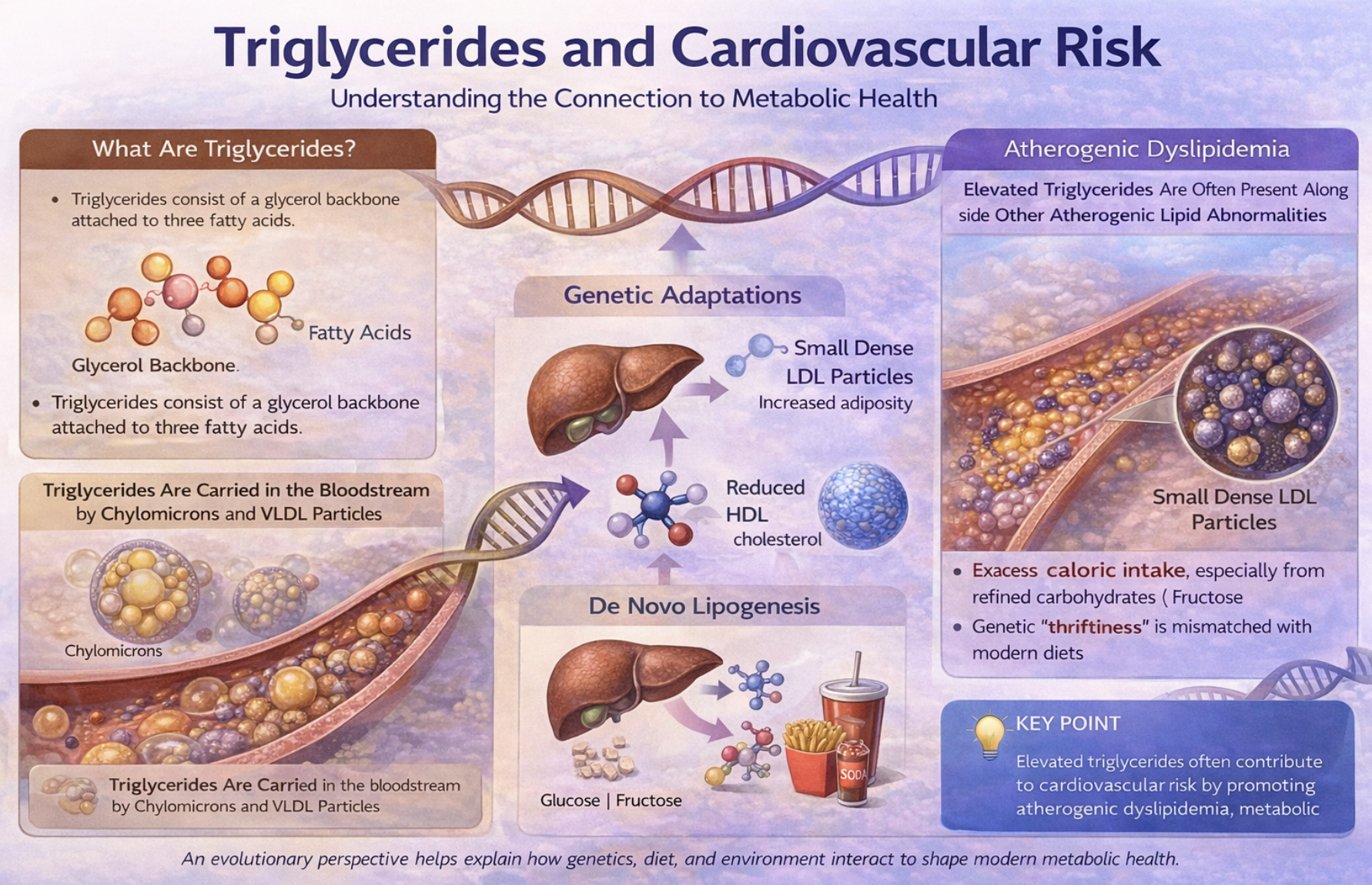
Triglycerides are a type of lipid that circulates in the bloodstream and serves as an important source of stored energy. After meals, triglycerides transport excess dietary energy to tissues where it can be used immediately or stored for later use.
Although triglycerides play a normal physiological role in energy metabolism, persistently elevated triglyceride levels are frequently associated with metabolic disorders such as insulin resistance, fatty liver disease, and metabolic syndrome.
In recent decades, researchers have increasingly recognized that elevated triglycerides may also contribute to cardiovascular disease, particularly when they occur alongside other metabolic abnormalities.
What Are Triglycerides?
Triglycerides are molecules composed of three fatty acids attached to a glycerol backbone. They represent the primary form in which the body stores fat.
Triglycerides originate from two main sources:
• dietary fat absorbed in the intestine
• fatty acids synthesized in the liver through de novo lipogenesis
After formation, triglycerides are transported in the bloodstream within lipoprotein particles such as very-low-density lipoproteins (VLDL) and chylomicrons.
These lipoproteins deliver fatty acids to tissues where they can be used for energy or stored in adipose tissue.
Triglycerides and Lipoprotein Metabolism
Triglyceride metabolism is closely linked with the broader lipoprotein system that transports lipids through the bloodstream.
The liver synthesizes triglycerides and packages them into VLDL particles, which circulate through the bloodstream and deliver fatty acids to tissues. As triglycerides are removed from VLDL particles, they gradually transform into other lipoproteins, including low-density lipoproteins (LDL).
This process connects triglyceride metabolism with the lipid pathways involved in atherosclerosis.
Elevated Triglycerides
Elevated triglyceride levels, known as hypertriglyceridemia, are common in individuals with metabolic syndrome.
Several metabolic conditions may contribute to elevated triglycerides, including:
• insulin resistance
• fatty liver disease
• excess caloric intake
• high consumption of refined carbohydrates
• visceral adiposity
When triglyceride levels remain elevated over time, they often appear alongside other metabolic abnormalities.
Atherogenic Dyslipidemia
High triglyceride levels frequently occur within a broader lipid pattern known as atherogenic dyslipidemia.
This pattern includes:
• elevated triglycerides
• reduced HDL cholesterol
• increased small, dense LDL particles
These lipid abnormalities are associated with increased cardiovascular risk because they promote the formation of atherosclerotic plaques within arterial walls.
Small, dense LDL particles in particular are considered more likely to penetrate arterial tissue and contribute to plaque formation.
Triglycerides and Insulin Resistance
Insulin resistance plays an important role in triglyceride metabolism.
When insulin signaling becomes impaired, the liver may produce larger amounts of triglyceride-rich lipoproteins. At the same time, tissues become less effective at clearing triglycerides from the bloodstream.
This combination leads to elevated circulating triglyceride levels, which often serve as a marker of metabolic dysfunction.
Because insulin resistance also contributes to fatty liver disease and metabolic syndrome, triglyceride levels often reflect the broader metabolic environment.
Fructose and Triglyceride Production
As discussed elsewhere on this site, fructose metabolism in the liver can contribute to increased lipid synthesis through the pathway of de novo lipogenesis.
When excess carbohydrate substrates are converted into fatty acids, these fatty acids are assembled into triglycerides within hepatocytes. The resulting triglycerides may accumulate in the liver or be exported into circulation as VLDL particles.
For this reason, elevated triglycerides often appear alongside fatty liver disease and other metabolic disturbances.
Clinical Significance
Triglyceride levels are routinely measured in lipid panels used to assess cardiovascular risk.
Typical fasting triglyceride categories include:
• Normal: less than 150 mg/dL
• Borderline high: 150–199 mg/dL
• High: 200–499 mg/dL
• Very high: 500 mg/dL or greater
Although triglycerides are only one component of cardiovascular risk assessment, elevated levels often indicate underlying metabolic abnormalities that may contribute to cardiovascular disease.
Improving Triglyceride Levels
Several lifestyle factors influence triglyceride levels.
Interventions that may help reduce elevated triglycerides include:
• improved dietary patterns
• reduction of excess caloric intake
• increased physical activity
• weight reduction when appropriate
• improved glucose regulation
Because triglycerides are closely linked to overall metabolic health, improvements in metabolic physiology often lead to reductions in triglyceride levels.
Related Topics
Readers interested in the metabolic pathways discussed on this page may also explore:
• De Novo Lipogenesis
• Fructose and Fatty Liver
• Insulin Resistance
• Metabolic Syndrome and Cardiovascular Disease
These pages examine the metabolic processes that influence lipid metabolism and cardiovascular risk.