Introduction
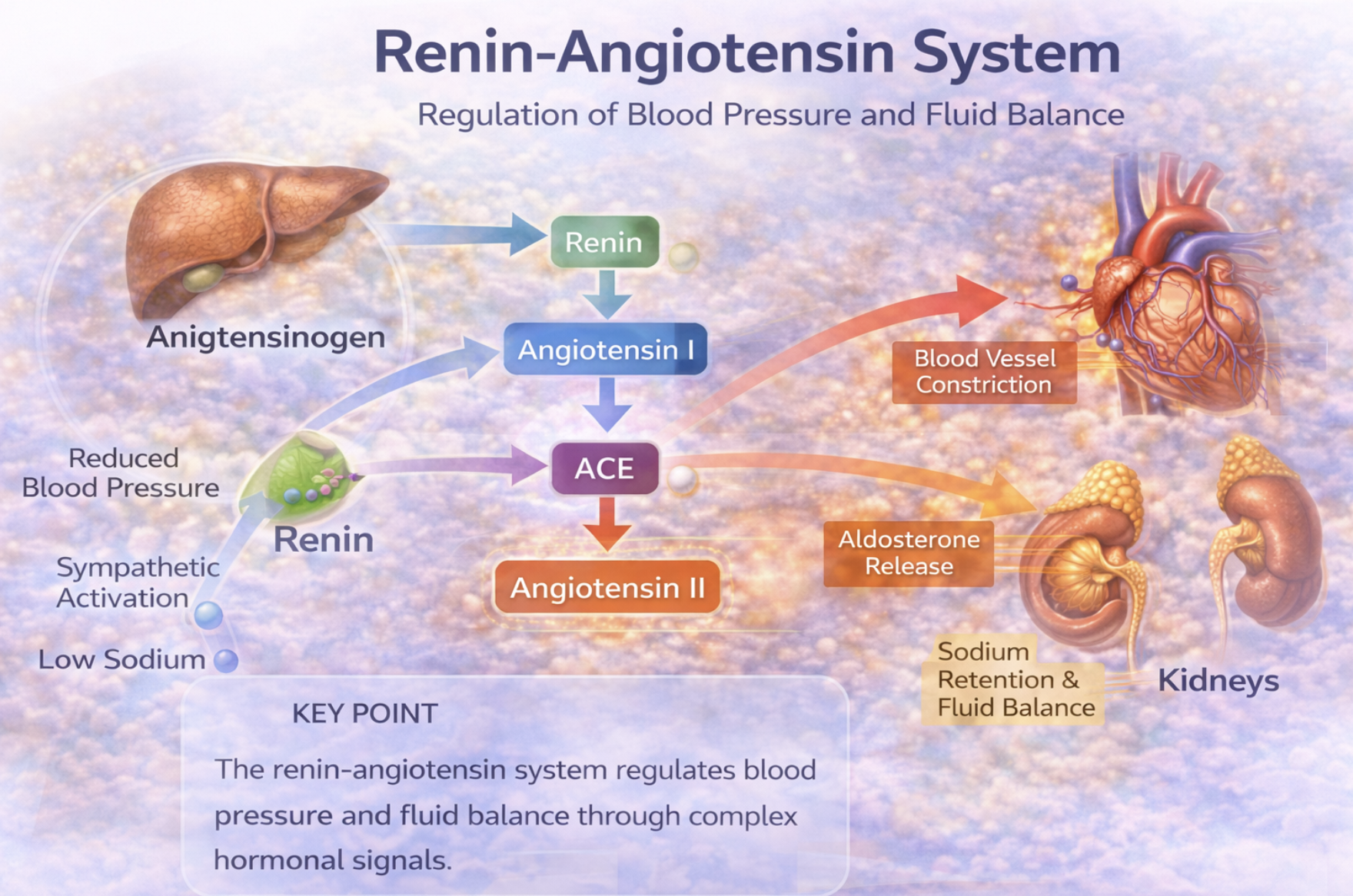
Blood pressure regulation depends on several interconnected physiological systems that control vascular tone, fluid balance, and hormonal signaling. One of the most important of these regulatory systems is the renin–angiotensin–aldosterone system (RAAS).
The RAAS plays a central role in maintaining blood pressure and electrolyte balance. It influences the function of the kidneys, blood vessels, heart, and endocrine system.
In recent decades, researchers have increasingly recognized that this system also interacts with metabolic pathways associated with obesity, insulin resistance, and metabolic syndrome. Understanding the relationship between the RAAS and metabolic disease provides insight into the connections between metabolism and cardiovascular health.
Overview of the RAAS
The renin–angiotensin–aldosterone system operates through a series of hormonal signals that regulate blood pressure and fluid balance.
The process begins when the kidneys release the enzyme renin in response to certain physiological signals, including:
• reduced blood pressure
• reduced sodium levels
• activation of the sympathetic nervous system
Renin initiates a cascade of reactions that lead to the formation of angiotensin II, a powerful signaling molecule involved in vascular regulation.
Formation of Angiotensin II
The RAAS cascade proceeds through several steps:
- The liver produces a protein called angiotensinogen.
- Renin converts angiotensinogen into angiotensin I.
- An enzyme called angiotensin-converting enzyme (ACE) converts angiotensin I into angiotensin II.
Angiotensin II acts on multiple organs throughout the body to regulate blood pressure and fluid balance.
Effects of Angiotensin II
Angiotensin II produces several physiological effects that increase blood pressure:
• constriction of blood vessels
• stimulation of aldosterone release from the adrenal glands
• increased sodium reabsorption by the kidneys
• stimulation of thirst and fluid intake
• activation of the sympathetic nervous system
Through these mechanisms, the RAAS helps maintain circulation during conditions such as dehydration or low blood pressure.
RAAS and Hypertension
When RAAS signaling becomes persistently activated, it can contribute to chronic hypertension.
Excessive vasoconstriction, sodium retention, and fluid retention can elevate blood pressure over time. For this reason, medications that inhibit components of the RAAS—such as ACE inhibitors and angiotensin receptor blockers (ARBs)—are widely used to treat hypertension.
These medications reduce the effects of angiotensin II and help lower blood pressure.
Interaction with Metabolic Disease
Research has shown that RAAS activity may also interact with metabolic pathways.
In individuals with obesity and metabolic syndrome, several factors may contribute to increased RAAS activation, including:
• visceral adiposity
• insulin resistance
• inflammatory signaling
• altered kidney function
Adipose tissue itself can produce components of the RAAS, creating additional hormonal signals that influence blood pressure regulation.
These interactions illustrate how metabolic disturbances can affect cardiovascular physiology.
RAAS and Insulin Resistance
Some studies suggest that angiotensin II may influence insulin signaling pathways.
Angiotensin II can promote oxidative stress and inflammatory signaling, both of which may impair insulin sensitivity in tissues such as skeletal muscle and adipose tissue.
Because insulin resistance is a central feature of metabolic syndrome, these interactions have attracted considerable interest in metabolic research.
Cardiovascular and Renal Effects
Persistent activation of the RAAS can affect multiple organs.
In the cardiovascular system, angiotensin II can promote vascular remodeling and contribute to the development of hypertension.
In the kidneys, RAAS activation influences sodium retention and fluid balance, which can further elevate blood pressure.
Over time, these processes can contribute to cardiovascular and renal complications in individuals with metabolic disease.
A Systems Perspective
The renin–angiotensin–aldosterone system illustrates how metabolic and cardiovascular physiology are closely interconnected.
Metabolic disturbances involving adipose tissue, insulin signaling, and inflammation can influence RAAS activity. In turn, RAAS activation can affect blood pressure, vascular function, and kidney physiology.
Viewing these interactions through a systems perspective helps clarify the complex relationships between metabolic health and cardiovascular disease.
Related Topics
Readers interested in the metabolic and cardiovascular pathways discussed on this page may also explore:
• Fructose and Hypertension
• Metabolic Syndrome and Cardiovascular Disease
• Insulin Resistance
• Visceral Adiposity and Inflammatory Signaling
These articles examine the physiological pathways linking metabolism and cardiovascular risk.