Introduction
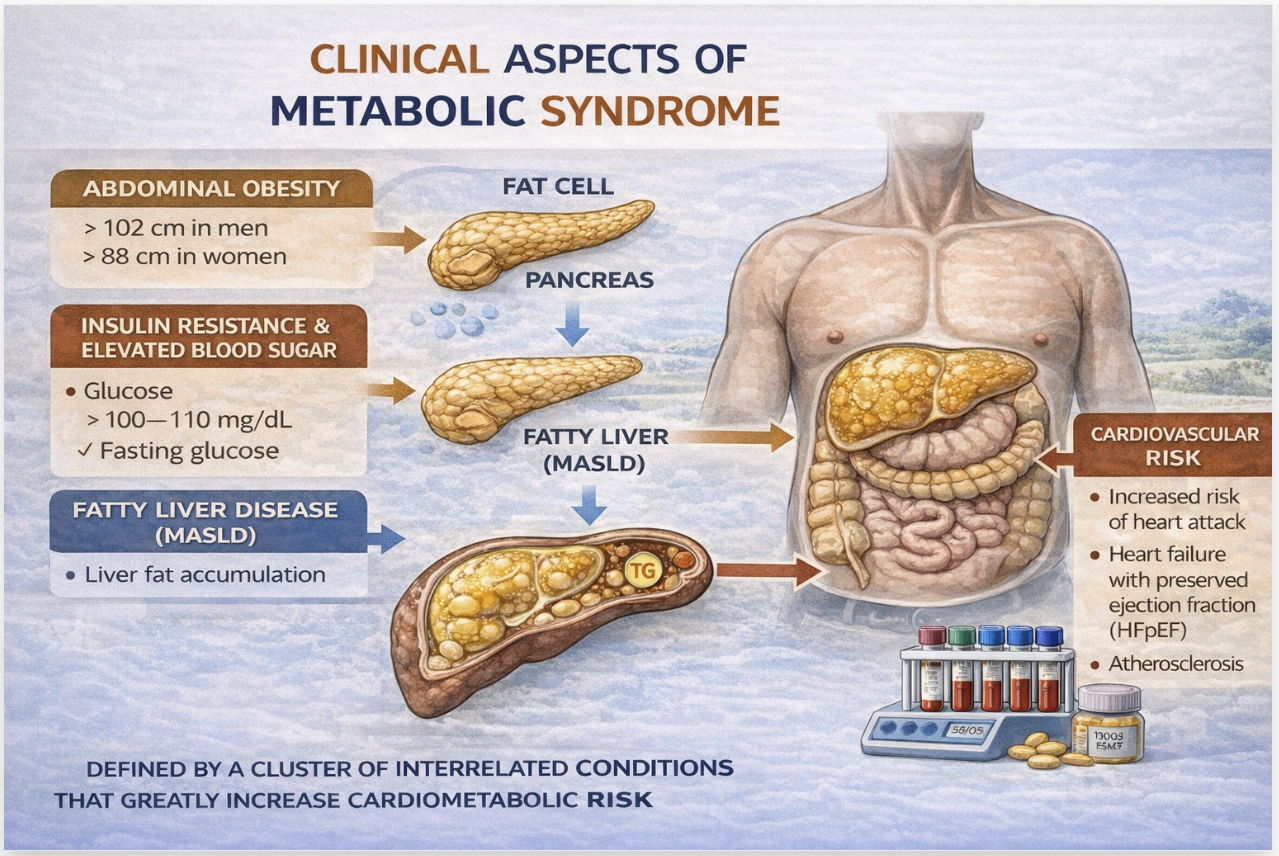
Unknown as a diagnosis prior to 1998, metabolic syndrome is a clinical term used to describe a cluster of metabolic abnormalities that tend to appear together in the same individual. These abnormalities typically include abdominal obesity, elevated triglycerides, reduced HDL cholesterol, high blood pressure, and impaired glucose regulation.
When several of these features occur simultaneously, the risk of cardiovascular disease and type 2 diabetes increases substantially.
Although metabolic syndrome is defined by specific diagnostic criteria, it is best understood not as a single disease but as a pattern of metabolic dysfunction involving multiple organ systems.
Diagnostic Features
Different medical organizations use slightly different definitions, but metabolic syndrome generally involves the presence of several of the following factors:
• increased waist circumference or abdominal obesity
• elevated triglyceride levels
• reduced HDL cholesterol
• elevated blood pressure
• elevated fasting glucose or insulin resistance
The presence of three or more of these features typically meets the clinical definition of metabolic syndrome.
These diagnostic criteria are designed to identify individuals who may be at increased risk for future cardiometabolic disease.
Insulin Resistance
One of the central biological processes associated with metabolic syndrome is insulin resistance.
Insulin is a hormone produced by the pancreas that allows cells to absorb glucose from the bloodstream. When tissues become less responsive to insulin, the body compensates by producing higher levels of the hormone.
Over time, this compensatory response may fail to maintain normal glucose regulation. Blood sugar levels may gradually rise, eventually progressing to prediabetes or type 2 diabetes.
Insulin resistance is closely linked with visceral adiposity, liver fat accumulation, and chronic metabolic stress.
Visceral Fat and Adipose Signaling
Body fat distribution plays an important role in metabolic health. Fat stored deep within the abdomen — known as visceral adipose tissue — appears to have particularly strong metabolic effects.
Visceral fat releases free fatty acids and signaling molecules that influence inflammation, lipid metabolism, and insulin sensitivity. When visceral adiposity increases, these signals can contribute to metabolic dysfunction in the liver, pancreas, and vascular system.
This process helps explain why abdominal obesity is strongly associated with metabolic syndrome.
The Role of the Liver
The liver occupies a central position in the metabolic processes associated with metabolic syndrome.
When excess energy is delivered to the liver, triglycerides may accumulate within liver cells, leading to metabolic dysfunction–associated steatotic liver disease (MASLD). Liver fat accumulation can disrupt normal glucose and lipid metabolism, contributing to insulin resistance and dyslipidemia.
Elevated liver fat is therefore often viewed as an early indicator of metabolic stress.
Environmental and Lifestyle Factors
Several environmental factors contribute to the development of metabolic syndrome:
• diets high in refined carbohydrates and added sugars, such as high fructose corn syrup
• sedentary lifestyle
• excess caloric intake
• chronic stress and disrupted sleep
• genetic susceptibility with some ethnicities having more fatty liver, others more elevated uric acid, others more heart attacks
These influences interact with biological systems that regulate energy balance, lipid metabolism, and hormonal signaling.
Understanding how environmental exposures interact with metabolic physiology is essential for explaining why metabolic syndrome has become increasingly common.
Cardiovascular Risk
In the United States, while the main focus has been on lipids research and USADA dietary guidelines (until 2026) have not emphasized the dangers of sugar, metabolic syndrome has not seen the appropriate intensity of research, compared to the overwhelming evidence in the international literature to the dangers of added sugars in the American diet.
The incidence of heart failure with preserved ejection fraction (HFpEF) in increasing. The focus of treatment of HFpEF is to treat the co-morbidities. These co-morbidities usually can be summed up in one diagnosis, "metabolic syndrome".

Individuals with metabolic syndrome face an increased risk of cardiovascular disease. Elevated triglycerides, reduced HDL cholesterol, hypertension, and chronic inflammation all contribute to vascular injury over time.
These metabolic disturbances can accelerate the development of atherosclerosis, the process by which fatty deposits accumulate within arterial walls.
Because cardiovascular disease remains one of the leading causes of death worldwide, identifying metabolic syndrome early can be important for preventive care.
Prevention and Management
Management of metabolic syndrome typically focuses on reducing the underlying metabolic stress contributing to these conditions.
Common strategies include:
• improving diet quality
• increasing physical activity
• reducing visceral adiposity
• managing blood pressure and lipid levels
• treating insulin resistance and glucose abnormalities
Because metabolic syndrome involves multiple interacting systems, treatment often requires a comprehensive approach rather than a single intervention.
Related Topics
Readers interested in the biological mechanisms underlying metabolic syndrome may also explore:
• Overview of Metabolic Disease
• History of Sugar before 1984
These topics examine the metabolic pathways and some of the history of sugars that contribute to the development of metabolic syndrome.