The rise of high-fructose corn syrup
By the late twentieth century, agricultural and economic forces had reshaped the sweetener landscape.
Large-scale corn production created an abundant supply of inexpensive raw material. At the same time, sugar tariffs kept cane sugar relatively costly.
This led to the development and rapid adoption of high-fructose corn syrup (HFCS) — a liquid sweetener that was:
- inexpensive
- easy to transport and mix
- highly stable in processed foods and beverages
HFCS provided the food industry with a scalable alternative to traditional sugar.
1984: the inflection point
Two developments made 1984 especially important.
The first event
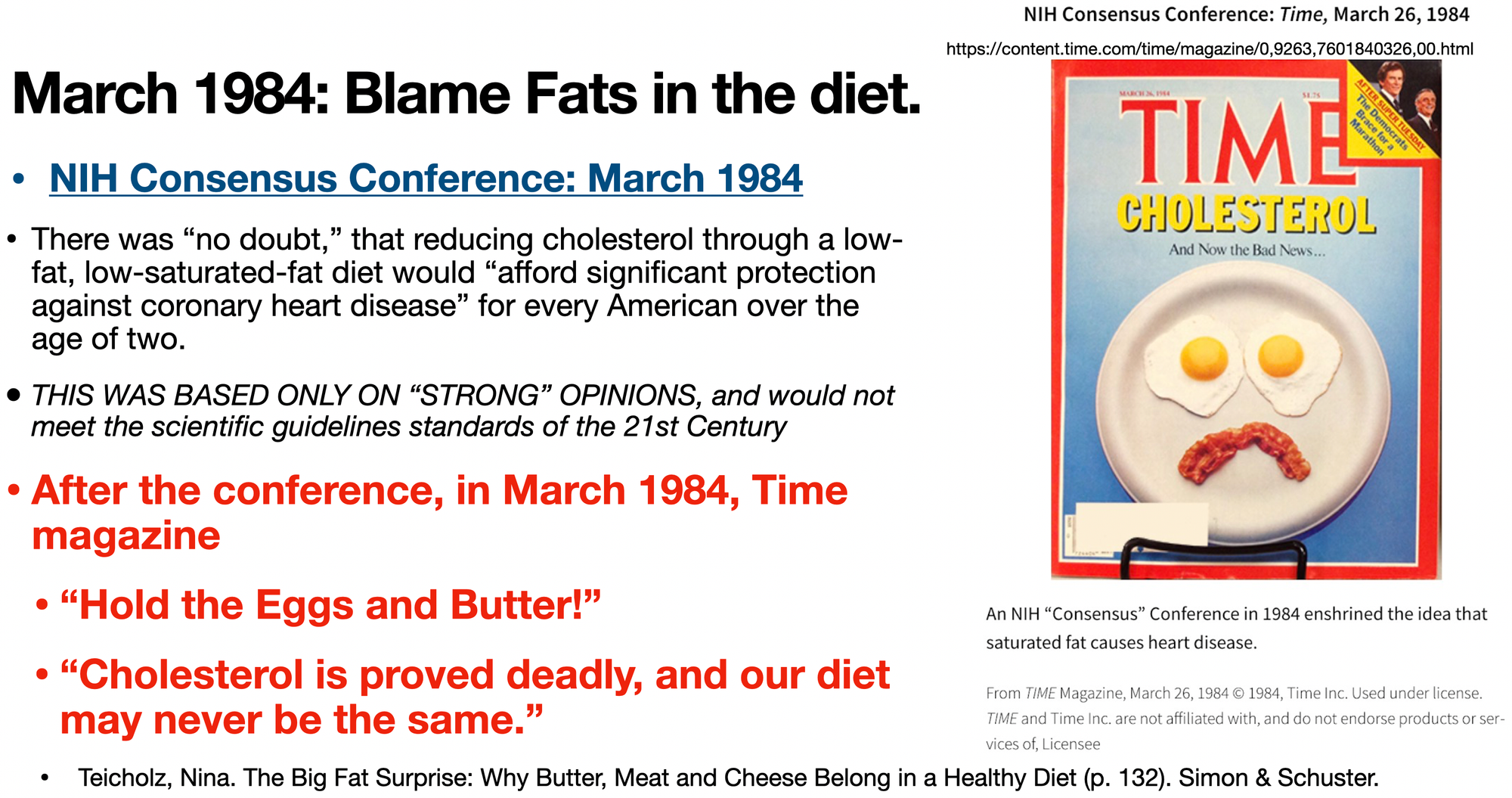
1984 became a year in which sugar and diet entered public debate more visibly, including high-profile discussion in mainstream media and medicine. An NIH conference recommended reduced fats in the diet.
The second event: the beverage industry shift
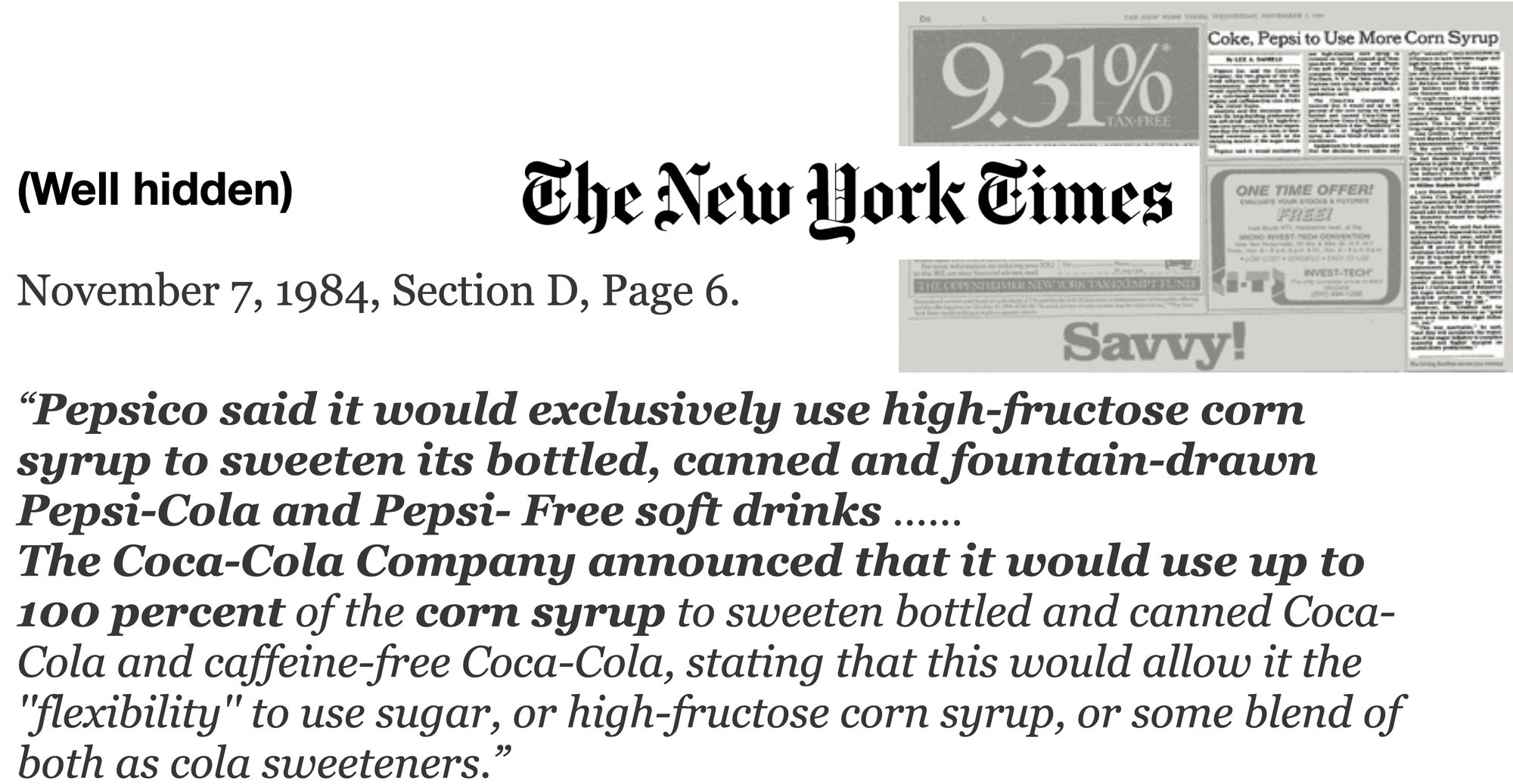
Around 1984, major U.S. beverage manufacturers, including Coca-Cola and Pepsi, transitioned from cane sugar to HFCS as their primary sweetener.
The second event: the beverage industry shift
Around 1984, major U.S. beverage manufacturers, including Coca-Cola and Pepsi, transitioned from cane sugar to HFCS as their primary sweetener.
This moment represents a key inflection point in the modern food system.
The shift was driven by:
- lower cost of corn-derived sweeteners
- agricultural policy favoring corn production
- sugar tariffs that maintained higher cane sugar prices
The consequences were significant:
- reduced production costs
- increased use of liquid sweeteners
- expansion of high-volume sugary beverage consumption
Sugar in liquid form
Sugary beverages became one of the dominant sources of added sugar.
Liquid sugar behaves differently from solid food:
- it is rapidly absorbed
- it bypasses normal satiety signals
- it can be consumed repeatedly
- it delivers large doses of sugar to the liver
This created a new pattern of exposure:
- frequent
- high-dose
- metabolically unbuffered
Unlike traditional diets, sugar was no longer occasional — it became continuous.
Sugar in the modern food environment
Today, added sugars are present in a wide range of processed foods, but sweetened beverages are especially important.
They deliver sugar in a form that is:
- fast
- concentrated
- easy to repeat
- weak in satiety
This differs fundamentally from traditional diets, where sugars were typically consumed within whole foods and in smaller amounts.
Global expansion
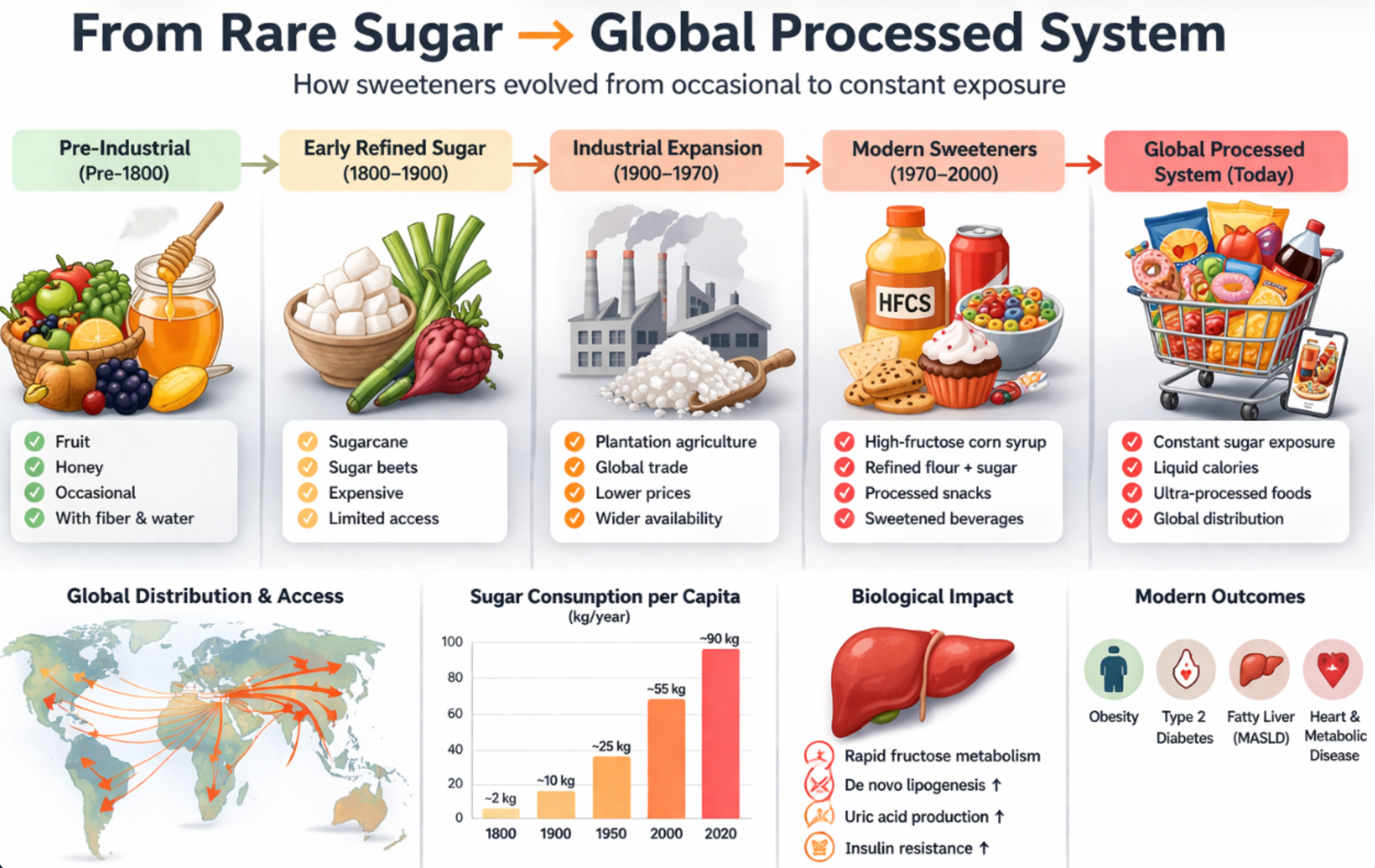
Advances in manufacturing, packaging, and distribution allowed sugar-rich products to spread worldwide.
Processed foods and beverages became:
- widely available
- inexpensive
- shelf-stable
- heavily marketed
Even remote populations began to experience rapid dietary change, often within a single generation.
Changes in eating patterns
As the food environment changed, eating patterns changed with it.
Modern diets increasingly include:
- refined grains
- added sugars
- packaged snack foods
- sweetened beverages
- ready-to-eat meals
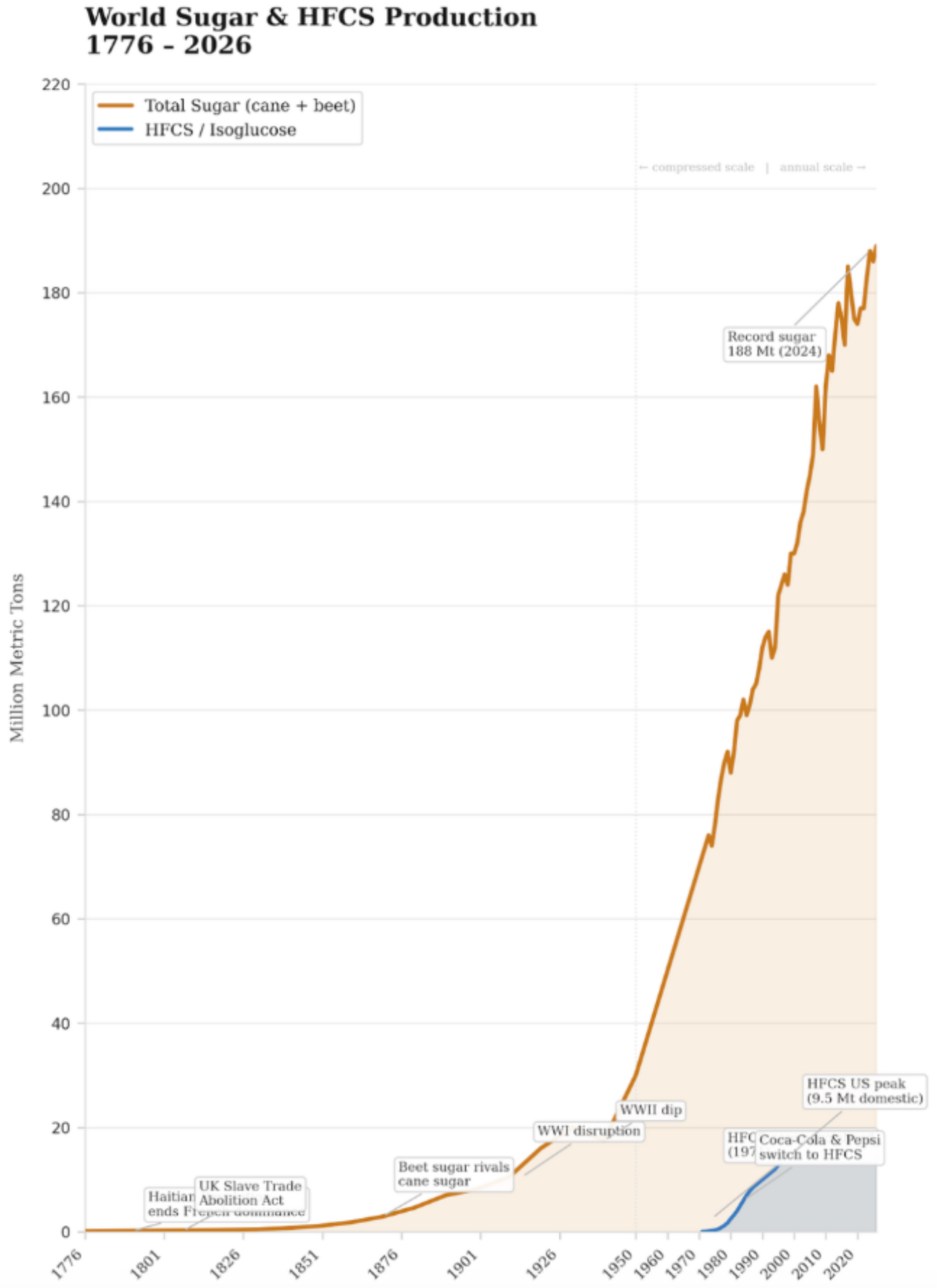
Sugar intake increased not only in quantity, but in frequency throughout the day.
This was a shift from occasional sweetness to constant exposure.
The global nutrition transition
Many regions of the world have undergone a rapid dietary transition.
As urbanization and economic development expanded, traditional diets were increasingly replaced by processed foods and sweetened beverages.
This transition often occurred within a single generation and is now a central part of the global metabolic crisis.
A new metabolic environment
The modern food environment delivers sugar in a way that differs fundamentally from the past:
- higher concentration
- faster absorption
- greater frequency
- reduced fiber and structural buffering
This creates sustained metabolic pressure, particularly on the liver and adipose tissue.
Health implications
This shift has occurred alongside rising rates of:
- obesity
- Type 2 diabetes
- fatty liver disease
- metabolic syndrome
- cardiovascular disease
These conditions share common metabolic pathways:
- insulin resistance
- lipid dysregulation
- chronic low-grade inflammation
The pattern is consistent across regions undergoing dietary transition.
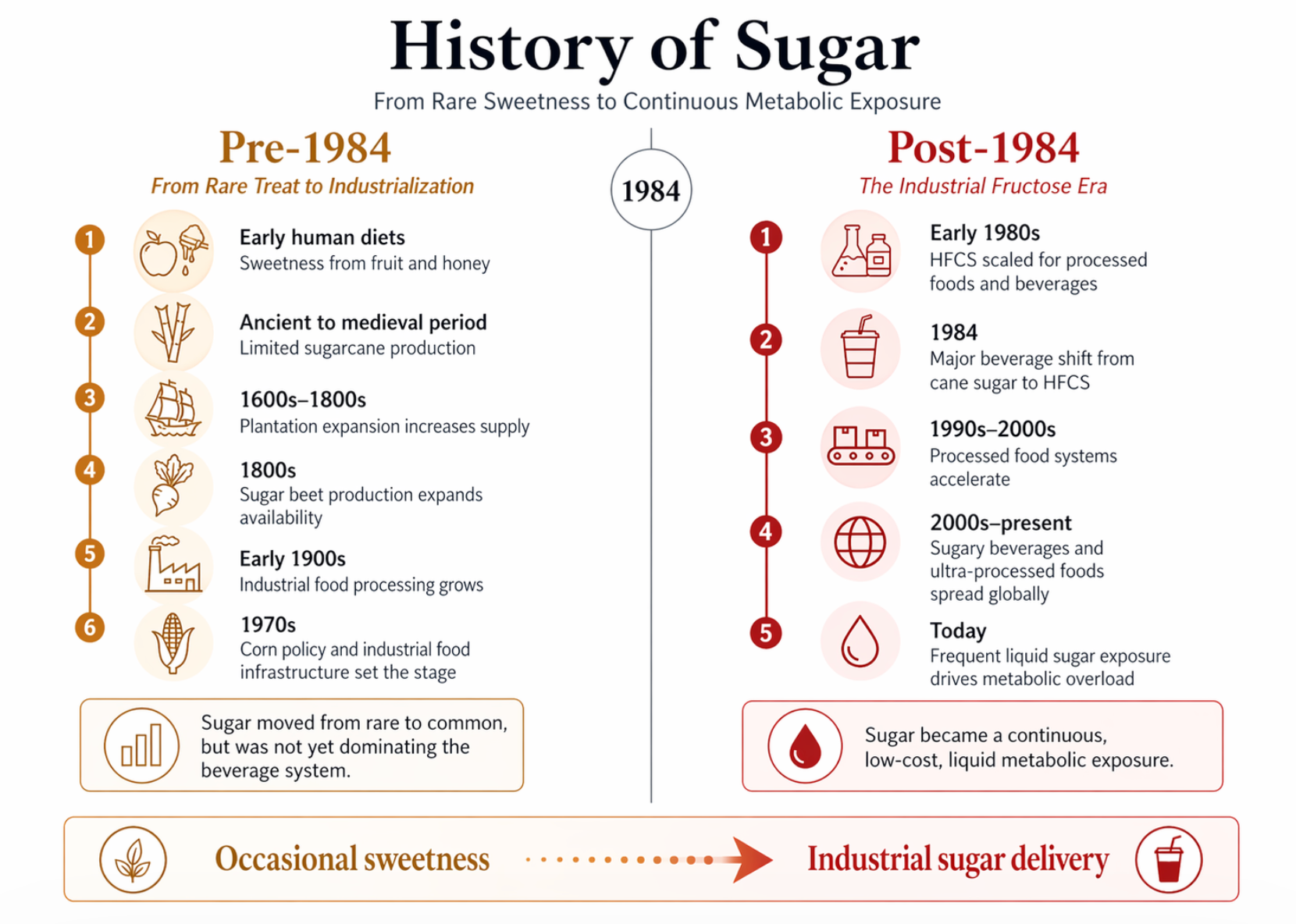
Timeline (Post-1984)
1970s
→ expansion of corn production
Early 1980s
→ development and scaling of HFCS
1984
→ major beverage shift from cane sugar to HFCS
1990s–2000s
→ rapid growth of processed food systems
2000s–present
→ global spread of sugary beverages and ultra-processed foods
Bottom line
The post-1984 era is defined by:
- industrial production of sweeteners
- widespread use of high-fructose corn syrup
- dominance of sugary beverages
- global distribution of processed foods
This shift transformed sugar from a common ingredient into a continuous metabolic exposure, contributing to the rise of modern metabolic disease.
Related pages
History of Sugar (Pre-1984)
Sugary Drinks
Global Metabolic Crisis