Food Section Navigation
Foundations:
Evolution and Diet •
Genes and Food •
Ancestral Foods •
The Modern Diet •
Western Diet and Environment •
Sugar, Processing, and Policy:
History of Sugar (Before 1984) •
History of Sugar (After 1984) •
Sugary Drinks •
International Dietary Practices •
USDA Dietary Guidelines •
Glycemic and Starch Framework:
Glycemic Index vs Load •
Safe Starches •
Dangerous Starches •
Practical Food Pages:
Root Crops •
Legumes •
Safe Nuts •
Rice •
Bread
The Core Distinction
- Glycemic Index (GI) = how fast a food raises blood glucose
- Glycemic Load (GL) = how much glucose a typical portion delivers
👉 GI = speed
👉 GL = total metabolic impact
Glycemic Index (GI)
Definition:
Relative ranking (0–100) of how quickly a food raises blood glucose compared to pure glucose.
Categories:
- Low: ≤55
- Moderate: 56–69
- High: ≥70
Examples:
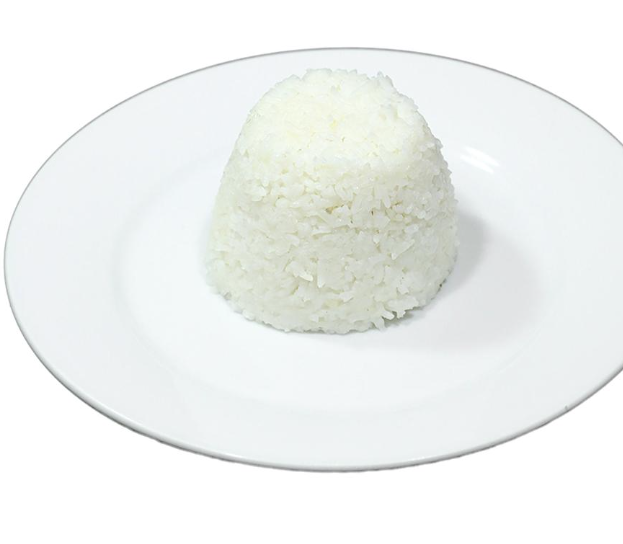
- Basmati rice → lower GI
- Jasmine rice → high GI
- Lentils → low GI
Limitation:
GI ignores portion size.
Glycemic Load (GL)

Definition:
GL = (GI × grams of carbohydrate per serving) ÷ 100
Categories:
- Low: ≤10
- Moderate: 11–19
- High: ≥20
Key Insight:
A food can have:
- High GI but low GL → small portion
- Moderate GI but high GL → large portion
Clinical Reality
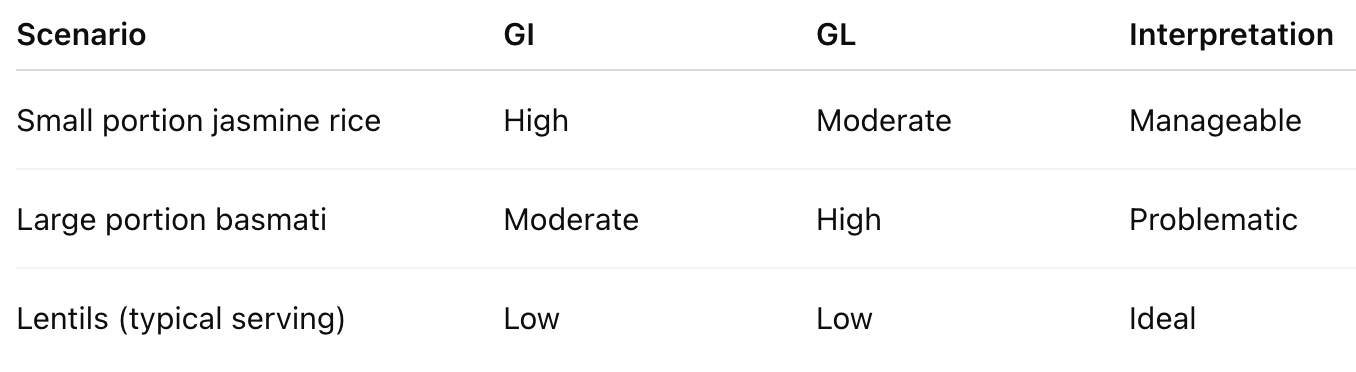
👉 Portion size often matters more than GI alone
Why This Matters
Modern diets combine:
- High-GI foods
- Large portions
- Frequent intake
This creates:
- Repeated glucose spikes
- Chronic insulin exposure
- Progressive metabolic dysfunction
The Food Matrix Effect
Glycemic Index is not fixed. It changes when foods are eaten with:
- Protein
- Fat
- Fiber
Example:
- Rice alone → high spike
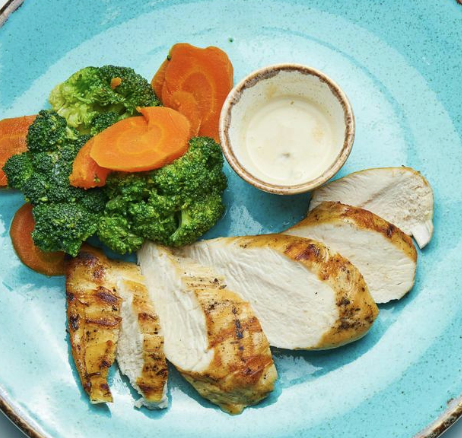
- Rice + legumes + vegetables → reduced spike
Practical Clinical Strategy
Step 1 — Choose Lower GI When Possible
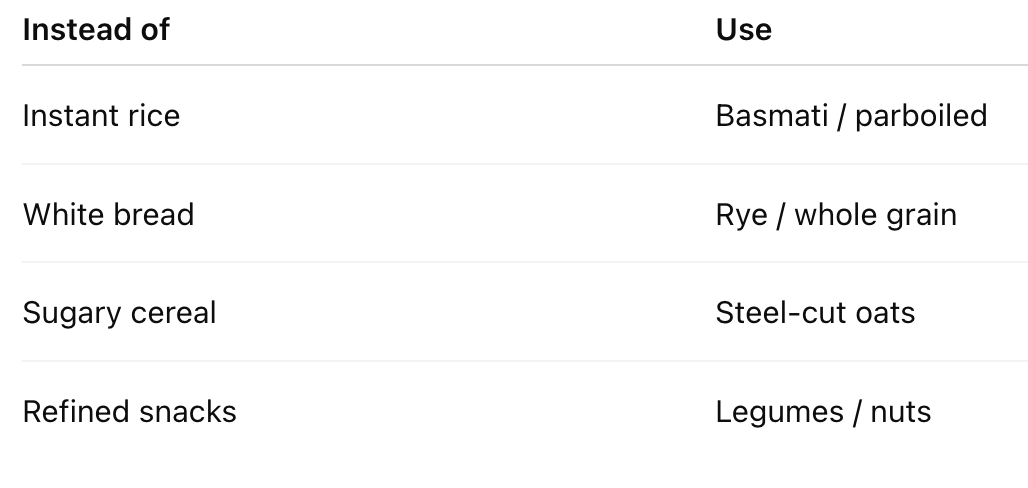
- Basmati > jasmine
- Steel-cut oats > instant oats
- Whole grains > refined flour
Step 2 — Control Glycemic Load
- Reduce portion size
- Avoid stacking multiple starches
Step 3 — Modify the Meal
- Add protein (fish, eggs, legumes)
- Add fiber (vegetables)
- Add fat (olive oil, nuts)
High-Yield Swaps
Clinical Pearl
A “healthy” food can still be metabolically harmful
if consumed in large amounts, frequently, and in isolation.
Bottom Line
- GI tells you how fast
- GL tells you how much
- Real-world risk = GI + portion + frequency + context