Introduction
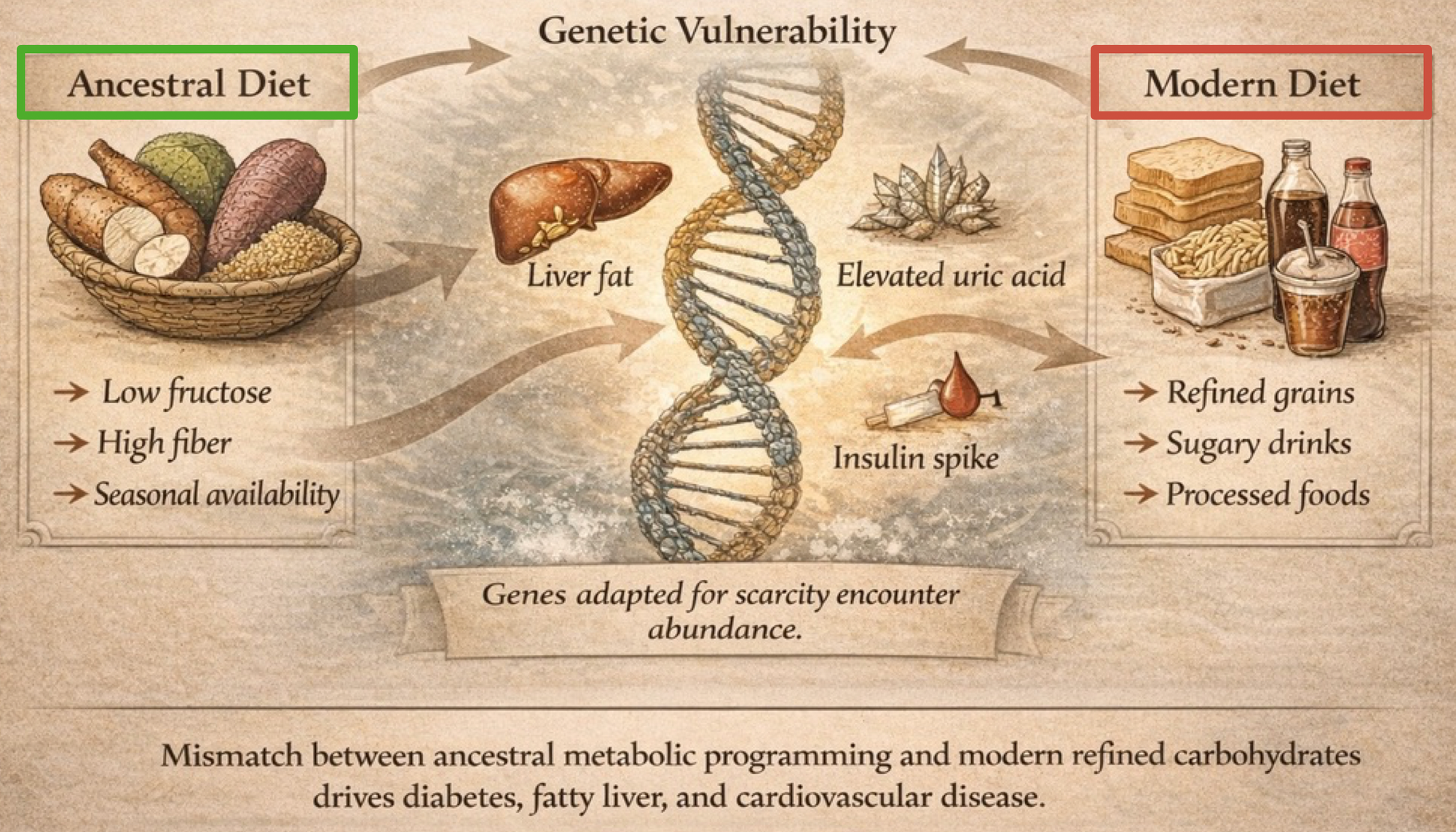
The term Western diet is commonly used to describe a pattern of eating that developed in industrialized nations during the twentieth century and has since spread to many parts of the world. Since the "Western" diet bears very little resemblance to the original nutritious diets of Western Europe, Internets Press prefers to label this diet as the "Modern" diet.
Although specific foods vary across regions, the Modern dietary pattern is typically characterized by high consumption of refined carbohydrates, added sugars, industrially processed foods, and energy-dense products. At the same time, intake of whole foods such as vegetables, fruits, legumes, and minimally processed grains is often lower than in many traditional dietary patterns.
Researchers studying global nutrition have increasingly examined how this dietary shift may influence metabolic health.
Characteristics of the Modern Diet
Several common features distinguish the Modern diet from many traditional dietary patterns.
These include:
• high intake of refined grains
• frequent consumption of added sugars
• increased availability of sweetened beverages
• higher consumption of processed and ultra-processed foods
• increased intake of industrial vegetable oils and refined fats
• lower intake of dietary fiber and whole foods
These elements often appear together in modern food environments and may influence metabolic physiology through multiple pathways.
Dietary Energy and Metabolic Load
The Modern diet frequently contains foods that are both energy dense and highly palatable. These characteristics may encourage greater caloric intake compared with diets composed primarily of minimally processed foods.
When caloric intake repeatedly exceeds energy expenditure, the body must store excess nutrients. Over time this process can contribute to increased adiposity, particularly visceral fat accumulation.
As discussed elsewhere on this site, excess adiposity and metabolic overload are closely associated with insulin resistance, fatty liver disease, and metabolic syndrome.