Introduction
Interleukin-6, commonly abbreviated IL-6, is a cytokine involved in immune signaling, inflammation, and metabolic regulation. It is produced by multiple tissues, including immune cells, adipose tissue, skeletal muscle, and the liver.
IL-6 has a dual role. In acute settings, it participates in normal immune responses and tissue repair. In chronic metabolic conditions, however, persistently elevated IL-6 signaling is associated with inflammation, insulin resistance, and cardiometabolic disease.
Understanding IL-6 helps explain how inflammation, metabolism, and organ function become interconnected in modern metabolic disease.
What Is IL-6?
IL-6 is a cytokine, a signaling molecule that allows cells to communicate during immune and inflammatory responses.
It is involved in:
- immune activation
- inflammatory signaling
- regulation of acute-phase responses
- metabolic adaptation
Unlike some cytokines that act primarily in a pro-inflammatory direction, IL-6 has both pro-inflammatory and regulatory functions depending on the context.
How IL-6 Works
IL-6 is released into the bloodstream or local tissues and binds to receptors on target cells.
This activates intracellular signaling pathways that influence:
- gene expression
- inflammatory responses
- metabolic processes
- hormonal signaling
IL-6 signaling can occur through different pathways, including classical signaling and trans-signaling, which may have different biological effects.
Sources of IL-6
IL-6 is produced by multiple tissues, including:
- macrophages and immune cells
- adipose tissue
- skeletal muscle
- liver cells
- endothelial cells
In metabolic disease, adipose tissue and immune cells within fat depots become important sources of IL-6.
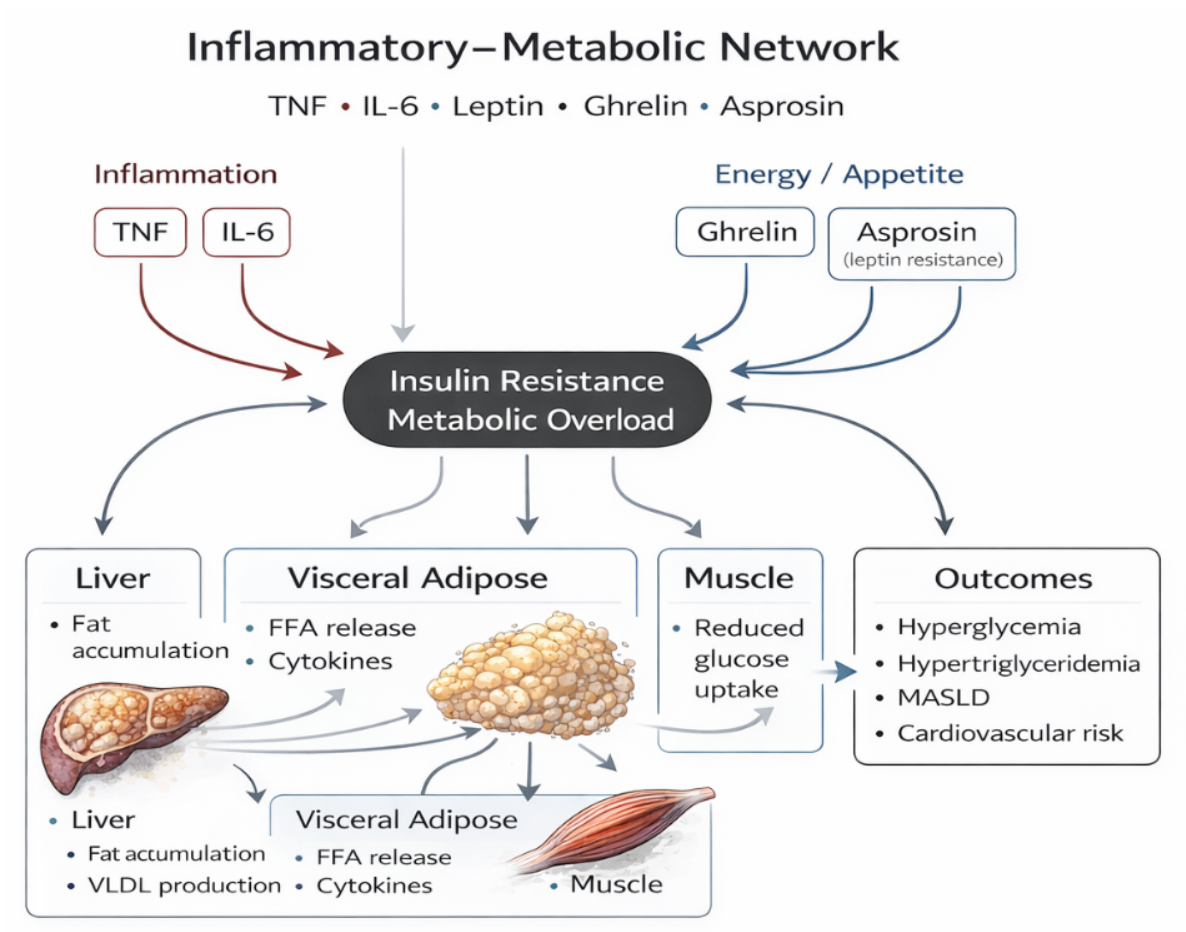
IL-6 in Metabolic Inflammation
IL-6 is a key component of chronic low-grade inflammation.
As visceral adiposity increases, IL-6 production often rises alongside other inflammatory cytokines. This contributes to a metabolic environment characterized by:
- persistent inflammatory signaling
- altered insulin sensitivity
- increased hepatic stress
- vascular dysfunction
Unlike acute inflammation, this process is subtle but sustained.
IL-6 and Insulin Resistance
IL-6 has complex effects on insulin signaling.
In some contexts, short-term IL-6 exposure may support metabolic adaptation, particularly during exercise. However, chronic elevation of IL-6 is associated with impaired insulin signaling.
This may contribute to:
- reduced glucose uptake in muscle
- altered hepatic glucose regulation
- worsening insulin resistance over time
This illustrates how the duration and context of cytokine signaling influence metabolic outcomes.
IL-6 and Adipose Tissue
Adipose tissue plays a major role in IL-6 production in metabolic disease.
As fat mass expands:
- adipocytes enlarge
- immune cells accumulate
- cytokine production increases
IL-6 released from adipose tissue contributes to systemic inflammation and metabolic signaling disturbances.
This is particularly relevant in visceral adipose tissue, which is strongly associated with cardiometabolic risk.
IL-6 and the Liver
IL-6 has important effects on the liver.
It plays a central role in the acute-phase response, stimulating the production of proteins such as C-reactive protein (CRP).
In metabolic disease, elevated IL-6 may contribute to:
- hepatic inflammation
- progression of fatty liver disease
- altered lipid and glucose metabolism
Because the liver integrates metabolic and inflammatory signals, IL-6 is a key link between these systems.
IL-6 and Exercise
IL-6 behaves differently in the context of physical activity.
During exercise, skeletal muscle releases IL-6 in a transient manner. This form of IL-6 signaling is associated with:
- increased energy utilization
- improved glucose uptake
- metabolic flexibility
This highlights an important distinction:
- short-term, regulated IL-6 release can be beneficial
- chronic, elevated IL-6 signaling is associated with disease
IL-6 and Cardiovascular Risk
IL-6 contributes to processes that influence cardiovascular disease.
These include:
- endothelial dysfunction
- vascular inflammation
- progression of atherosclerosis
Elevated IL-6 levels are often associated with increased cardiovascular risk in epidemiological studies.
IL-6 in Chronic Disease
Persistently elevated IL-6 signaling is associated with:
- obesity
- metabolic syndrome
- insulin resistance
- fatty liver disease
- cardiovascular disease
Its presence reflects an ongoing interaction between metabolic stress and inflammatory signaling.
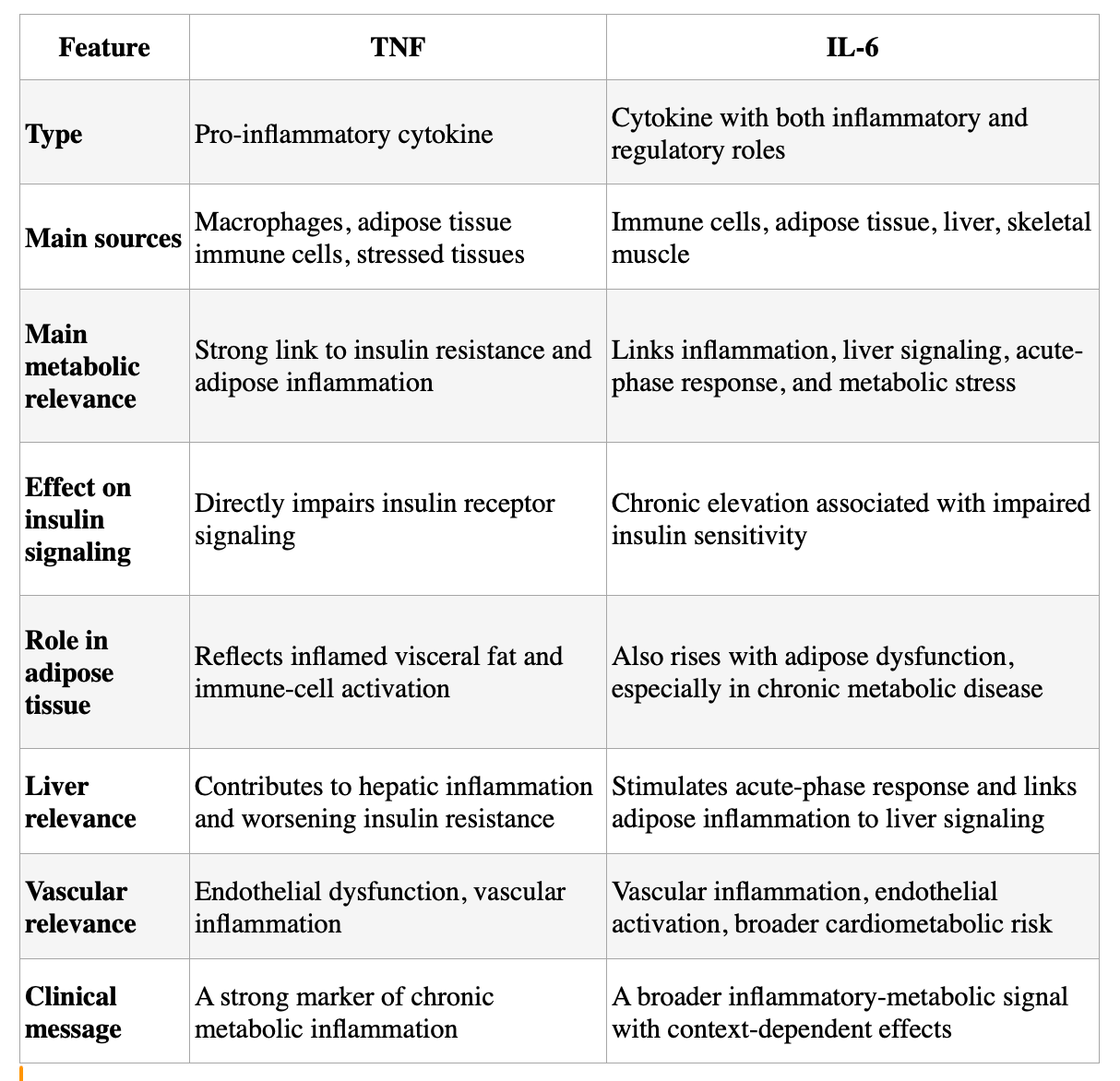
Comparison Table of Tumor Necrosis Factor and Interleukin-6
Therapeutic and Research Perspectives
IL-6 is an area of active research.
Scientists are studying:
- IL-6 signaling pathways
- its interaction with other cytokines such as TNF
- its role in metabolic and cardiovascular disease
- therapies that target IL-6 signaling in inflammatory conditions
These studies aim to clarify how inflammatory pathways contribute to chronic disease.
Bottom Line
IL-6 is a key cytokine that links inflammation and metabolism.
When chronically elevated, it contributes to:
- insulin resistance
- adipose tissue dysfunction
- liver inflammation
- vascular injury
IL-6 is best understood as part of the broader network of signals that connect metabolic overload with chronic disease.