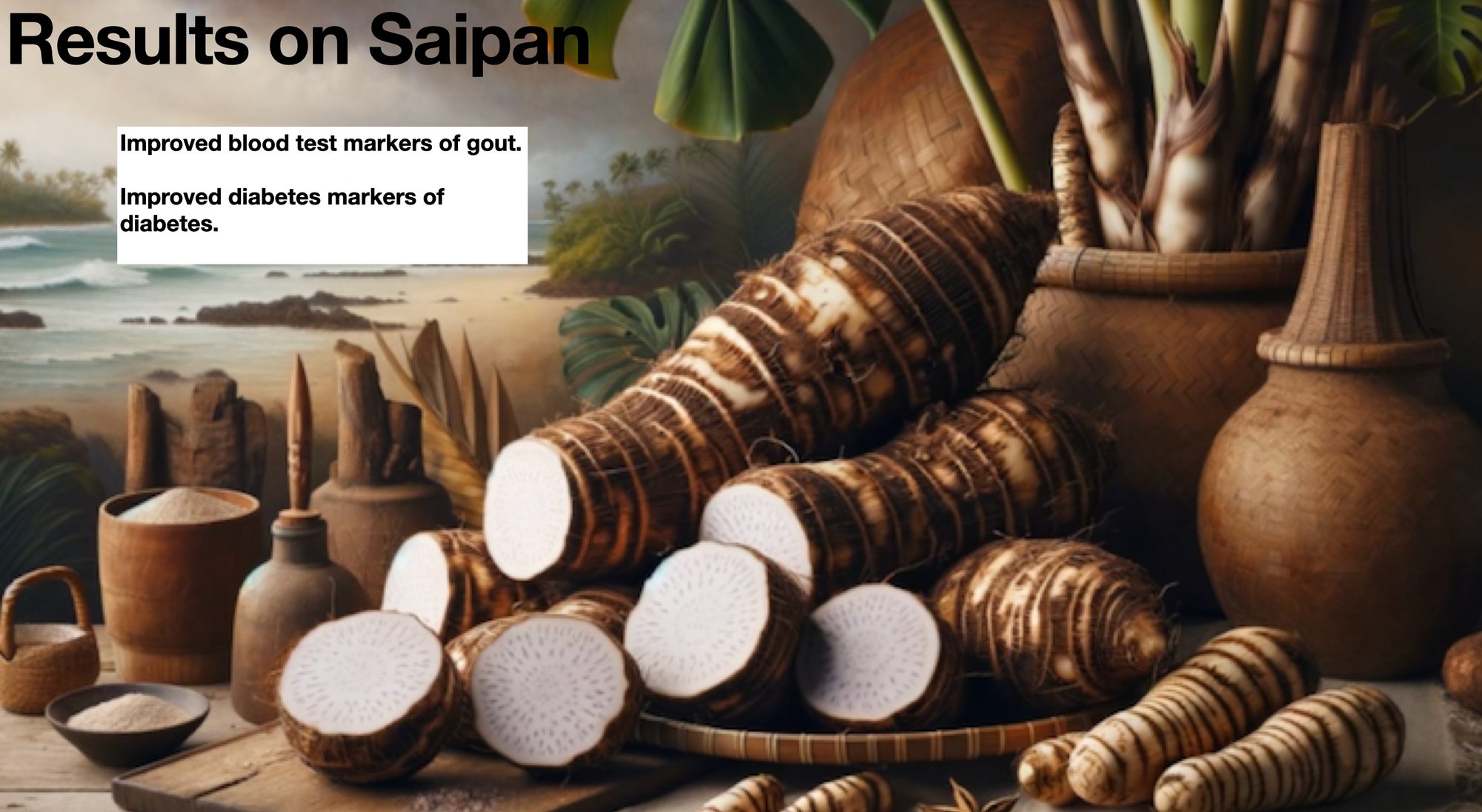
How Word of Mouth Changes the Bakery Breads
A local food shift with larger meaning
On Saipan, a quiet change has been taking place.
What began with one bakery producing taro bread has spread, within a short period of time, to a second bakery — and then to the largest bakery, which is now producing ube bread.
This is not a government campaign. It is not a national advertising effort. It is a local food transition driven largely by word of mouth, patient demand, and growing awareness that traditional starches may be metabolically safer than modern white bread and sugar-heavy bakery products.
The result is simple but important:
👉 people on Saipan, Tinian, and Rota now have a real choice.
They can choose ancestral breads rather than defaulting to refined white wheat bread.
Why this matters
Modern bread is often treated as a neutral staple.
It is not.
Most mass-market white bread is built from:
- refined flour
- rapid starch absorption
- low fiber
- industrial processing
- frequent pairing with sugar-rich spreads or beverages
In contrast, breads built around traditional starches such as:
- taro
- ube
- other root-based flours
restore part of the original food structure that industrial breads have lost.
This matters because food structure affects:
- digestion
- glycemic response
- satiety
- metabolic load
From one bakery to three islands
The story on Saipan is especially important because it shows how quickly community demand can reshape the local food environment.
The progression has been:
- one bakery is identified as the place to buy taro bread
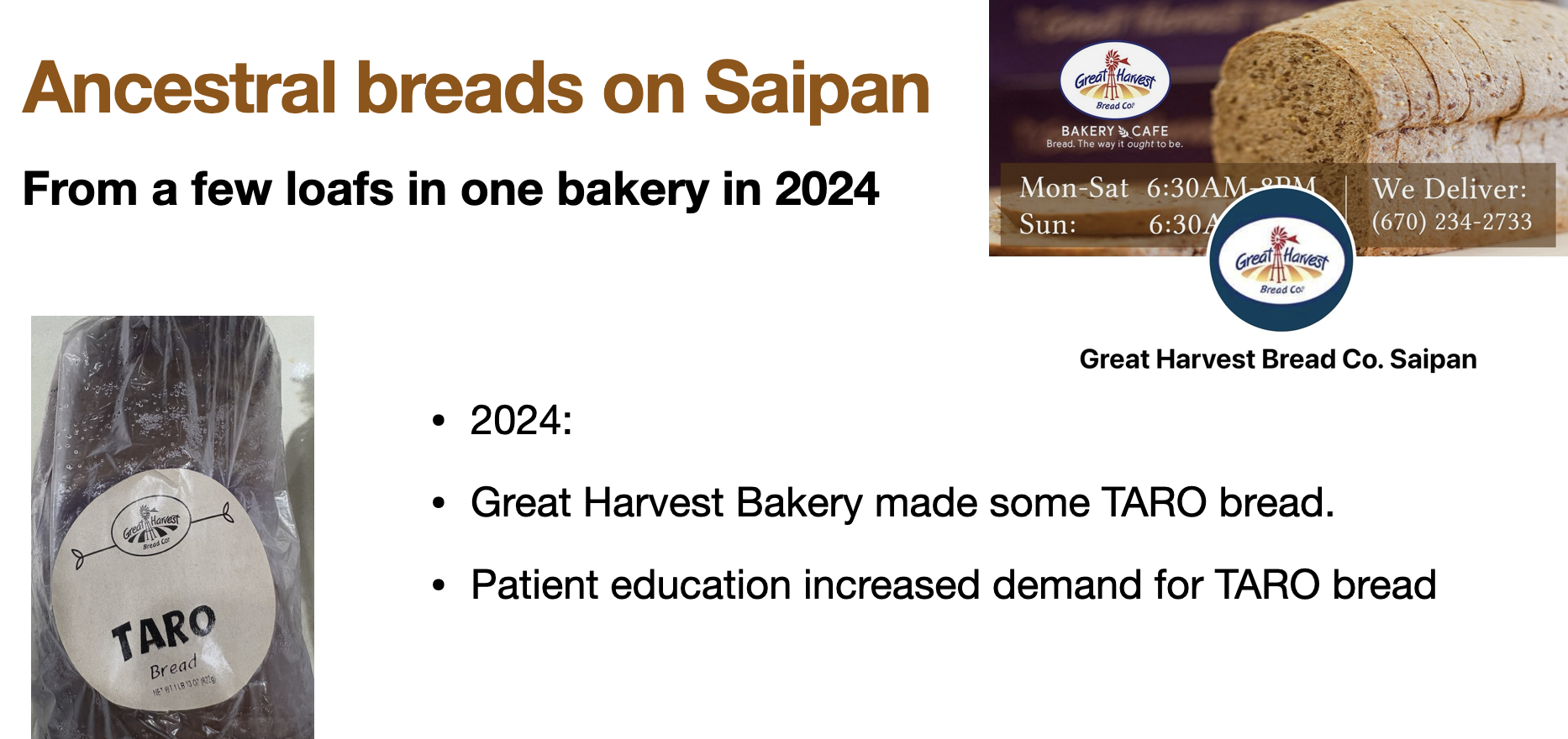
- demand spreads by word of mouth
- a second bakery follows
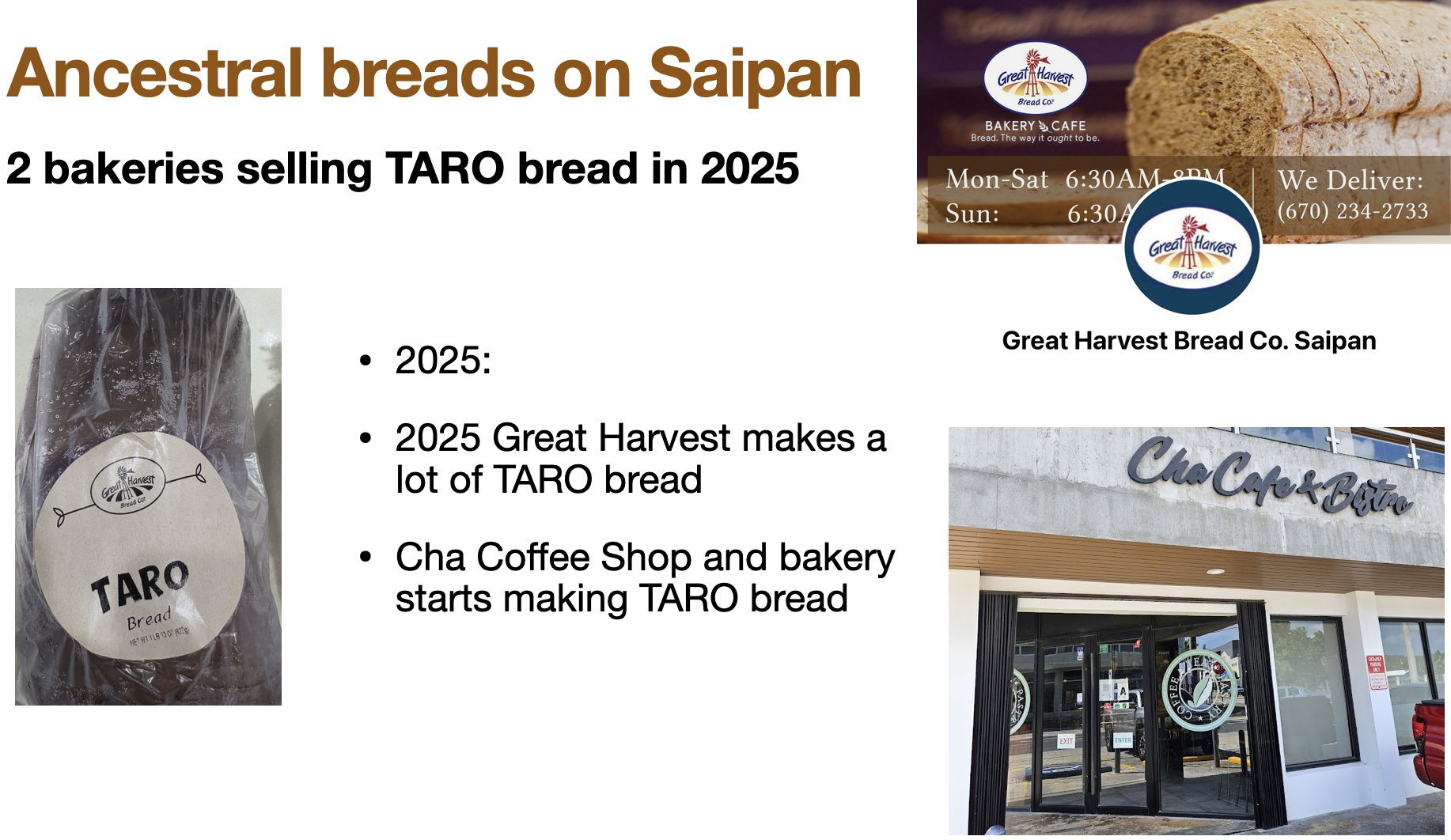
- the largest bakery begins producing ube bread
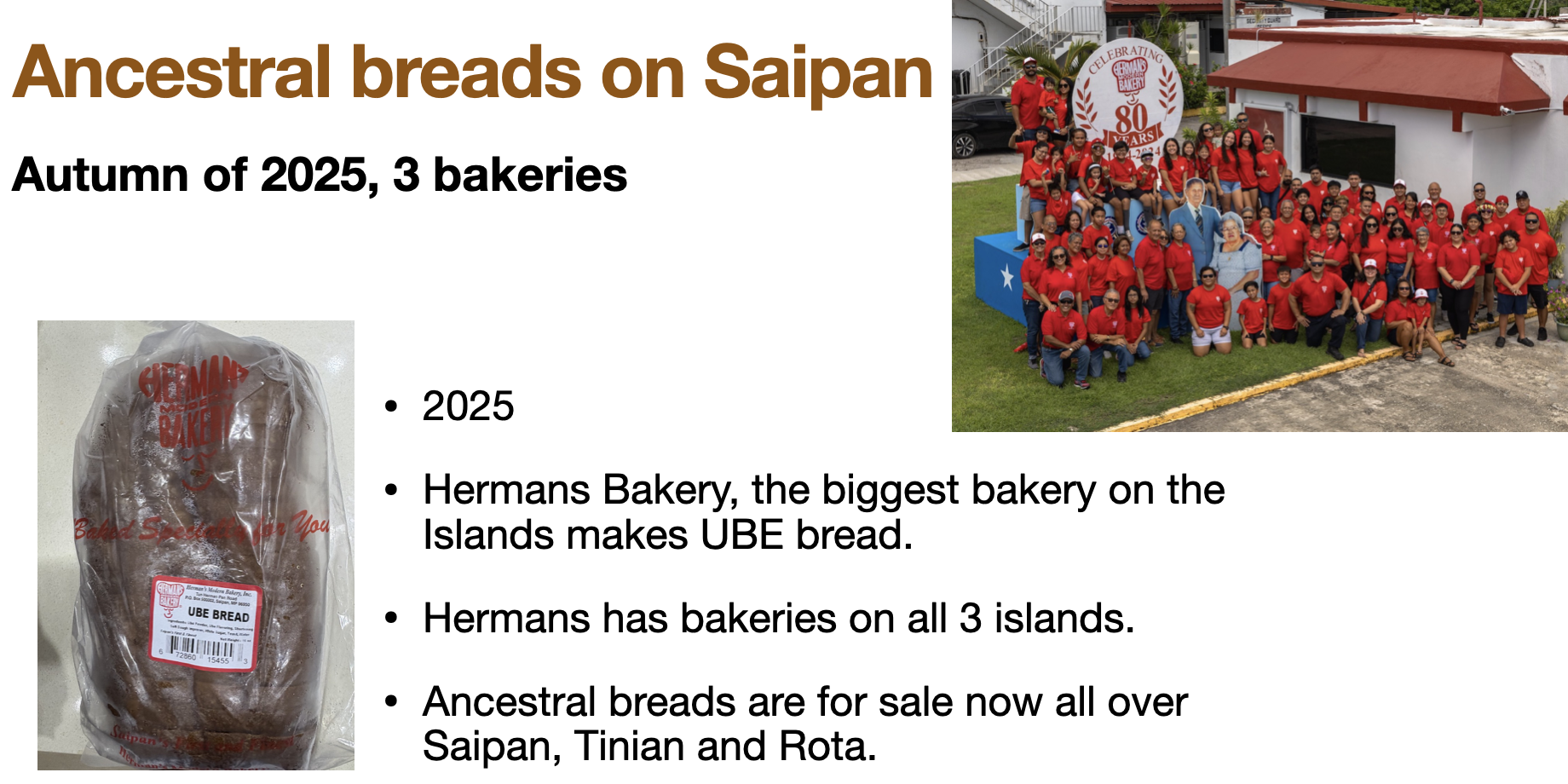
- consumers across Saipan, Tinian, and Rota gain access to ancestral bread choices
- bakeries ask for more taro and ube from the local farmers
This is a practical example of how food systems can change from the bottom up.
Not by theory alone.
Not by policy alone.
But by people asking for something better.
A community response, not a luxury trend
This is not a boutique food story.
It is a metabolic health story.
For many island communities, the replacement of traditional starches with refined imported flour has been part of a much larger pattern of dietary disruption. White bread is not just cheap and convenient. It is part of the broader imported food system that has contributed to:
- obesity
- insulin resistance
- fatty liver disease
- Type 2 diabetes
- hyperuricemia
- cardiovascular disease
Ancestral breads offer a way to shift that pattern without asking people to abandon bread itself.
That is one reason this matters.
It is not “no bread.”
It is better bread.
Why taro and ube breads matter metabolically
Traditional root-based breads differ from industrial white bread in important ways.
They provide:
- more fiber
- slower absorption
- lower glycemic stress
- better satiety
- less abrupt glucose and insulin response
In practical terms, this means they are more compatible with the idea of structured starch intake than rapidly absorbed white flour products.
This is especially important in populations already vulnerable to:
- diabetes
- visceral adiposity
- uric acid elevation
- fatty liver disease
What patients are already seeing
In real-world use, some patients report that shifting away from refined white bread toward breads based on traditional starches is associated with:
- lower body weight
- better glucose control
- lower uric acid levels
- improved metabolic markers such as HbA1c
These observations are consistent with the broader metabolic model:
traditional starches
→ slower absorption
→ reduced metabolic overload
This is one reason the bakery shift matters beyond symbolism.
It is practical, visible, and measurable.
Food choice becomes possible again
A major problem in modern food environments is that unhealthy foods are not just present — they are often the cheapest and easiest default.
If the only widely available bread is refined white bread, then “choice” is largely theoretical.
But once bakeries begin producing taro bread and ube bread at scale, something changes:
👉 ancestral foods become visible again
👉 healthier starch options become normal again
👉 communities regain food choice
That is a meaningful public-health shift.
An opportunity for NGOs and public health groups
This is where the next step becomes important.
There is now a clear opportunity for:
- NGOs
- public-health organizations
- community health programs
- school and feeding initiatives
to support local bakeries in expanding ancestral breads and reducing the price barrier.
A practical model would be simple:
- subsidize taro- and ube-based breads in the Western Pacific Islands
- lower their retail price of ancestral breads
- make ancestral breads cost-competitive with modern white wheat bread
- shift the default purchase toward metabolically safer products
If ancestral breads can be sold at or near the price of sugar-laden modern white bread, adoption is likely to increase substantially.
This is not only a bakery issue. It is a prevention strategy.
Why this model could spread
What is happening on Saipan has implications beyond one island.
It suggests that communities do not always need to wait for national reform.
Sometimes the sequence is:
local demand
→ bakery response
→ wider availability
→ public-health opportunity
That model could be applied in:
- Pacific island communities
- Indigenous communities
- school-based nutrition programs
- NGO-supported food initiatives
The principle is simple:
restore traditional staple foods in forms people will actually buy and use.
A lesson from the islands
The islands of Saipan, Tinian, and Rota now offer an important lesson.
The modern metabolic crisis was built partly by replacing traditional starches with imported refined flour products.
The response does not have to begin with abstract policy.
It can begin with a bakery.
It can spread to the farmers
This is a micro-economics model applicable world-wide
Bottom line
The emergence of taro bread and ube bread across Saipan, Tinian, and Rota is more than a local food trend.
It is an example of metabolic prevention made visible.
What began with one bakery has spread through word of mouth into a broader community shift. That creates a real opportunity:
- preserve ancestral food knowledge
- improve metabolic health
- and make safer breads normal, affordable, and widely available
If NGOs and public-health groups help lower the price of these breads to match industrial white wheat bread, the effect could be substantial.
This is one of the clearest examples of how a community can begin to move from imported metabolic risk back toward culturally rooted food protection.
Related pages
Micronesia
Root Crops
Bread
Safe Starches
Genes and Food
The Modern Diet
Sugary Drinks