Subsection Navigation
Clinical Resources •
What is a Lipid Panel? •
What is a Liver Panel? •
FIB-4 •
TyG Index •
Fasting Glucose •
HbA1c •
CRP and ESR •
What is a CBC? •
Criteria for Metabolic Syndrome •
Metabolic Screening •
Fatty Liver Screening •
Drugs to Reverse Metabolic Syndrome •
School Nutrition Projects •
Taro and Ube Bread on Saipan
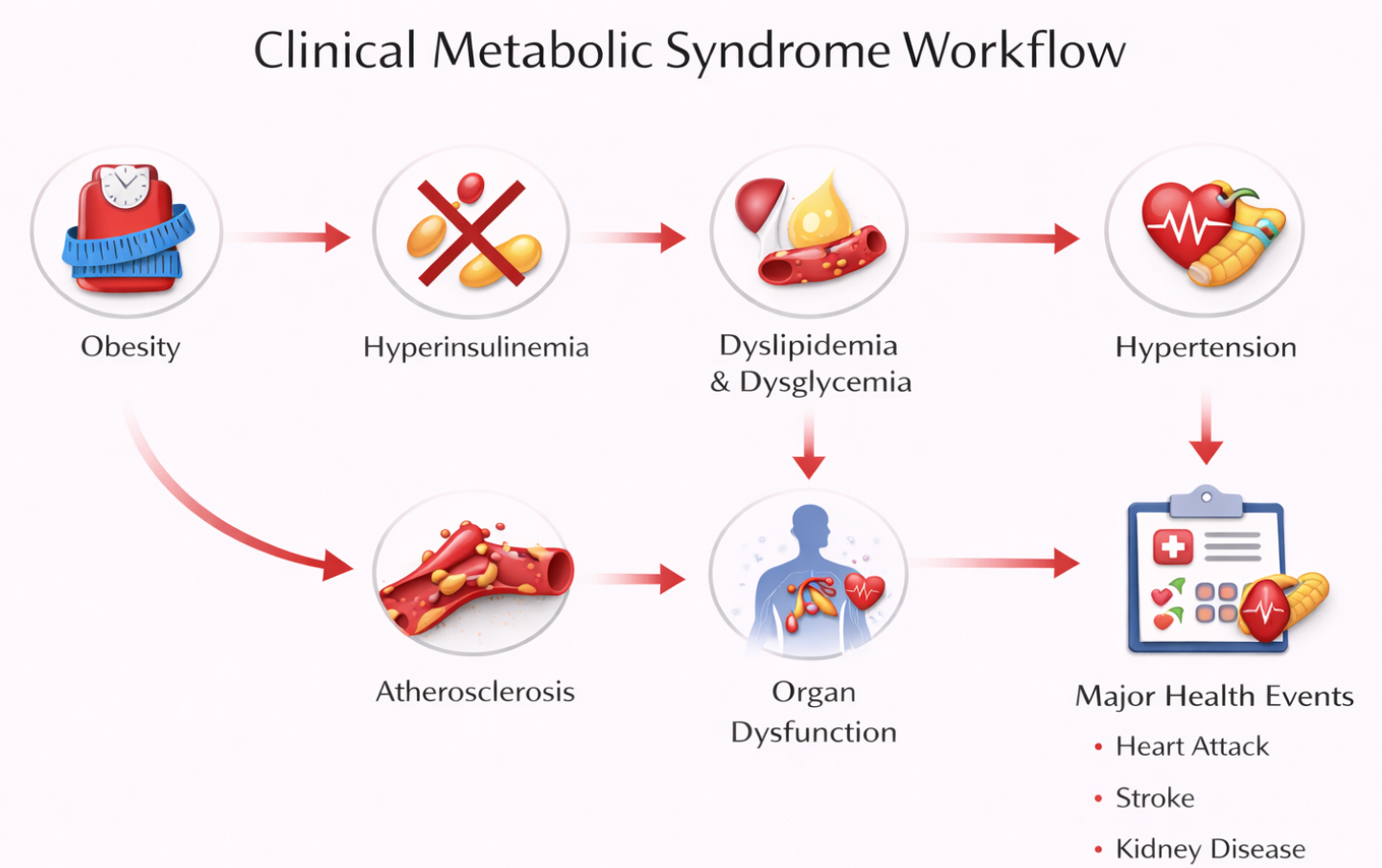
How to Screen for Metabolic Disease in 5 Minutes: A Practical Clinic Workflow
Why This Matters
Most metabolic disease is:
- common
- silent early
- and detected late
A simple, structured approach can identify risk before diabetes, cardiovascular disease, or advanced liver disease develops.
This workflow is designed to be used in routine clinical practice—quickly and consistently.
Step 1 — Identify Risk (30–60 seconds)
Look for:
- Central adiposity (waist circumference or visual pattern)
- Prediabetes or diabetes
- Elevated triglycerides
- Hypertension
- Incidental fatty liver on imaging
- Family history of metabolic disease
If any of the above are present → proceed.
Step 2 — Order the Core Panel (1 minute)
Minimum practical labs:
- Fasting glucose or HbA1c
- Lipid panel (focus on triglycerides)
- Liver enzymes (AST, ALT)
- Uric acid
Why uric acid:
- Early signal of metabolic stress
- Linked to fructose metabolism
- Often elevated before overt disease
Step 3 — Recognize Early Patterns (1–2 minutes)
Red flags:
- Elevated triglycerides
- Rising uric acid
- Mild ALT/AST elevation (or even normal enzymes with risk factors)
- Increasing waist circumference
Think:
- Insulin resistance
- Early Metabolic dysfunction–associated steatotic liver disease
Step 4 — Check the Liver (If Indicated)
If risk factors or abnormal labs:
- Ultrasound (if not already done)
- If steatosis present → assess fibrosis risk
Simple fibrosis triage:
- Calculate FIB-4 (age, AST, ALT, platelets)
Interpretation:
- Low → monitor
- Indeterminate → further testing
- High → refer
Step 5 — Escalate When Needed
If not clearly low risk:
- Elastography (FibroScan or equivalent)
- Additional biomarkers (ELF, if available)
- Hepatology referral for:
- suspected advanced fibrosis
- unclear results
Step 6 — Act Early (This Is the Key Step)
Core Interventions
Diet
- Reduce sugar (especially beverages)
- Reduce refined carbohydrates
- Emphasize whole foods
Activity
- Regular aerobic + resistance activity
Weight
- Even modest loss improves liver fat
Step 7 — Reassess
- Repeat labs in 3–6 months
- Track:
- triglycerides
- uric acid
- glucose/HbA1c
- weight/waist
Trend matters more than single values.
The Pattern to Recognize
This cluster should trigger action—even if subtle:
- Mild metabolic abnormalities
- Early liver fat
- Elevated uric acid
This is the window for intervention.
Common Pitfalls
- “Liver enzymes are normal” → disease can still be present
- “Patient is not obese” → visceral fat may still be high
- “Just watch it” → delays intervention
- Ignoring incidental fatty liver
Where This Connects
/metabolic-disease/masld-explained/metabolic-disease/uric-acid/fructose-science/fructose-vs-glucose
Bottom Line
You do not need complex testing to detect early metabolic disease.
You need:
- a consistent workflow
- attention to early signals
- and the willingness to act before disease becomes advanced