Introduction
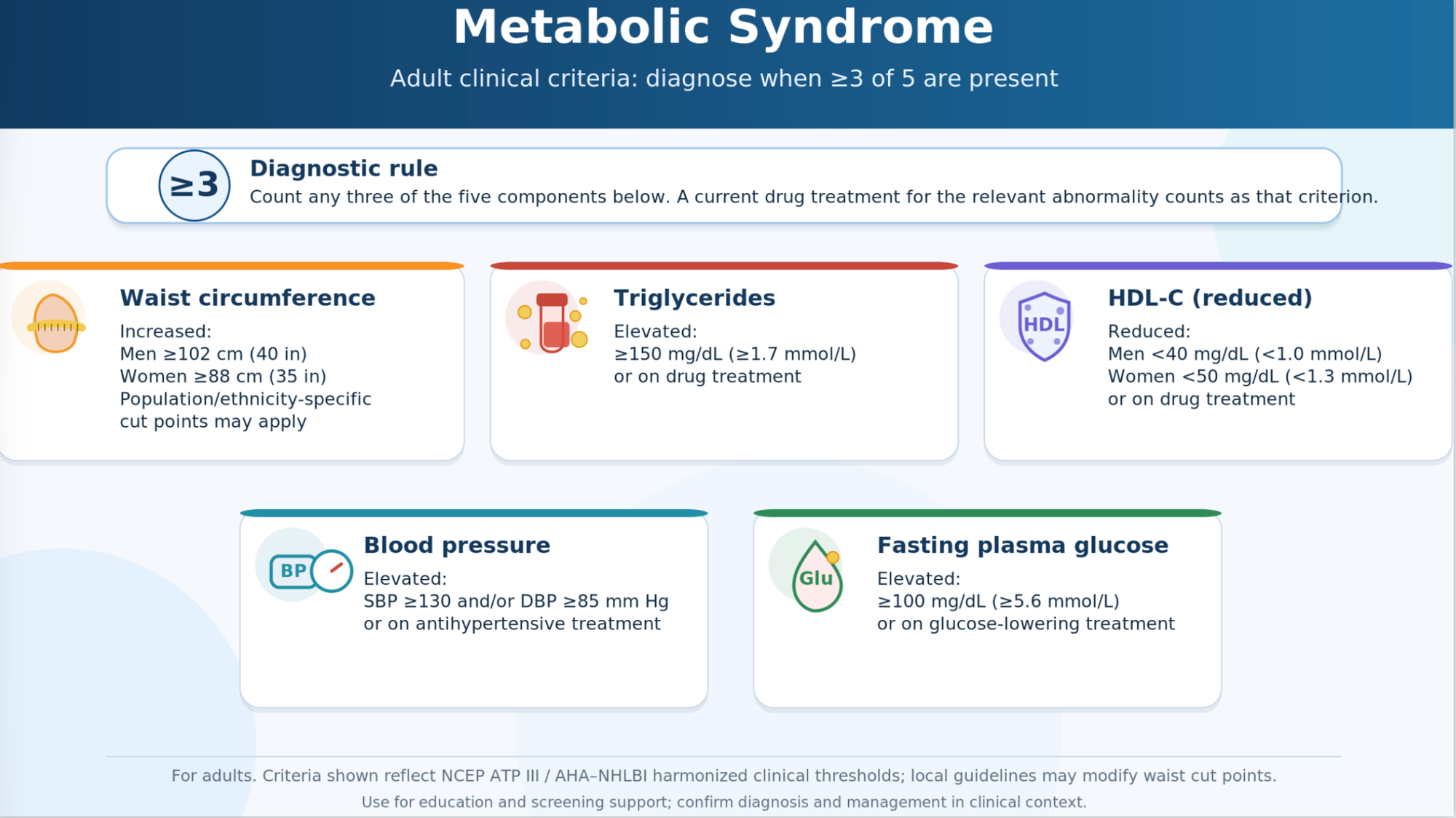
Metabolic syndrome is a clinical term used to describe a cluster of metabolic abnormalities that frequently occur together in the same individual. These abnormalities are associated with increased risk of type 2 diabetes, cardiovascular disease, and other metabolic disorders.
Although metabolic syndrome reflects a broader pattern of metabolic dysfunction, clinicians rely on specific diagnostic criteria to identify individuals who may be at increased risk.
These criteria focus on measurable indicators of metabolic health, including body fat distribution, blood lipid levels, blood pressure, and glucose regulation.
Core Components of Metabolic Syndrome
Most definitions of metabolic syndrome include five key metabolic indicators:
• abdominal obesity
• elevated triglycerides
• reduced HDL cholesterol
• elevated blood pressure
• impaired glucose regulation
When several of these features are present simultaneously, the condition is classified as metabolic syndrome.
Diagnostic Criteria
Several medical organizations have developed diagnostic guidelines for metabolic syndrome. One commonly used definition is provided by the National Cholesterol Education Program Adult Treatment Panel III (ATP III).
According to this framework, metabolic syndrome is diagnosed when three or more of the following criteria are present:
Abdominal obesity
• waist circumference greater than approximately
• 102 cm (40 inches) in men
• 88 cm (35 inches) in women
Elevated triglycerides
• triglyceride levels ≥150 mg/dL (1.7 mmol/L)
Reduced HDL cholesterol
• HDL <40 mg/dL in men
• HDL <50 mg/dL in women
Elevated blood pressure
• blood pressure ≥130/85 mmHg
or use of antihypertensive medication
Elevated fasting glucose
• fasting glucose ≥100 mg/dL (5.6 mmol/L)
or treatment for diabetes
These criteria help clinicians identify individuals who may benefit from further metabolic evaluation.
Abdominal Obesity
Central obesity, particularly the accumulation of visceral adipose tissue, plays an important role in metabolic syndrome.
Visceral fat releases fatty acids and signaling molecules that influence insulin sensitivity, inflammation, and lipid metabolism. Because of these effects, abdominal fat distribution is strongly associated with metabolic risk.
Waist circumference therefore serves as a practical clinical marker of metabolic health.
Lipid Abnormalities
Metabolic syndrome frequently involves a characteristic pattern of lipid abnormalities known as atherogenic dyslipidemia.
This pattern typically includes:
• elevated triglycerides
• reduced HDL cholesterol
• increased small, dense LDL particles
These lipid abnormalities contribute to the development of atherosclerosis and increase cardiovascular risk.
Blood Pressure
Elevated blood pressure is another common component of metabolic syndrome.
Several metabolic factors may influence blood pressure regulation, including insulin resistance, inflammatory signaling, endothelial dysfunction, and altered kidney handling of sodium.
Because hypertension significantly increases cardiovascular risk, its presence within metabolic syndrome carries important clinical implications.
Impaired Glucose Regulation
Elevated fasting glucose or impaired glucose tolerance reflects underlying disturbances in insulin signaling.
Insulin resistance often precedes the development of type 2 diabetes by many years. Identifying individuals with early glucose abnormalities allows clinicians to intervene before more severe metabolic disease develops.
For this reason, fasting glucose measurement is an essential component of metabolic syndrome diagnosis.
Clinical Importance
Metabolic syndrome is not a disease in itself but rather a pattern of metabolic abnormalities that signals increased risk for several major health conditions.
These include:
• type 2 diabetes
• cardiovascular disease
• fatty liver disease
• chronic kidney disease
Early recognition of metabolic syndrome provides an opportunity to address underlying metabolic risk factors before more serious complications arise.
Prevention and Management
Management strategies for metabolic syndrome typically focus on improving overall metabolic health.
These approaches may include:
• increasing physical activity
• improving dietary patterns
• reducing visceral adiposity
• managing blood pressure and lipid levels
• addressing insulin resistance
In some cases, medications may also be used to manage specific metabolic abnormalities.
Related Topics
Readers interested in the broader biological context of metabolic syndrome may also explore:
• Insulin Resistance
• Visceral Fat and Metabolic Health
• Fatty Liver Disease (MASLD)
• Metabolic Syndrome and Cardiovascular Disease
These pages examine the physiological pathways that contribute to metabolic syndrome.