Introduction
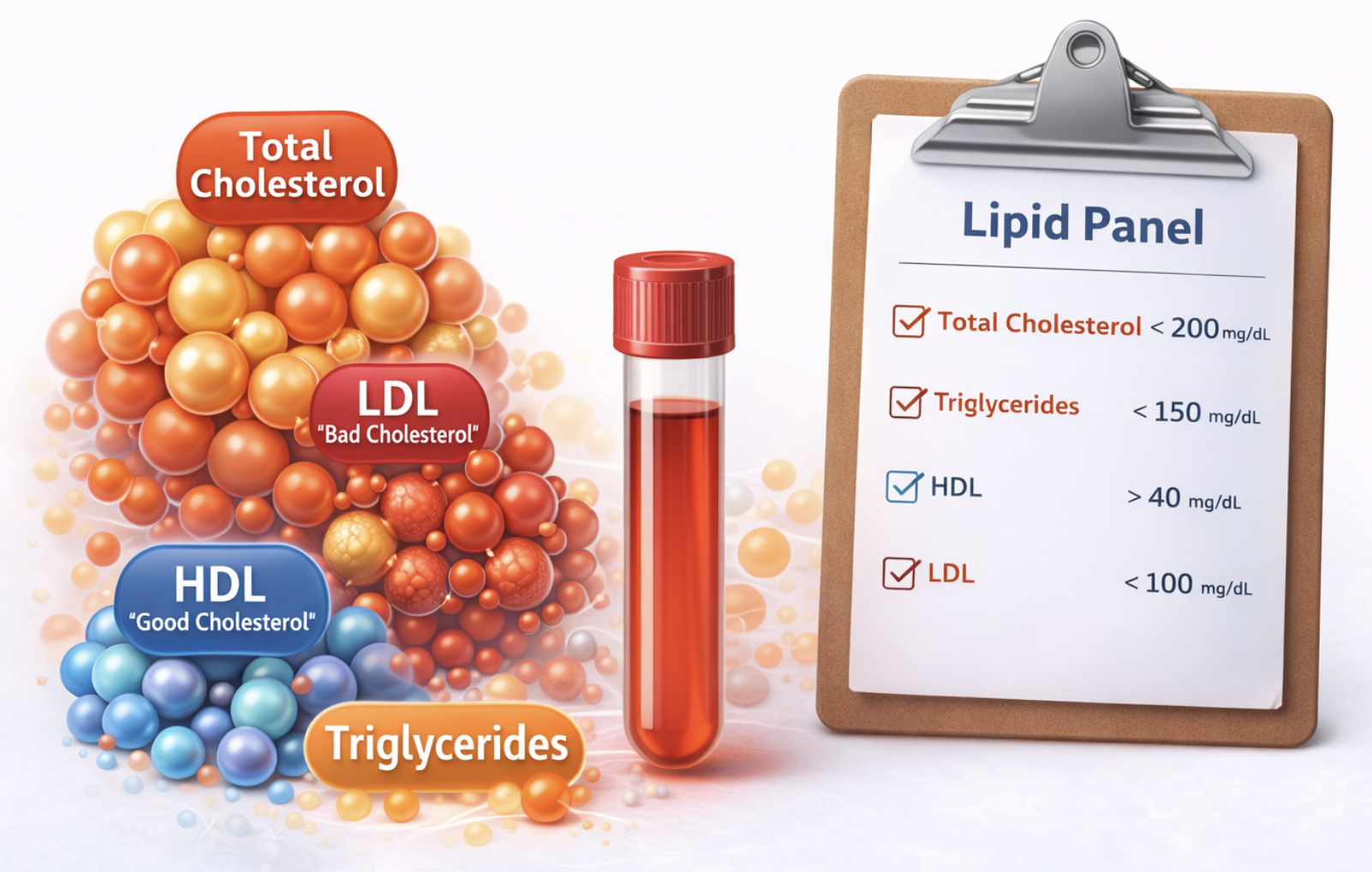
A lipid panel is a blood test that measures several types of fats circulating in the bloodstream. Doctors commonly use this test to evaluate cardiovascular risk and assess metabolic health.
Lipids play important roles in the body, including energy storage, hormone production, and cell membrane structure. However, abnormal levels of certain lipids can contribute to cardiovascular disease and metabolic disorders.
The lipid panel helps clinicians understand how fats are being transported through the bloodstream and whether patterns associated with metabolic disease are present.
What the Lipid Panel Measures
A standard lipid panel typically includes four main measurements:
• Total cholesterol
• LDL cholesterol (low-density lipoprotein)
• HDL cholesterol (high-density lipoprotein)
• Triglycerides
Together these markers provide insight into lipid metabolism and cardiovascular risk.
Total Cholesterol
Total cholesterol represents the combined amount of cholesterol contained within several types of lipoprotein particles circulating in the blood.
Although total cholesterol provides a broad overview of lipid levels, doctors often look more closely at the individual components of the lipid panel to better understand cardiovascular risk.
LDL Cholesterol
LDL cholesterol is often referred to as “low-density lipoprotein cholesterol.”
LDL particles transport cholesterol from the liver to tissues throughout the body. When LDL particles accumulate in the bloodstream in high concentrations, they may contribute to the formation of atherosclerotic plaques in arterial walls.
For this reason, elevated LDL cholesterol is commonly associated with increased cardiovascular risk.
HDL Cholesterol
HDL cholesterol stands for high-density lipoprotein cholesterol.
HDL particles help transport excess cholesterol from tissues back to the liver in a process known as reverse cholesterol transport.
Higher levels of HDL cholesterol are generally associated with lower cardiovascular risk because HDL helps remove excess cholesterol from circulation.
Triglycerides
Triglycerides are another form of lipid measured in the lipid panel. They represent the primary form of stored fat in the body.
Elevated triglyceride levels often occur in individuals with insulin resistance, metabolic syndrome, and fatty liver disease. High triglycerides frequently appear alongside reduced HDL cholesterol and other metabolic abnormalities.
Because of these relationships, triglycerides provide important information about metabolic health.
Why the Lipid Panel Matters
The lipid panel is widely used to estimate cardiovascular risk.
Abnormal lipid patterns can contribute to the development of atherosclerosis, a condition in which fatty deposits accumulate in arterial walls. Over time, these deposits may narrow arteries and increase the risk of heart attack or stroke.
Because lipid metabolism is closely connected with metabolic physiology, the lipid panel can also reveal patterns associated with metabolic syndrome and insulin resistance.
Preparing for a Lipid Panel
Traditionally, lipid panels were performed after an overnight fast, since triglyceride levels can increase after meals.
In recent years, some guidelines have allowed non-fasting lipid testing in certain situations. However, fasting tests are still commonly used when evaluating triglycerides or metabolic health.
Doctors interpret lipid panel results in combination with other factors such as blood pressure, blood sugar levels, family history, and lifestyle.
Improving Lipid Levels
Lifestyle factors play an important role in lipid metabolism.
Strategies that may help improve lipid levels include:
• improving dietary patterns
• increasing physical activity
• reducing excess body weight
• improving glucose regulation
• managing metabolic risk factors
In some cases, medications may also be used to help control lipid levels and reduce cardiovascular risk.
Summary
A lipid panel measures several types of fats in the bloodstream and provides valuable information about cardiovascular and metabolic health. By evaluating total cholesterol, LDL cholesterol, HDL cholesterol, and triglycerides, clinicians can identify lipid patterns associated with cardiovascular disease and metabolic syndrome.
Understanding lipid panel results helps individuals and clinicians better assess metabolic risk and guide preventive strategies.
Related Topics
Readers interested in learning more about lipid metabolism may explore:
• What Are Triglycerides?
• HDL Cholesterol and Metabolic Health
• Small Dense LDL and Atherosclerosis
• Triglycerides and Cardiovascular Risk
These articles explain how lipid metabolism interacts with metabolic and cardiovascular physiology.