Micronesia: Ground Zero for Metabolic Collapse and Opportunity
In Micronesia, the metabolic crisis is not theoretical—it is visible within two generations. Communities that once relied on fishing, root crops, and minimally processed foods were the healthiest in the world. Now, the people of these islands face some of the highest rates of obesity and diabetes in the world. The timeline is compressed. The signal is unmistakable.
This is what happens when a traditional food system is rapidly replaced by imported, processed calories.
The culprit is easily seen by looking at the processed foods coming in on ships.
Traditional food system
Historically, diets in Micronesia were built around:
- taro
- breadfruit
- yam
- coconut (whole, not industrial oils)
- fish and seafood
- seasonal fruits
These foods were:
- high in fiber
- minimally processed
- low in added sugar
- consumed in structured meals
This system supported metabolic stability.
Then vs Now
Traditional Pattern
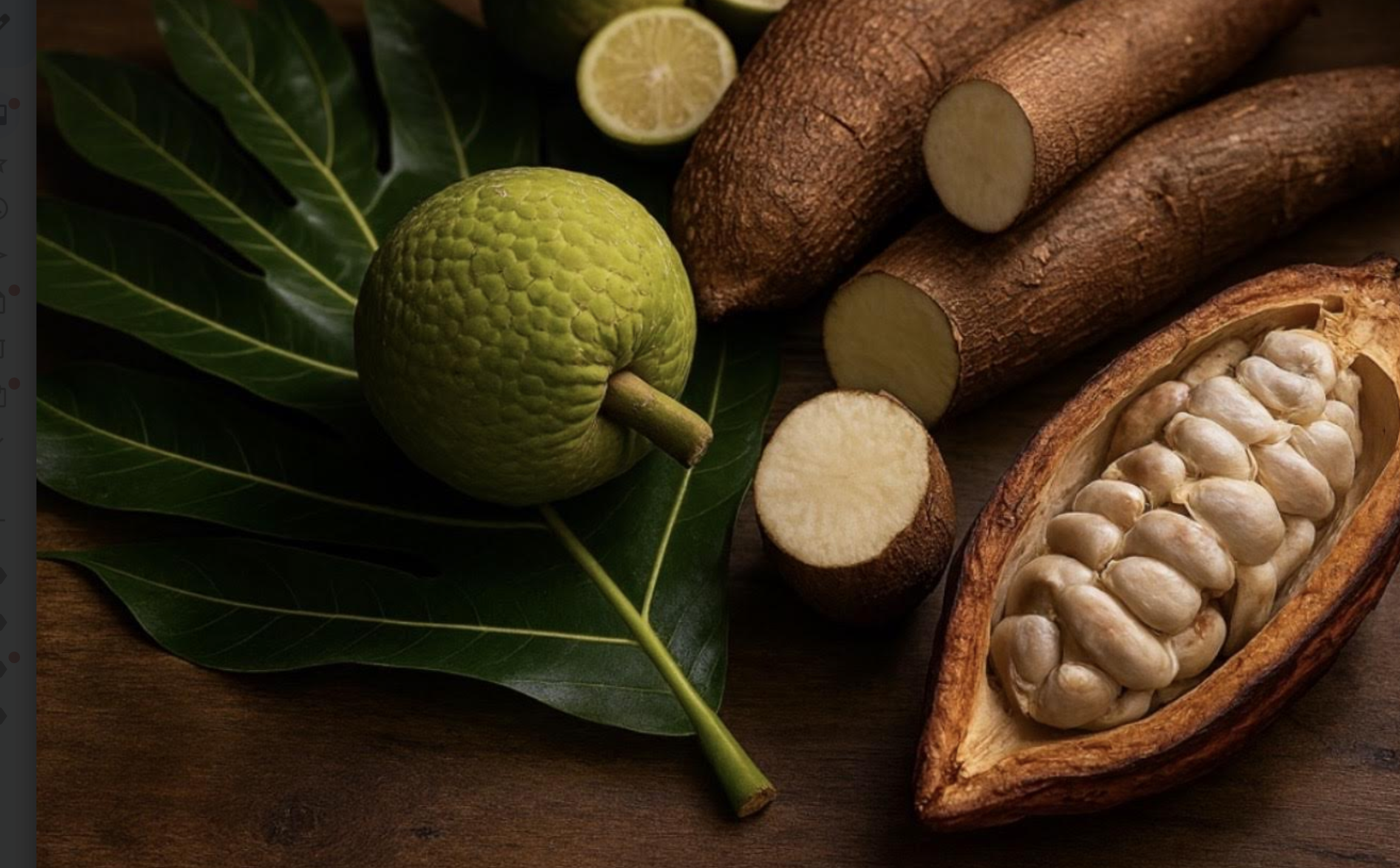
Taro, breadfruit, and root crops
Fresh fish
Whole coconut
Seasonal fruits
Low sugar exposure
Structured meals
Modern Pattern
White flour products
Sugary beverages
Processed snacks
Imported packaged foods
Frequent eating
The shift did not occur gradually—it arrived in shipping containers.
Imported foods and dietary disruption
The modern food supply is dominated by imported products. The products come in to every island with a port big enough to accommodate ships carryhing containers filled with processed foods:
- refined flour
- processed starches
- canned and packaged foods
- sugary beverages
These foods are:
- energy-dense
- low in fiber
- rapidly absorbed
- consumed frequently
They replace traditional foods rather than complement them.
Sugary beverages and liquid sugar
Sugary drinks are a central driver of change.
They are:
- widely available
- inexpensive
- consumed daily
They introduce:
- rapid sugar absorption
- high fructose exposure
- minimal satiety
Liquid sugar becomes one of the most powerful contributors to metabolic overload.
Genetic susceptibility
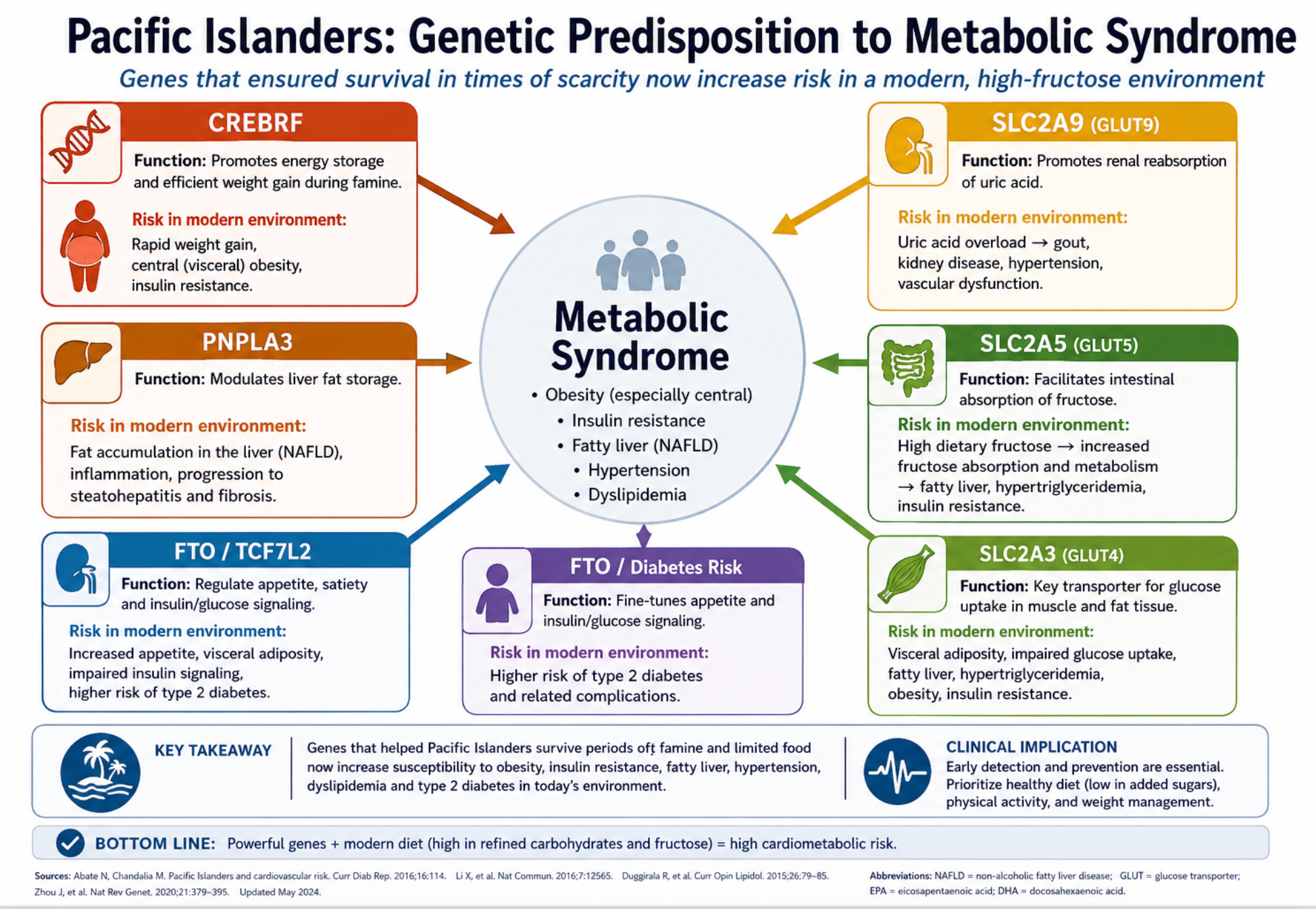
Micronesian populations demonstrate features consistent with adaptation to scarcity:
- efficient energy storage
- strong lipogenic response
- differences in uric acid handling (e.g., SLC2A9 pathways)
These traits were protective historically.
In the modern environment, they increase vulnerability to:
- obesity
- insulin resistance
- fatty liver disease
Disease pattern
Micronesia now shows:
- early-onset obesity
- severe Type 2 diabetes
- high rates of metabolic dysfunction–associated steatotic liver disease
- cardiovascular complications
- cancers previoulsy unknown and appearing in hyougn patient
These conditions often appear:
- earlier in life
- at higher severity
- across entire communities
- In 2026, on the same day, Dr Gregor saw a patient in his early twenties with chest pain surviving his first heart attack at age 23, and a critically ill man in his mid thirties, dying of stage 4 colon cancer. Both had extreme obesity, elevated HbA1C, and fatty liver on ultrasound.
The metabolic shift
The transition introduces:
- rapid glucose and fructose exposure
- increased liver fat production
- elevated triglycerides
- insulin resistance
- rising uric acid levels
This reflects the same pathways described globally, but occurring faster.
A practical shift: returning to traditional starches
A key observation from local experience is that dietary change can work in the opposite direction.
Replacing refined flour products with traditional starches such as:
- taro
- ube
- breadfruit
has been associated with:
- reduction in body weight
- improvement in HbA1c
- reduction in uric acid levels
These changes align with known metabolic mechanisms.
Traditional starches:
- contain more fiber
- are digested more slowly
- reduce rapid sugar exposure
- restore meal structure
Why this works
The benefit is not simply lower calories.
It reflects a change in how energy is delivered:
- slower absorption
- reduced liver fat production
- improved insulin signaling
- lower triglyceride burden
In practical terms:
👉 restoring traditional foods reduces metabolic overload
Intervention opportunity
Micronesia offers one of the clearest opportunities for intervention anywhere.
Key advantages:
- strong cultural memory of traditional foods
- continued availability of root crops
- small, connected populations
Practical strategies include:
- replacing refined flour with taro, ube, and breadfruit
- reducing sugary beverage intake
- restoring structured meal patterns
Early experience suggests that even partial shifts can produce measurable metabolic improvement.
In the Commonwealth of the Northern Mariana Islands, the Public School System has made active monthly school meal menus publicly available for January through April 2026 as part of its Child Nutrition Program, showing continued USDA‑funded meal delivery for students across Saipan, Rota and Tinian. The menus — covering both breakfast and lunch — are routinely posted and downloadable on the CNMI PSS site, evidencing ongoing procurement and delivery operations under federal nutrition assistance funding.
In Guam, the Department of Education’s Food and Nutrition Services section maintains its 2026 National School Lunch Program (NSLP) and School Breakfast Program (SBP) guidance, including relevant USDA policy memoranda for implementation this year, and has an open Food Services Management procurement (RFP 001‑2026) out for vendors to bid on managing meals. While the formal solicitation was issued in late 2025, it continues to shape the procurement window for potential meal providers.
Why Micronesia matters
Micronesia is both:
- a warning
- and a solution
It shows:
- how quickly metabolic disease can emerge
- how strongly diet drives that change
- how reversible some of these patterns may be
This makes it one of the most important regions in understanding the global metabolic crisis.
Explore Full Atlas of the Global Metabolic Crisis
Main Global Crisis Page • How the Metabolic Crisis Developed • Rising Chronic Disease
Regions:
Africa • Europe • Middle East and North Africa • South Asia • East Asia • Southeast Asia • Oceania and Pacific Islands • Latin America and Caribbean • North America