Early Insulin Resistance in a Modern Food Environment
A Region of Ancient Food Traditions and Modern Metabolic Risk
South Asia developed around complex, deeply rooted food cultures shaped by climate, agriculture, trade, and religion. Traditional diets varied widely across India, Pakistan, Bangladesh, Sri Lanka, and neighboring regions, but they often shared certain structural features: home cooking, legumes, grains eaten in meal context, vegetables, spices, and relatively limited industrial sugar exposure.
Today, that balance is breaking down.
Rapid urbanization, reduced physical activity, refined carbohydrates, sweetened beverages, and packaged foods have created a metabolic environment that is especially dangerous in South Asia. In many populations, diabetes and visceral adiposity appear at lower body weights and younger ages than expected.
This is one of the defining metabolic stories of the modern world.
Then vs Now
Traditional Patterns
- Lentils, beans, and pulses
- Rice or flatbreads in meal structure
- Vegetables, herbs, and spices
- Fermented foods in some regions
- Limited industrial sugar
Modern Food Environment
- Refined grains
- Sweetened beverages
- Packaged snacks and sweets
- Constant grazing and convenience eating
The issue is not simply carbohydrates. It is the shift from traditional meal structures to refined, rapidly absorbed, industrialized calories.
Core Mechanism
Across South Asia, chronic fructose and refined-carbohydrate exposure intensify a familiar pathway:
- Fructose uptake through GLUT5
- Liver metabolism through Ketohexokinase
This contributes to:
- hepatic fat accumulation,
- rising uric acid,
- Insulin resistance,
- and Metabolic dysfunction–associated steatotic liver disease.
Why South Asia Matters
South Asia is one of the clearest examples of a population developing:
- diabetes at younger ages,
- metabolic disease at lower BMIs,
- and disproportionately severe insulin resistance.
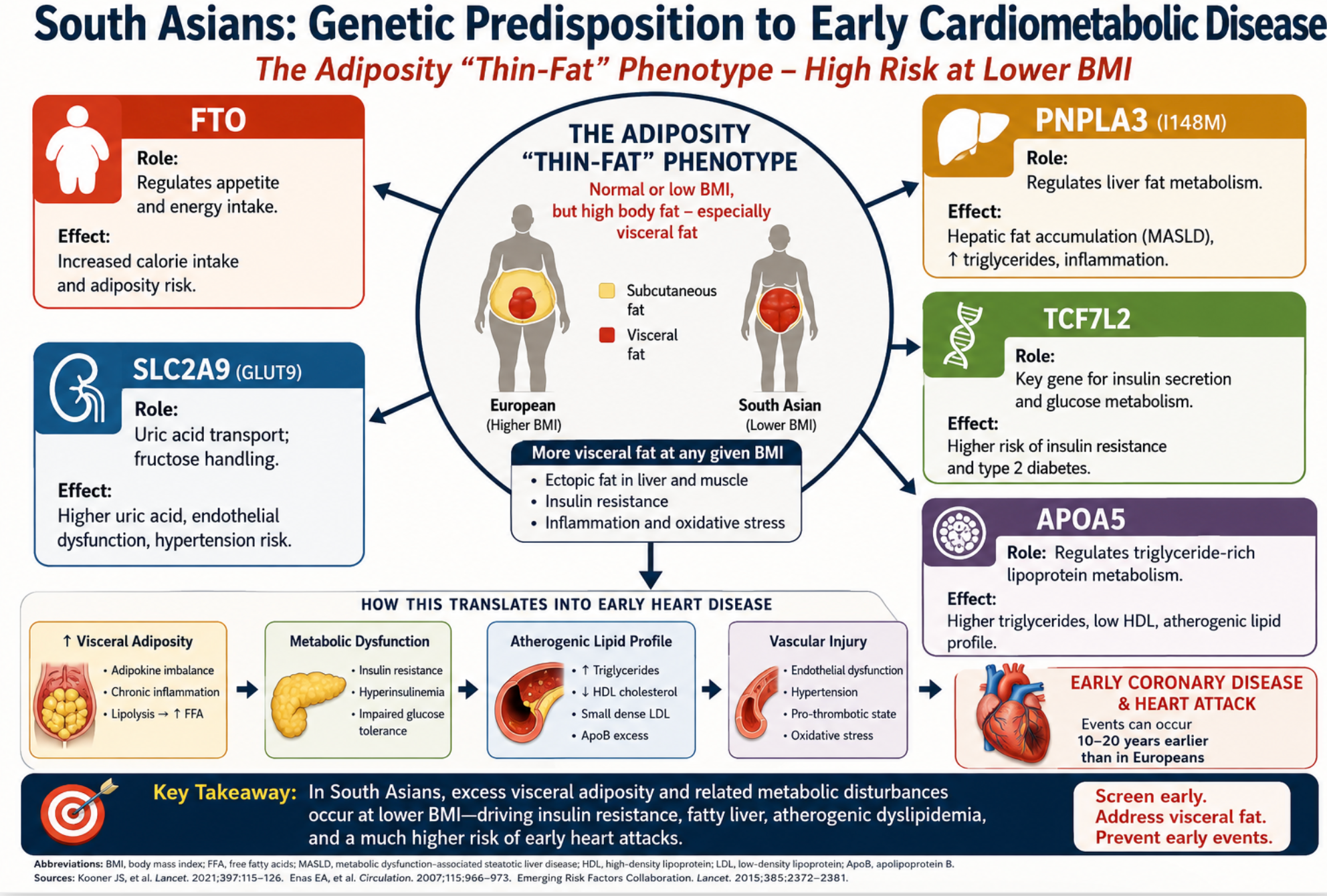
This region is central to the global story.
Explore Full Atlas of the Global Metabolic Crisis
Main Global Crisis Page • How the Metabolic Crisis Developed • Rising Chronic Disease
Regions:
Africa • Europe • Middle East and North Africa • South Asia • East Asia • Southeast Asia • Oceania and Pacific Islands • Latin America and Caribbean • North America