From Aboriginal Food Systems to a Modern Industrial Diet
A continent of contrasting food systems
Australia contains two very different dietary histories:
- Aboriginal food systems developed over tens of thousands of years, precisely adapted to diverse environments
- Modern Australian diets shaped by European settlement, industrial agriculture, and global food systems
Today, these systems coexist uneasily, with major implications for metabolic health.
Aboriginal food systems
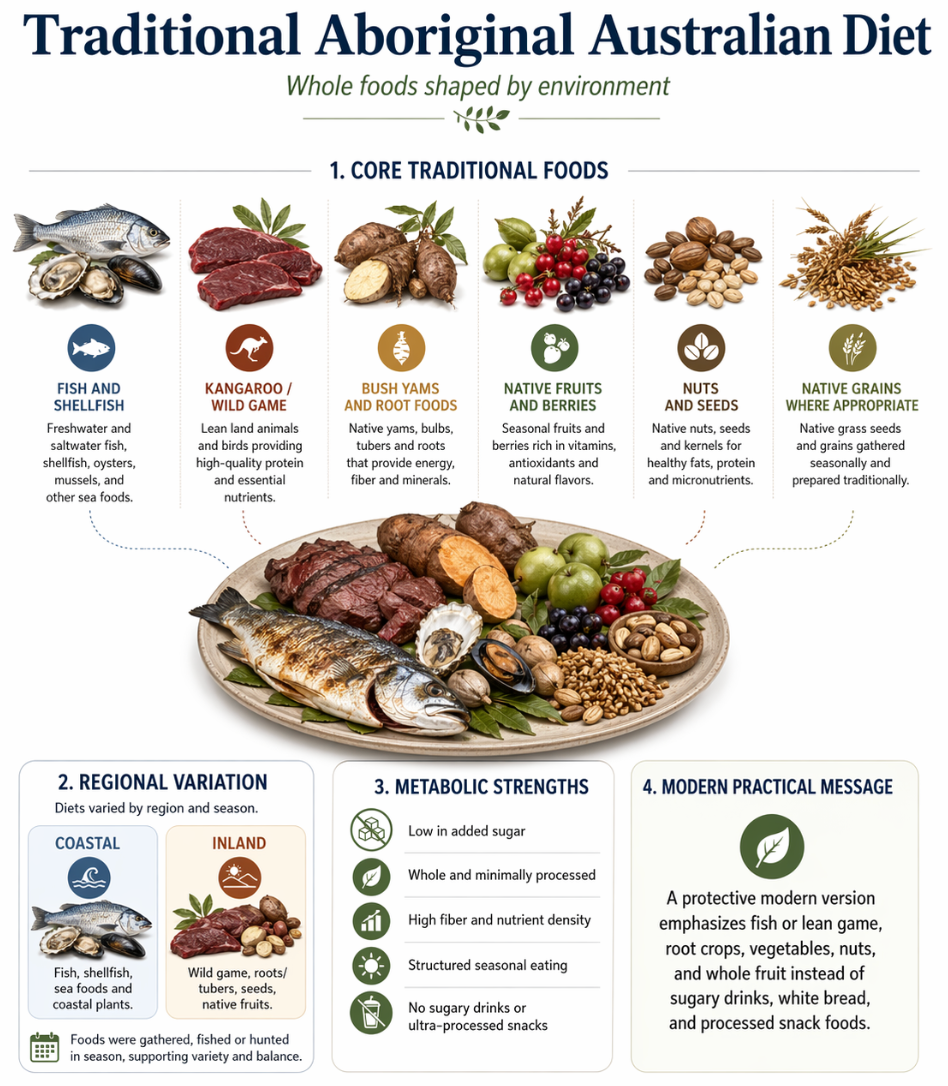
Aboriginal Australians developed regionally adapted diets often referred to as “bush foods.”
These included:
- wild game (kangaroo, emu)
- fish and shellfish in coastal regions
- roots, tubers, and seeds
- native fruits and plants
Key features:
- minimally processed foods
- high nutrient density
- low added sugar
- strong seasonal and feast–fast cycles
These systems supported metabolic stability in harsh and variable environments.
Then vs Now
Traditional Pattern
Wild and locally sourced foods
Seasonal availability
High physical activity
Minimal sugar exposure
Structured intake patterns
Modern Pattern
Refined grains and flour products
Sugary beverages
Ultra-processed foods
Frequent snacking
Reduced activity
The transition has been rapid, especially in urban settings.
Disruption of Aboriginal diets
The shift away from traditional foods occurred abruptly.
Key drivers:
- displacement from traditional lands
- loss of access to hunting and gathering
- reliance on store-bought and commodity foods
- introduction of refined flour and sugar
This represents a rapid transition from highly adapted diets to industrial foods.
The “store food” pattern
In many remote and regional communities, modern diets often rely on:
- refined flour products
- sugar
- processed foods
- sugary beverages
These foods are:
- energy-dense
- low in fiber
- rapidly absorbed
They differ fundamentally from traditional diets.
Sugary beverages and liquid sugar
Sugary drinks are a major contributor to dietary change.
They are:
- widely available
- frequently consumed
- often cheaper than healthier options
This introduces:
- rapid sugar absorption
- frequent intake
- increased metabolic load
The modern Australian diet
Across the broader population, diets are characterized by:
- ultra-processed foods
- refined carbohydrates
- sugary drinks
- large portion sizes
- frequent eating
Australia is now a fully developed industrial food environment.
Disease pattern
Australia is experiencing:
- high rates of obesity
- rising Type 2 diabetes
- metabolic syndrome
- fatty liver disease
- cardiovascular disease
These patterns are especially severe in Aboriginal populations, where the transition was most abrupt.
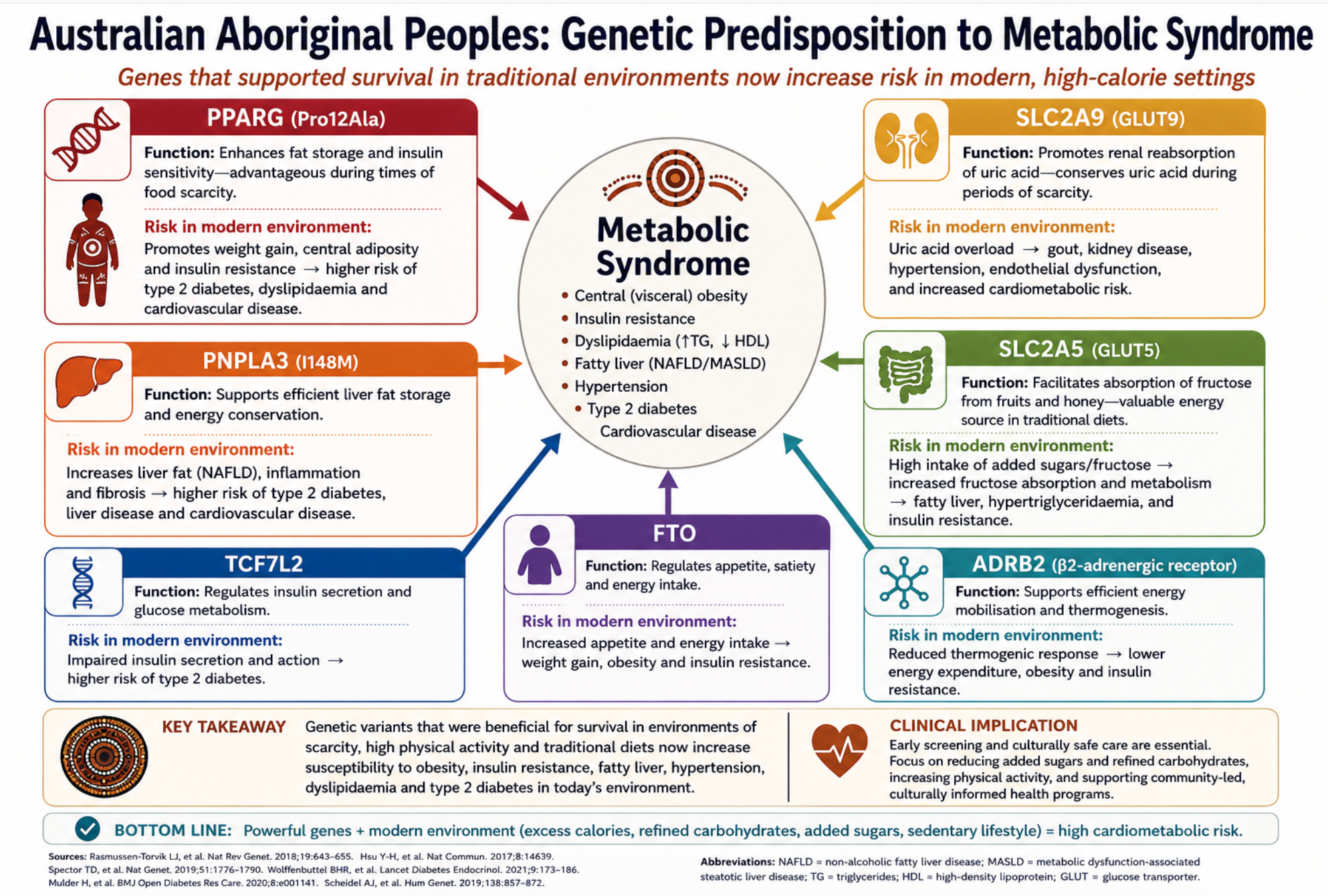
The metabolic transition
The shift introduces:
- rapid glucose and fructose exposure
- increased liver fat production
- insulin resistance
- dyslipidemia
These are the same pathways seen globally in metabolic disease.
Why Australia matters
Australia provides a clear contrast:
- highly adapted traditional food systems
- rapid and externally driven dietary disruption
- full exposure to modern industrial food patterns
It demonstrates both extreme vulnerability and complete transition within one country.
Intervention opportunity
Important strengths remain:
- growing interest in native foods
- recognition of traditional dietary knowledge
- strong public health awareness
Potential strategies include:
- reintroducing traditional foods where possible
- reducing ultra-processed food intake
- limiting sugary beverages
- restoring structured eating patterns
Nutrition Intervention in Schools
Australia is beginning to recognize that school food is not just a lunchbox issue — it is a national health issue. Most Australian children still bring food from home or buy from school canteens, but recent reviews have shown that many school-day meals are high in packaged snacks and low in vegetables, fiber, and whole foods. Australia’s National Healthy School Canteens project and newer school-food initiatives are trying to shift schools away from sugary drinks, confectionery, and ultra-processed snack foods toward healthier everyday foods.
Some public-health groups are now asking a larger question: should Australia move beyond the lunchbox-and-canteen model and toward a more structured national school meal system? That discussion matters because children eat a large share of their weekday food at school, and school food may be one of the most practical places to interrupt the modern pattern of obesity, fatty liver, diabetes, and lifelong metabolic risk.
Bottom line
Australia reflects both:
- the loss of highly adapted traditional diets
- and the full establishment of a modern industrial food system
The contrast between these two systems illustrates how rapidly metabolic disease can emerge when diet changes faster than biology can adapt.
Explore Full Atlas of the Global Metabolic Crisis
Main Global Crisis Page • How the Metabolic Crisis Developed • Rising Chronic Disease
Regions:
Africa • Europe • Middle East and North Africa • South Asia • East Asia • Southeast Asia • Oceania and Pacific Islands • Latin America and Caribbean • North America