Adaptive Genotypes, Disrupted Food Systems, and Rapid Metabolic Disease
Highly adapted traditional systems
Indigenous populations across North America developed highly specialized food systems matched to local environments.
These systems varied by region:
Arctic and Subarctic
Fish, marine mammals, wild game, seasonal berries
Pacific Northwest
Salmon, shellfish, forest foods
Plains
Bison, wild plants, seasonal hunting
Eastern Woodlands
Game, maize, beans, squash
Southwestern United States and Northern Mexico
Maize, beans, squash, chili, desert-adapted crops
Mesoamerican regions
Maize-based agriculture with diverse plant foods
Despite these differences, traditional diets shared key features:
- whole, minimally processed foods
- high fiber intake
- low added sugar
- strong seasonal and meal structure
These systems supported metabolic stability over long periods of time.
Adaptive metabolic biology
These dietary systems were paired with metabolic adaptations.
Many Indigenous populations demonstrate:
- efficient energy storage pathways
- strong lipogenic responses to carbohydrate intake
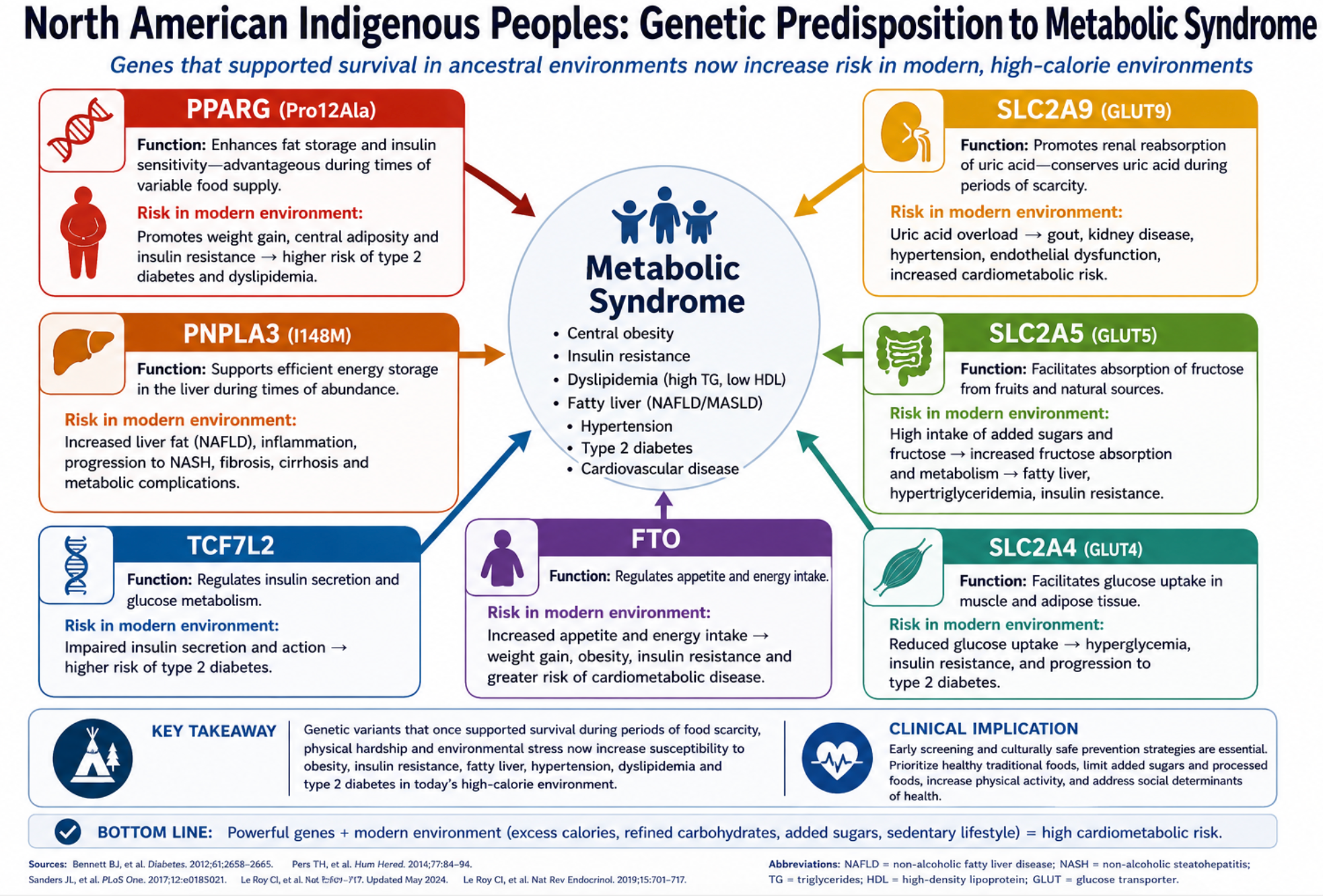
- differences in uric acid handling (including SLC2A9-related pathways)
- genetic variants affecting hepatic fat metabolism (e.g., PNPLA3)
These traits were advantageous in environments characterized by:
- variable food availability
- seasonal scarcity
- high physical activity
In those settings, efficient storage and energy conservation were protective.
The Southwestern and Mesoamerican continuum
The U.S. Southwest and Northern Mexico form a continuous agricultural and cultural region.
Populations such as the Pima and Navajo relied on:
- maize-based agriculture
- beans and legumes
- squash and desert crops
These diets were:
- high in fiber
- low in added sugar
- metabolically stable
In southern Mexico, similar maize-based systems formed the nutritional foundation.
Then vs Now
Traditional Pattern
Wild and locally sourced foods
Maize-based agriculture in southern regions
Seasonal availability
Structured meals
Minimal sugar exposure
Modern Pattern
Refined flour
Added sugar
Processed commodity foods
Sugary beverages
Frequent eating patterns
The transition was rapid and externally driven.
Disruption of food systems
The shift away from traditional diets occurred abruptly.
Key drivers included:
- loss of access to traditional lands
- disruption of agriculture and hunting systems
- reliance on imported and commodity foods
- introduction of refined flour and sugar
In the Southwest, traditional maize-based diets were replaced by:
- refined wheat flour
- processed foods
- sugar-rich products
This created a completely new metabolic environment.
The Pima example
The Pima provide one of the clearest examples of rapid metabolic transition.
Historically:
- maize, beans, and locally grown foods
- structured intake and high activity
After transition:
- refined flour and sugar
- processed foods
- reduced physical activity
This shift was associated with:
- extremely high rates of Type 2 diabetes
- early-onset metabolic disease
It is one of the most well-documented examples of environment overwhelming adaptation.
Fatty liver and metabolic disease
One of the most important clinical features in this population is the rising prevalence of metabolic dysfunction–associated steatotic liver disease (MASLD).
This reflects:
- increased hepatic fat accumulation
- high rates of insulin resistance
- elevated triglycerides
Genetic susceptibility (e.g., PNPLA3 variants) may increase the likelihood of:
- liver fat accumulation
- progression of liver disease
This makes fatty liver a central part of the disease pattern.
Sugary beverages and fructose exposure
Sugary drinks have become a major component of dietary change.
They introduce:
- rapid sugar absorption
- high fructose exposure
- frequent intake
- minimal satiety
This drives:
- liver fat production
- uric acid generation
- triglyceride elevation
- insulin resistance
The pattern differs fundamentally from traditional diets.
Loss of dietary structure
Traditional systems emphasized:
- defined meals
- seasonal variation
- natural cycles of intake
Modern patterns include:
- continuous eating
- snacking
- liquid calorie consumption
This increases metabolic load and reduces regulatory balance.
Disease pattern
Indigenous populations across North America now experience:
- very high rates of Type 2 diabetes
- obesity
- metabolic syndrome
- fatty liver disease
- cardiovascular disease
These conditions often appear:
- at younger ages
- with greater severity
- across entire communities
The metabolic transition
The shift from traditional to modern diet introduces:
- rapid glucose and fructose exposure
- increased hepatic fat accumulation
- insulin resistance
- dyslipidemia
In genetically susceptible populations, these changes may occur more rapidly and with greater severity.
Why this region matters
Indigenous North America provides one of the clearest examples of:
- rapid environmental change
- interaction with adaptive metabolic biology
- emergence of metabolic disease
It demonstrates how:
adaptive traits under scarcity
→ become liabilities under abundance
A broader comparison
This pattern parallels:
- Pacific Island populations
- Arctic communities
- rapidly transitioning regions globally
In each case:
traditional diet + adaptive biology
→ rapid change in food environment
→ metabolic disease
Intervention opportunity
Important strengths remain:
- knowledge of traditional foods
- cultural connection to land and agriculture
- continued use of maize-based systems in some regions
Reintroducing:
- traditional crops (maize, beans, squash)
- structured meal patterns
- reduced sugar exposure
may help restore metabolic balance.
Bottom line
Indigenous North America illustrates the interaction between:
- adaptive genetic traits
- rapid dietary disruption
- modern food environments
The result is a highly vulnerable metabolic state, where liver fat, insulin resistance, and cardiometabolic disease emerge quickly when traditional systems are replaced
Mesoamerican regions (southern Mexico)
Maize-based agriculture with beans, squash, and diverse plant foods
Despite regional differences, these systems shared key features:
- whole, minimally processed foods
- strong seasonal structure
- high nutrient density
- low added sugar
- clear feast–fast cycles
These patterns supported metabolic stability for generations.
The Southwestern and Mesoamerican continuum
The U.S. Southwest and Northern Mexico form a continuous cultural and agricultural region.
Populations such as the Pima and Navajo historically relied on:
- maize-based agriculture
- beans and legumes
- squash and desert crops
- locally adapted plant foods
In southern Mexico, similar maize-based systems formed the foundation of traditional diets.
These systems were:
- high in fiber
- low in added sugar
- metabolically stable
- tightly linked to land and climate
Then vs Now
Traditional Pattern
Wild and locally sourced foods
Maize-based agriculture in southern regions
Seasonal availability
Structured meals
Minimal sugar exposure
High physical activity
Modern Pattern
Refined flour
Added sugar
Processed commodity foods
Sugary beverages
Reduced dietary structure
The transition was rapid and externally driven.
Disruption of food systems
The shift away from traditional diets occurred abruptly.
Key drivers included:
- loss of access to traditional lands
- disruption of agricultural systems
- dependence on imported and commodity foods
- introduction of refined flour, sugar, and processed products
In the Southwest, traditional maize-based diets were replaced by:
- refined wheat flour
- processed foods
- sugar-rich products
This represents one of the clearest examples of rapid dietary transition.
The Pima example
The Pima people provide one of the most well-documented examples of metabolic transition.
Historically, they consumed:
- maize
- beans
- squash
- locally grown foods
With environmental and economic change, this diet shifted toward:
- refined flour
- sugar
- processed foods
This transition was associated with:
- some of the highest recorded rates of Type 2 diabetes
- rapid emergence of metabolic disease
This illustrates how quickly metabolic health can deteriorate when dietary systems change.
Commodity food systems
Across Indigenous North America, traditional foods were replaced by:
- refined flour
- sugar
- processed grains
- packaged foods
These foods were:
- calorie-dense
- low in fiber
- rapidly absorbed
- metabolically disruptive
They differ fundamentally from traditional diets.
Sugary beverages and modern exposure
Sugary drinks have become a major component of the modern diet.
They introduce:
- rapid sugar absorption
- frequent intake
- minimal satiety
- increased liver fat production
This pattern did not exist in traditional food systems.
Loss of dietary structure
Traditional systems emphasized:
- defined meal timing
- seasonal variation
- natural cycles of intake
Modern patterns include:
- continuous eating
- frequent snacking
- liquid calorie consumption
This increases metabolic load.
Disease pattern
Indigenous populations across North America now experience:
- very high rates of Type 2 diabetes
- obesity
- metabolic syndrome
- cardiovascular disease
- fatty liver disease
These conditions often appear:
- at younger ages
- with greater severity
- across entire communities
Explore Full Atlas of the Global Metabolic Crisis
Main Global Crisis Page • How the Metabolic Crisis Developed • Rising Chronic Disease
Regions:
Africa • Europe • Middle East and North Africa • South Asia • East Asia • Southeast Asia • Oceania and Pacific Islands • Latin America and Caribbean • North America