1 — One Disease. Many Names.
One Biological Pathway.
Most modern chronic diseases are described separately—obesity, diabetes, fatty liver disease, gout, heart disease.
But at a biological level, they are not separate.
They are different expressions of the same underlying metabolic process.
This site is built around a simple model:
Fructose → Liver → Uric Acid → Fat → Systemic Disease
Once you understand this pathway, the modern global health crisis becomes easier to see—and more importantly, easier to act on.
2 — THE CORE ARC
The Metabolic Pathway
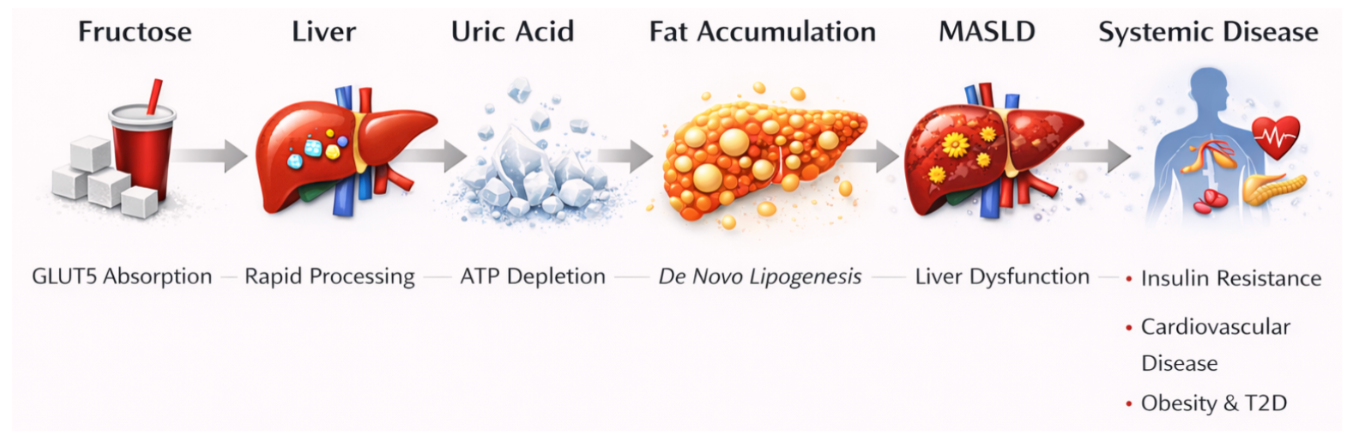
Fructose is handled differently from other nutrients.
Instead of being distributed throughout the body, it is transported directly to the liver through the portal vein—what we call a “liver-first” metabolism.
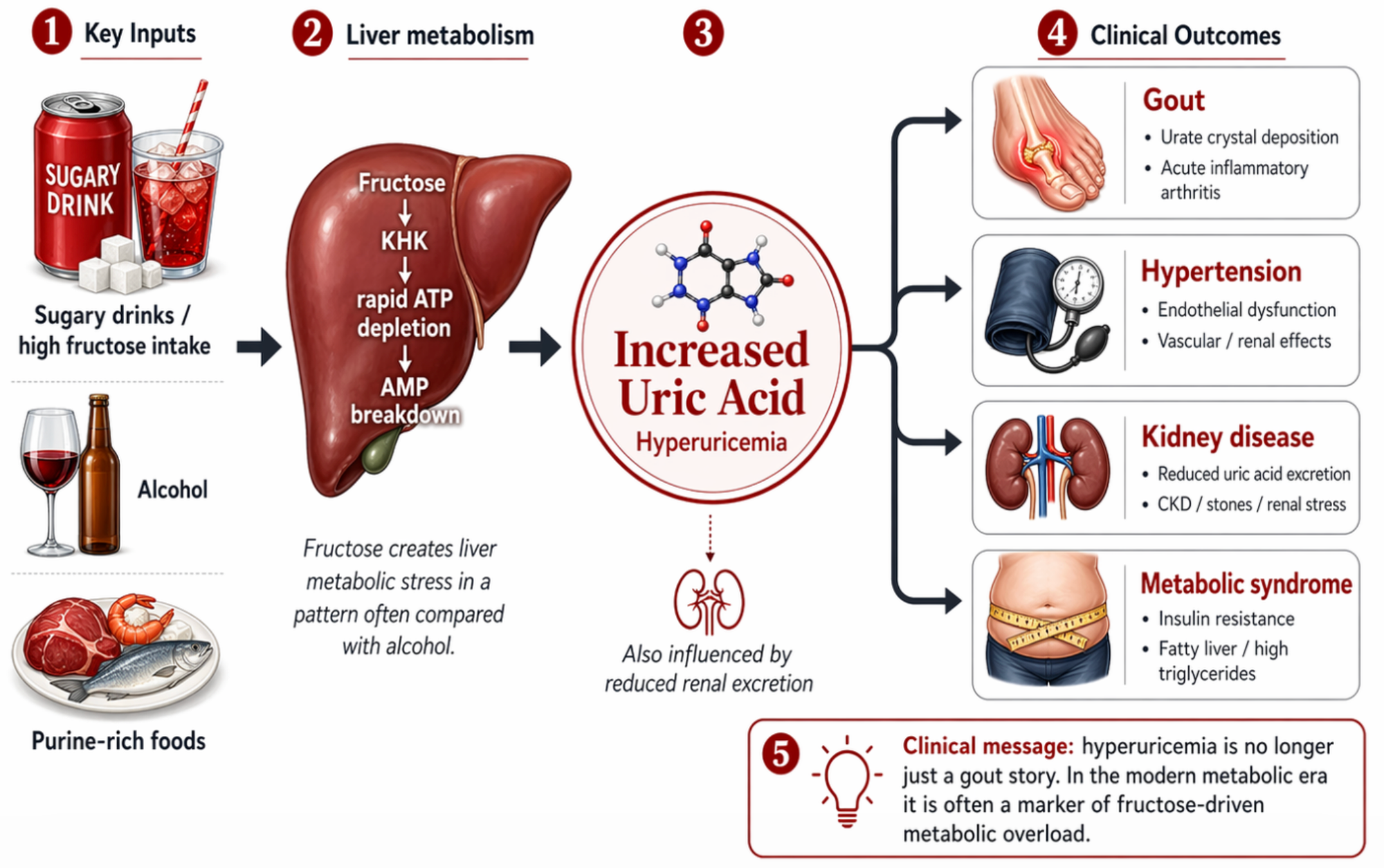
Inside the liver, fructose is rapidly phosphorylated by ketohexokinase (KHK), consuming ATP and generating a transient energy deficit.
This triggers a cascade:
- ATP depletion
- AMP breakdown
- Increased uric acid production
- Mitochondrial stress
- Activation of fat synthesis pathways
The result is a shift toward fat storage and metabolic dysfunction, even in the absence of excess calories.
3 — WHY URIC ACID MATTERS
Uric Acid: From Survival Advantage to Modern Risk
Uric acid is not just a waste product.
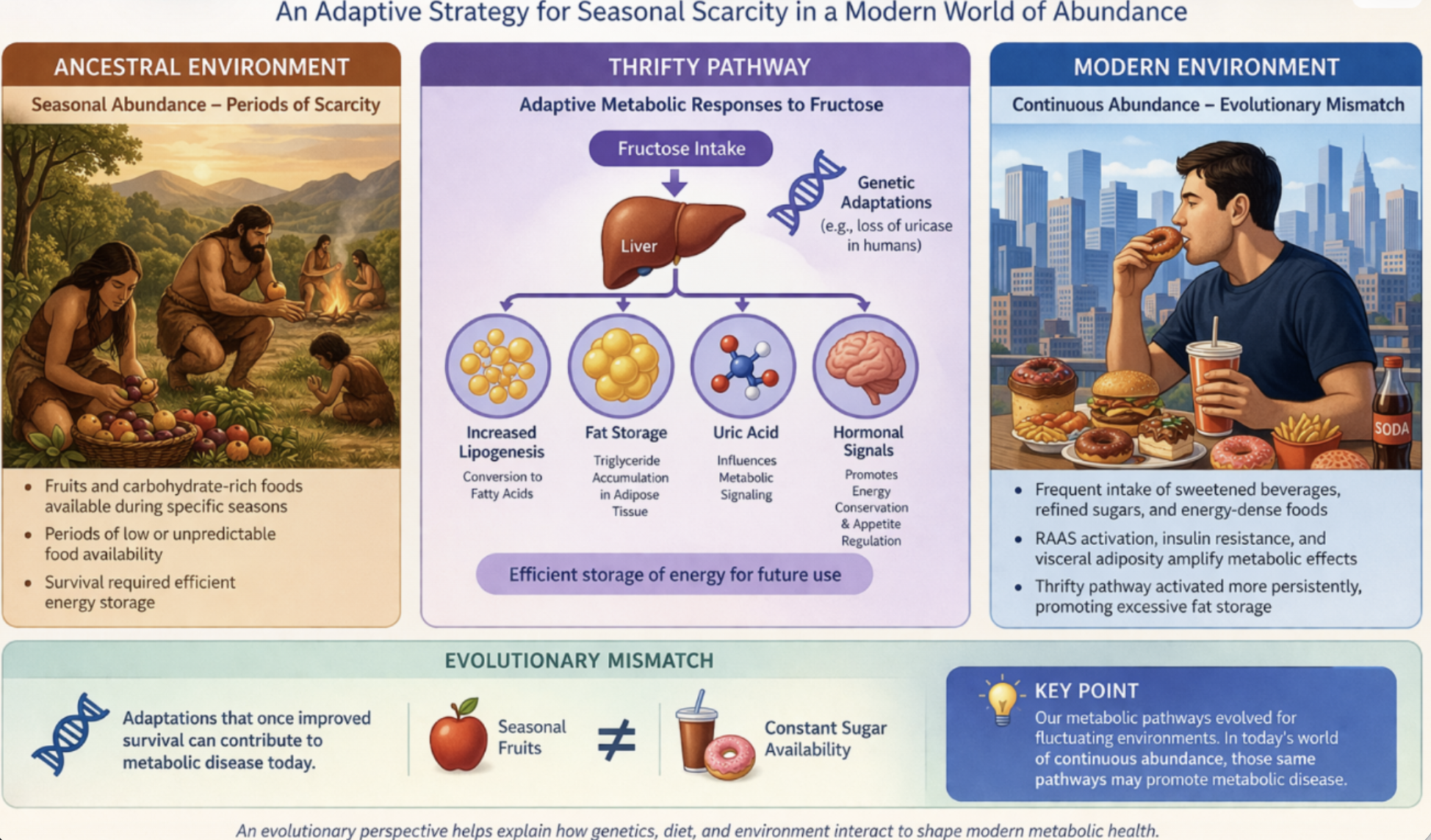
In human evolution, it functioned as a survival signal—helping the body conserve energy, retain sodium, and promote fat storage during periods of scarcity. It was also at a low level, in solution and functioning as an anti-oxidant.
That biology still exists. But in a world of constant fructose exposure, the same mechanism becomes maladaptive. The uric acid level rises, and it crystalizes.
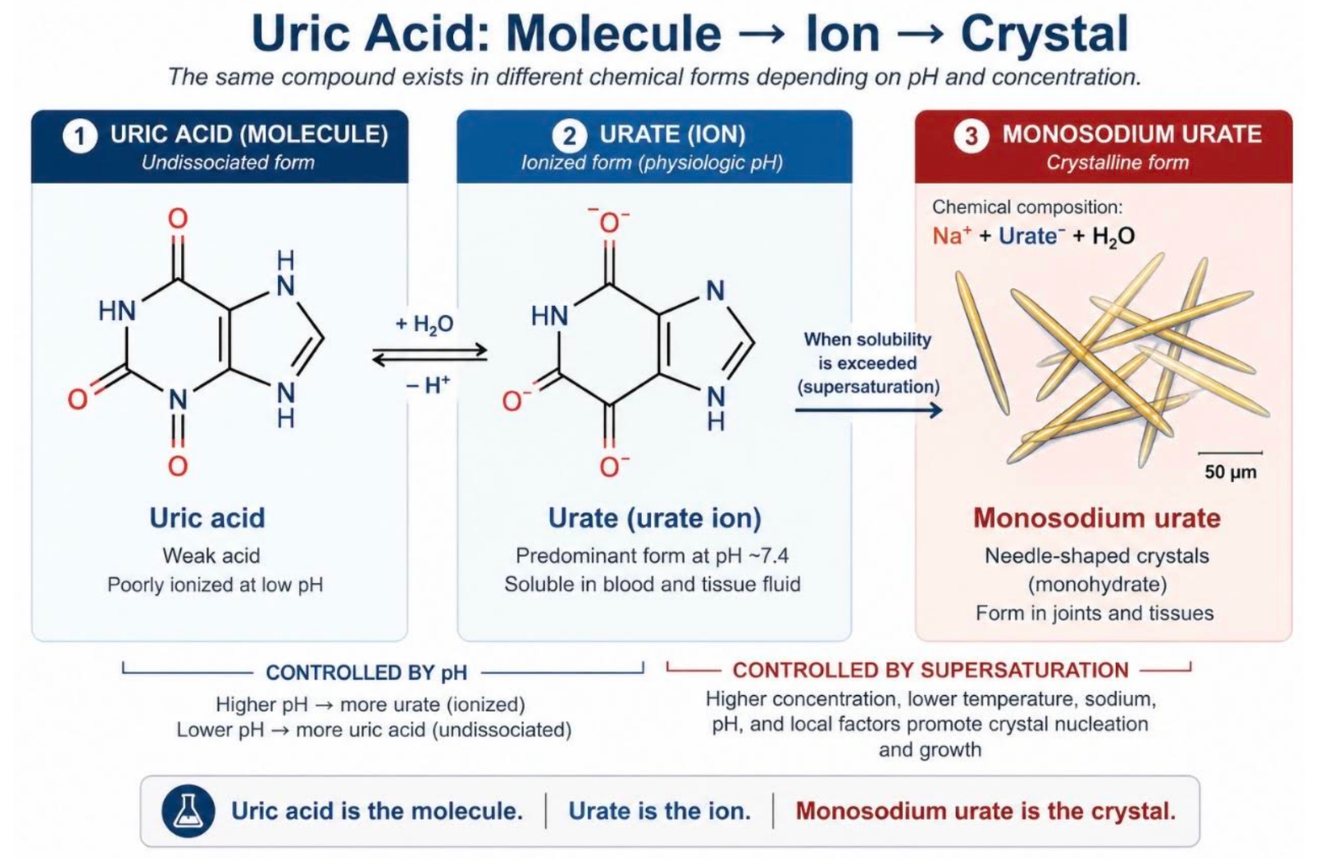
Chronically elevated uric acid is associated with:
- Gout
- Hypertension
- Fatty liver disease (MASLD)
- Chronic kidney disease
- Cardiovascular disease
It is one of the clearest biochemical markers of metabolic overload.
4 — THE LIVER AS THE GATEHOUSE
The Liver: First Checkpoint
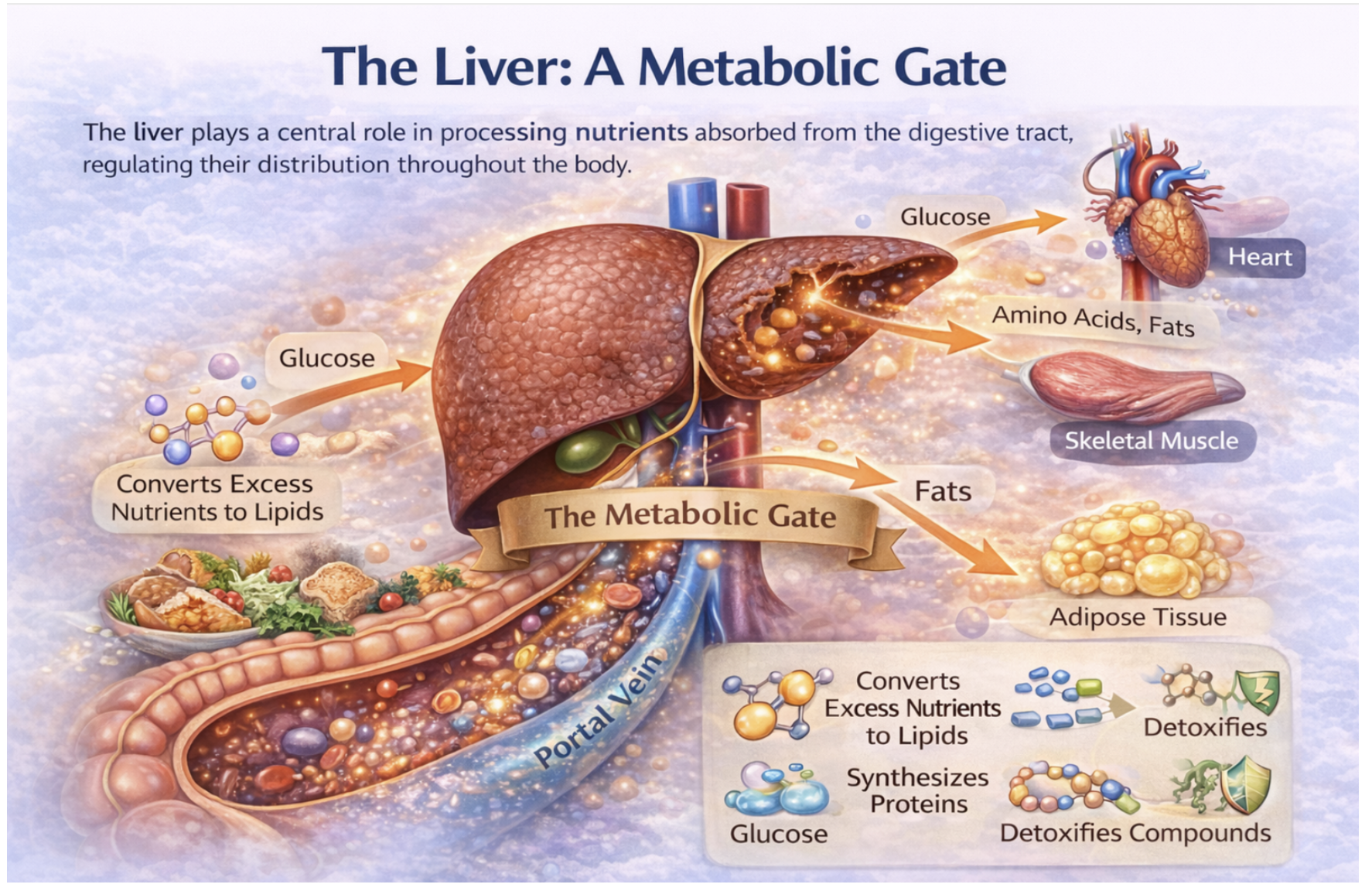
The liver is not just an organ—it is the metabolic gatekeeper.
Every fructose load passes through it first.
In small amounts, this system works efficiently.
But repeated exposure—especially in liquid form—overwhelms the system:
- Increased de novo lipogenesis (fat creation)
- Fat accumulation within hepatocytes
- Insulin resistance
- Spillover of metabolic dysfunction into the bloodstream
This is the starting point of systemic disease.
5 — FROM LOCAL TO SYSTEMIC DISEASE
From Liver Stress to Whole-Body Disease
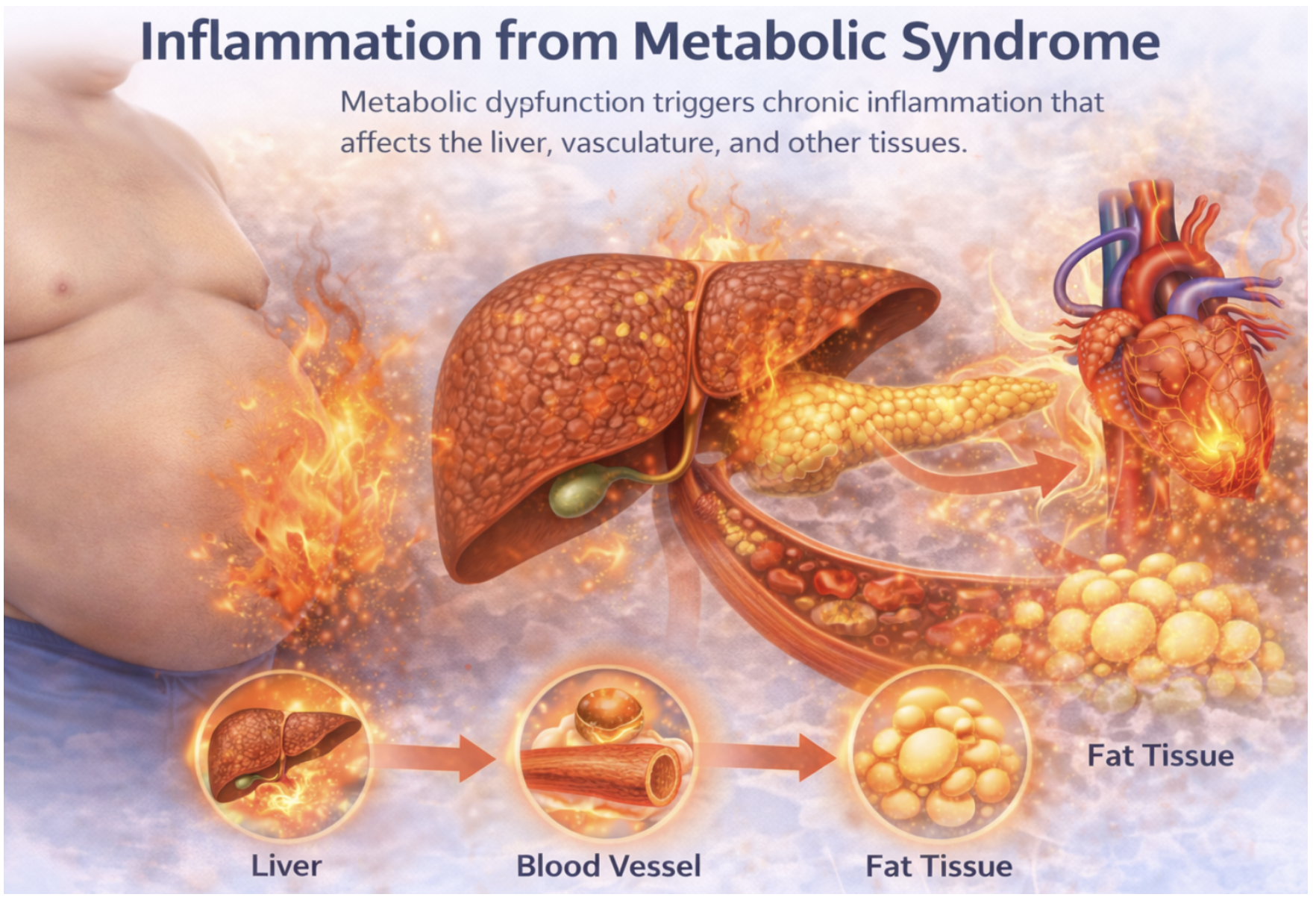
Once hepatic metabolism is disrupted, the effects extend far beyond the liver:
- Adipose tissue expands and becomes inflamed
- Insulin signaling becomes impaired
- Blood pressure rises
- Renal handling of urate and sodium shifts
- Vascular function deteriorates
Different individuals express different endpoints:
- One develops diabetes
- Another develops gout
- Another develops heart disease
The pathway is shared.
The presentation varies.
6 — WHY THIS HAPPENED
Fifty Thousand Years… Undone in Fifty
Human metabolism evolved over tens of thousands of years in environments where sugar was rare and seasonal.
In the past 50 years, that environment changed rapidly:
- High-fructose sweeteners became widespread
- Ultra-processed foods became dominant
- Liquid sugar consumption increased dramatically
The biology did not change.
The environment did.
This is a classic example of evolutionary mismatch.
7 — WHAT THIS MEANS
What This Means in Practice
This model is not about blame or restriction. It is about alignment with biology.
Across cultures and ancestries, the protective pattern is consistent:
- Whole foods
- Fiber-rich carbohydrates
- Minimal processing
- Limited liquid sugar
- Traditional preparation methods
Different populations express this differently—but the principles are shared.
8 — TRANSITION
Where to Go Next
For Clinicians Understand screening, biomarkers, and practical workflows
For Community & Policy Work
Explore school nutrition and ancestral food projects
For a Deeper Read
Book 1: The Sweet Killer (1st Edition)