What Is Fatty Liver Disease — MASLD?
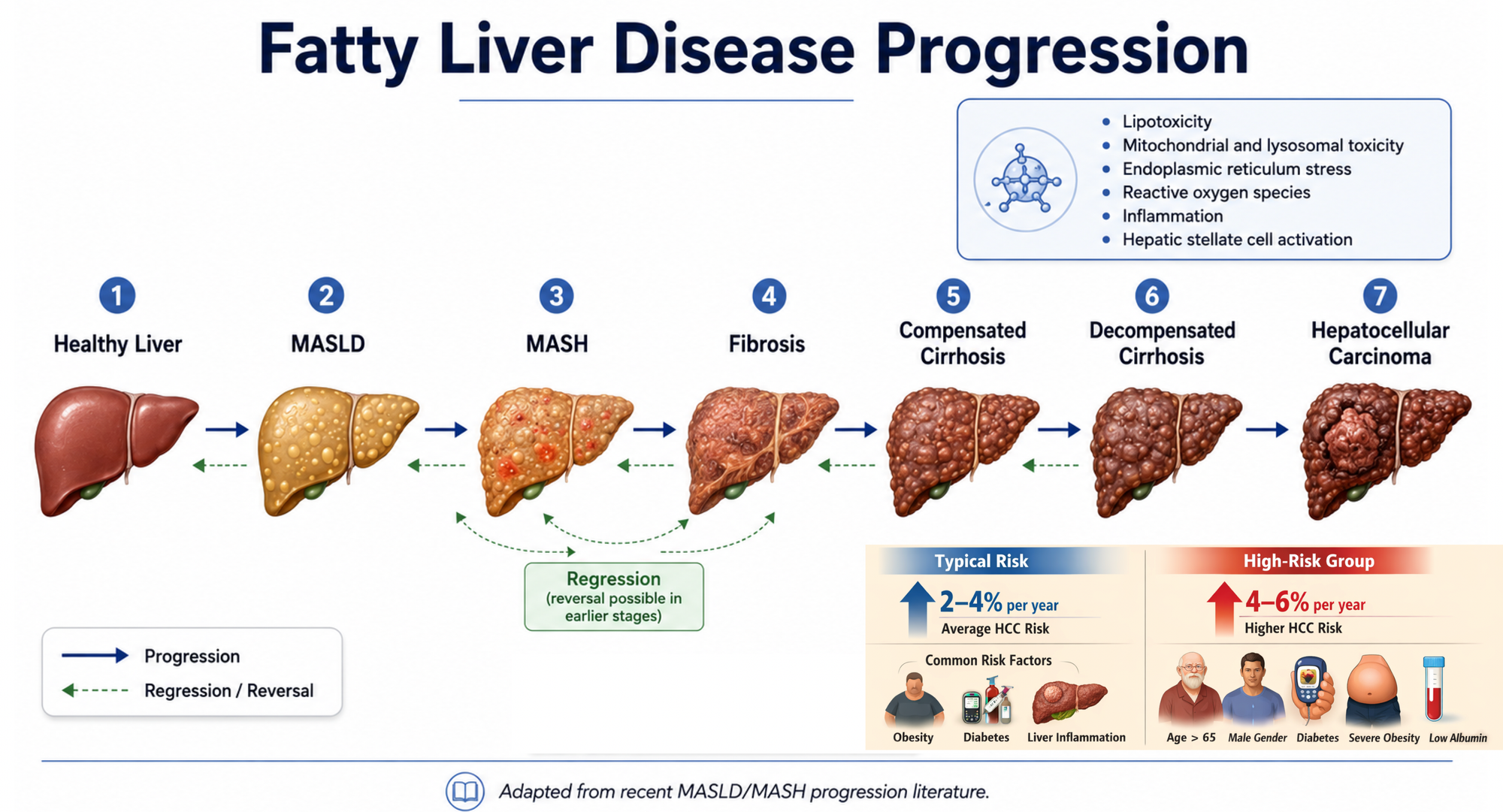
Fatty liver disease means excess fat has built up in the liver. Today, the term MASLD — metabolic dysfunction-associated steatotic liver disease — is increasingly used for the condition previously called NAFLD, because the disease is closely tied to metabolic dysfunction. AASLD says NAFLD is now called MASLD, and that MASLD includes people with liver fat plus at least one of five cardiometabolic risk factors.
This is why fatty liver disease should not be treated as an isolated liver problem. It often sits inside a larger metabolic pattern involving insulin resistance, type 2 diabetes, high triglycerides, low HDL cholesterol, high blood pressure, abdominal weight gain, and diet.
What happens in fatty liver disease?
NIDDK defines NAFLD/MASLD as excess fat building up in the liver when the buildup is not caused by heavy alcohol use. It describes two major forms: a simpler fatty liver form with little or no inflammation, and a more severe inflammatory form formerly called NASH and now often called MASH.
H2: Why MASLD is a metabolic disease
NIDDK lists obesity, insulin resistance, type 2 diabetes, abnormal blood fats, high triglycerides, low HDL cholesterol, high blood pressure, higher-than-normal blood glucose, and metabolic syndrome traits as factors that make NAFLD/MASLD more likely.
Why this matters beyond the liver
NIDDK notes that people with NAFLD have higher risk for cardiovascular disease, type 2 diabetes, metabolic syndrome, high blood pressure, and abnormal cholesterol or triglyceride levels.
What tests detect fatty liver disease?
Doctors use medical history, physical exam, blood tests, imaging tests, and sometimes liver biopsy to diagnose NAFLD/MASLD and distinguish fatty liver from more serious steatohepatitis.
Read Fatty Liver Symptoms and Warning Signs to understand what you may notice — and what only testing can reveal. What Is Obesity→ Fructose and triglycerides → Metabolic Syndrome Criteria → Metabolic Syndrome Chemistry → High Triglycerides → Insulin resistance
Q: Is MASLD the same as NASH or fatty liver disease?
A: MASLD is the newer term for much of what was previously called NASH or NAFLD.
Q: Is fatty liver only caused by alcohol?
A: No. MASLD refers to fatty liver linked to metabolic dysfunction rather than heavy alcohol use. Research has determined that a can of regular soda contains 20 grams of fructose and a can of beer contains 20 grams of fructose. Fructose behaves just like alcohol in the liver. Some ethnic groups are especially vulnerable to get liver disease from added sugars, especially fructose
Q: Is fatty liver connected to diabetes?
A: Yes. NIDDK lists insulin resistance and type 2 diabetes among conditions that make NAFLD/MASLD more likely.
Q: Is fatty liver connected to cancer?
A: Yes. Once cirrhosis develops there is a significant risk every year of developing cancer of the liver.