Uric Acid: The Early Warning Signal of Metabolic Overload
Why Uric Acid Matters
Uric acid is often thought of as a footnote—something related to gout and little else.
That view is outdated.
Uric acid is one of the earliest measurable signals that the body is under metabolic stress, particularly from excess sugar exposure.
What Is Uric Acid?
Uric acid is a byproduct of energy metabolism.
It is generated when ATP (the cell’s energy currency) is rapidly consumed and broken down. Under normal conditions, levels remain stable.
But when certain metabolic pathways are overstimulated, uric acid rises.
The Fructose Connection
A key driver of uric acid production is fructose metabolism:
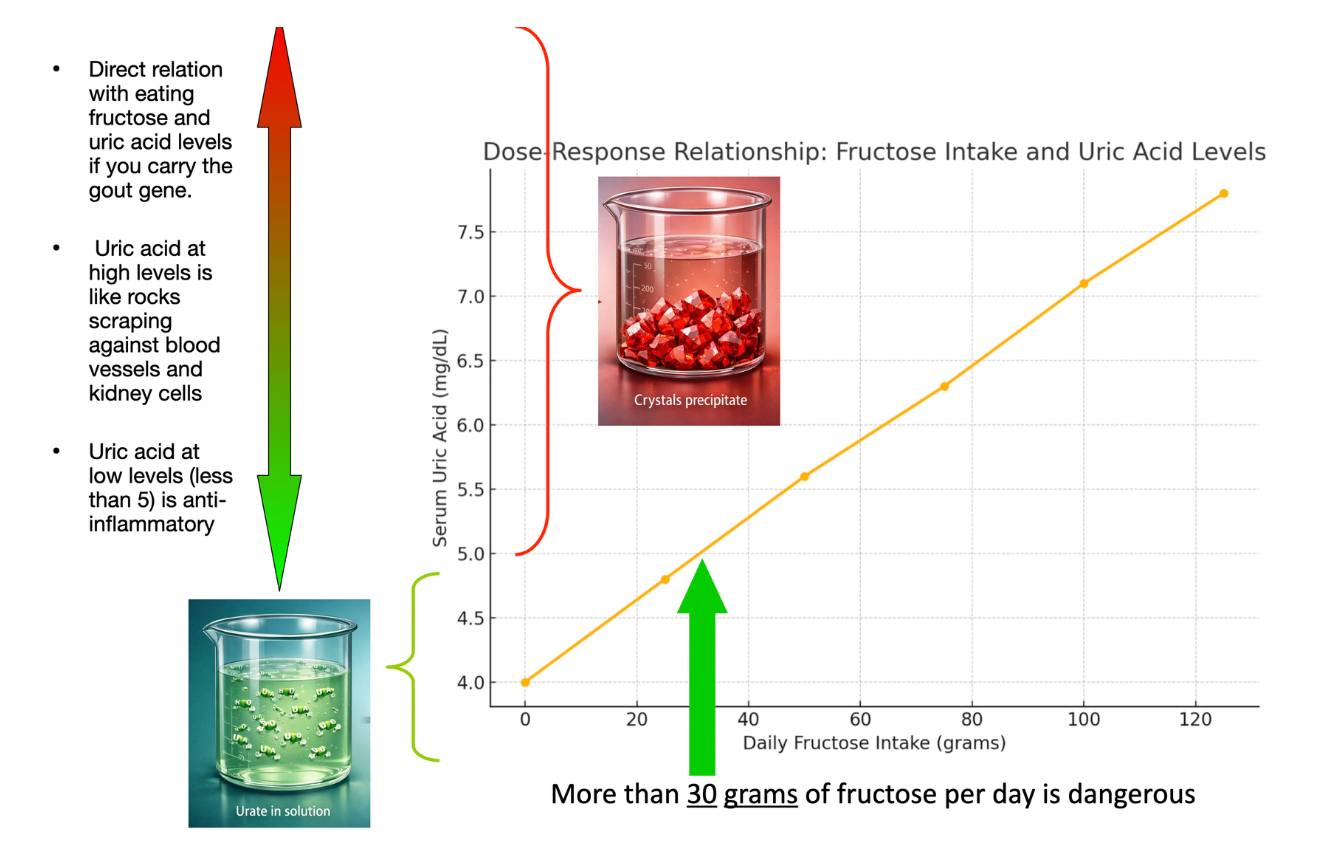
- Fructose enters cells via GLUT5
- It is rapidly phosphorylated in the liver by Ketohexokinase
This process:
- consumes ATP quickly
- increases AMP breakdown
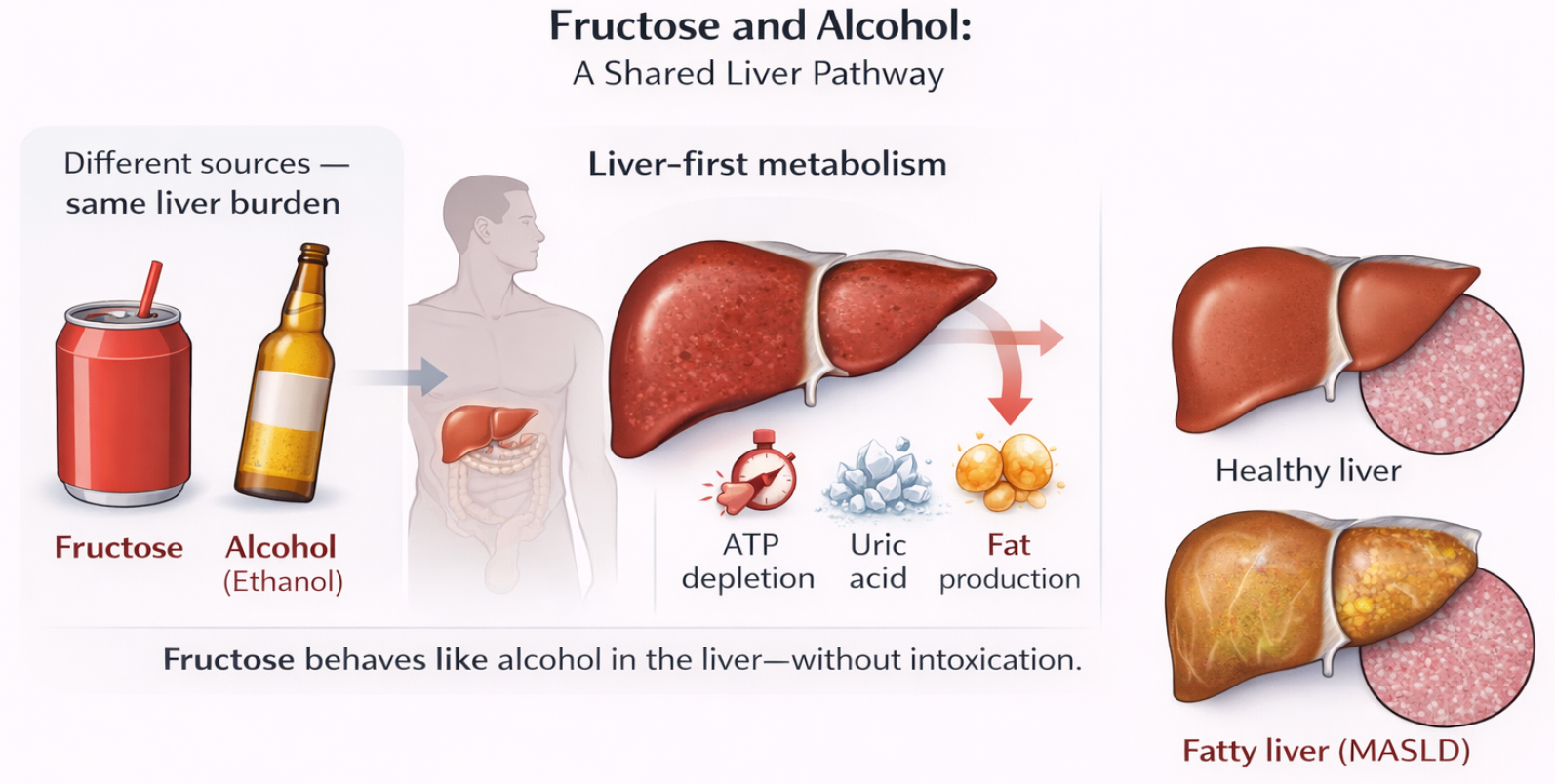
- generates uric acid in a manner similar to the way the liver handles alcohol
- In the modern diet, fructose is a prime driver of uric acid.
Why Uric Acid Rises Early
Because ATP depletion happens early in the fructose pathway, uric acid often rises before:
- overt diabetes
- significant weight gain
- obvious liver disease
This makes uric acid a leading indicator, not a late consequence.
What Uric Acid Does in the Body
Elevated uric acid is not just a marker—it has biological effects:
1. Impairs Endothelial Function
Reduces nitric oxide availability → affects vascular health
2. Promotes Insulin Resistance
Interferes with normal metabolic signaling
3. Drives Fat Accumulation
Contributes to hepatic fat production
4. Amplifies Inflammation
Links to broader metabolic and cardiovascular risk
Clinical Associations
Elevated uric acid is commonly seen alongside:
- Metabolic dysfunction–associated steatotic liver disease
- Insulin resistance
- Type 2 diabetes
- Hypertension
- Cardiovascular disease
It often appears before or alongside these conditions.
The Evolutionary Perspective
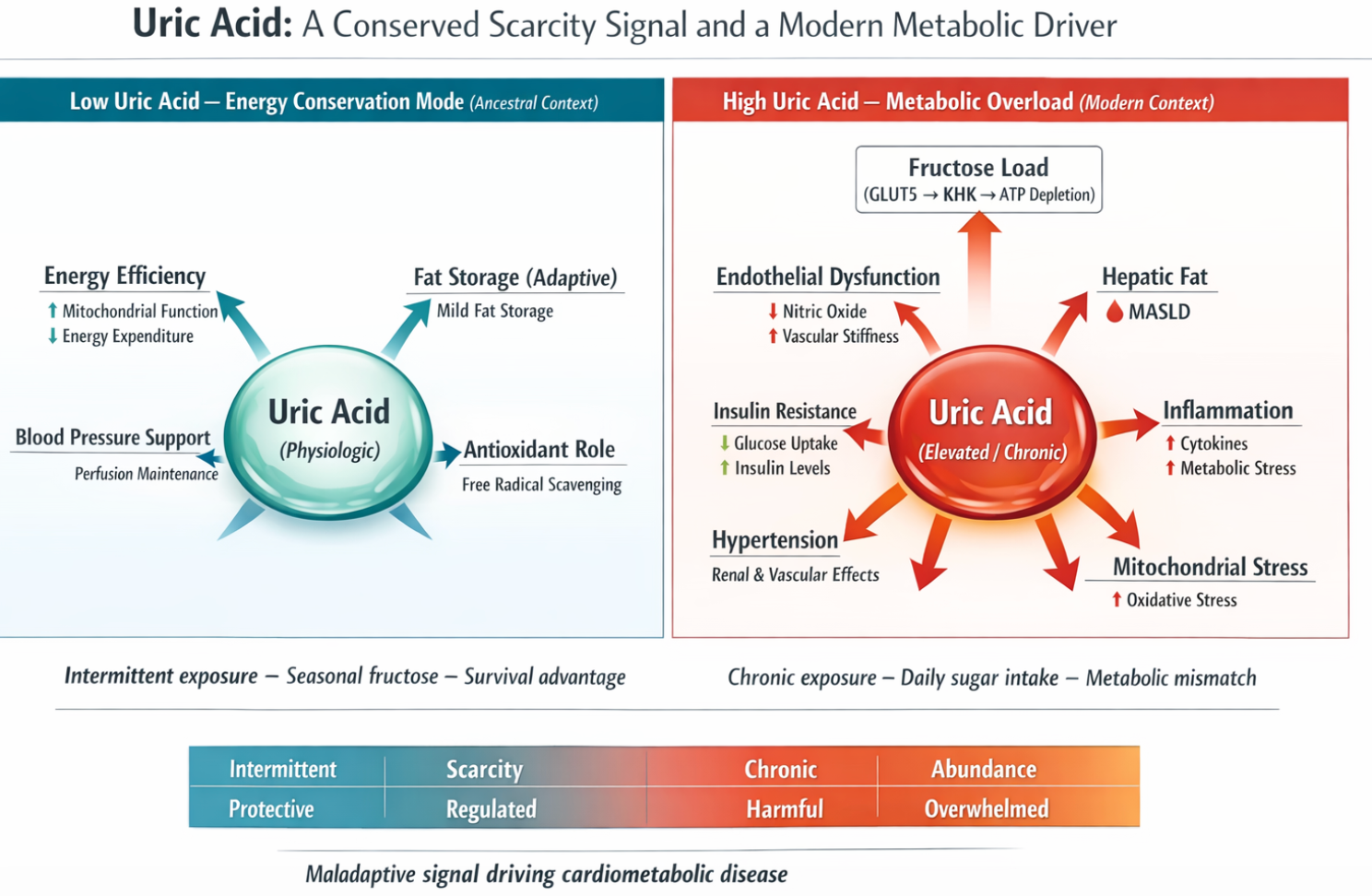
Uric acid likely served a purpose in human evolution:
- Promoted energy storage during scarcity
- Supported survival in low-food environments
- Helped retain calories during intermittent feeding
Uric acid is not simply a waste product. It is a biological signal that evolved to help humans survive periods of scarcity. At low or intermittent levels, it supports energy conservation and fat storage.
In that context, elevated uric acid was adaptive. In the early 20th Century the approximate average human uric acid level was 4, and one hundred years later it has risen to a level of 5.
In today’s environment, where sugar exposure is constant rather than seasonal, this same pathway is chronically activated. The result is a shift from adaptation to dysfunction—so high uric acid becomes maladaptive, driving insulin resistance, fatty liver, and cardiovascular risk.
Why It Is Underused Clinically
Despite its importance, uric acid is often overlooked:
- Not routinely included in metabolic panels
- Viewed narrowly as a “gout marker”
- Not integrated into cardiometabolic risk assessment
This represents a missed opportunity.
A Practical Clinical Approach
When to Check Uric Acid
- Suspected metabolic syndrome
- Fatty liver (MASLD)
- Elevated triglycerides
- Early insulin resistance
How to Interpret
- High-normal levels may still be meaningful
- Trends over time are important
- Consider in context with triglycerides, glucose, and waist circumference
What Can Be Done
Reduce Upstream Drivers
- Limit sugar, especially sweetened beverages
- Reduce refined carbohydrate load
Improve Metabolic Health
- Weight reduction (if appropriate)
- Increase physical activity
Clinical Management
- Address associated conditions (diabetes, hypertension)
- Consider pharmacologic therapy in selected cases
Why This Matters
Uric acid provides a window into early metabolic dysfunction.
It allows clinicians to:
- detect risk earlier
- intervene sooner
- potentially prevent progression to more severe disease
Where This Connects
/fructose-science/fructose-vs-glucose/metabolic-disease/masld-explained/fructose-science/glut5/fructose-science/khk
Bottom Line
Uric acid is not just about gout.
It is a biological signal of metabolic overload, closely tied to fructose metabolism and liver function.
Recognizing and acting on that signal early may change the trajectory of metabolic disease.