Overview • Biology of Metabolic Disease • Metabolic Syndrome Biochemistry • Fructose Disease Arc • Fructose Evolution / Thrifty Pathway
Fructose Pathway:
Fructose vs Glucose • GLUT5 • KHK • Fructose Metabolism • Liver Metabolic Gate • ATP Depletion • De Novo Lipogenesis • Fructose & Triglycerides • HFCS • ALT
Hormones, Inflammation, and Systems:
Insulin Signaling • Insulin Resistance • Adipokines & Hormones • Leptin • Ghrelin • Asprosin • Adiponectin • Inflammation • TNF • Interleukin-6 • Gut Microbiome • Cardio-Hepatic Axis • Renin-Angiotensin System
Cancer and Special Topics:
Fructose & Cancer Metabolism • Cancer Metabolism • Warburg Effect
Introduction
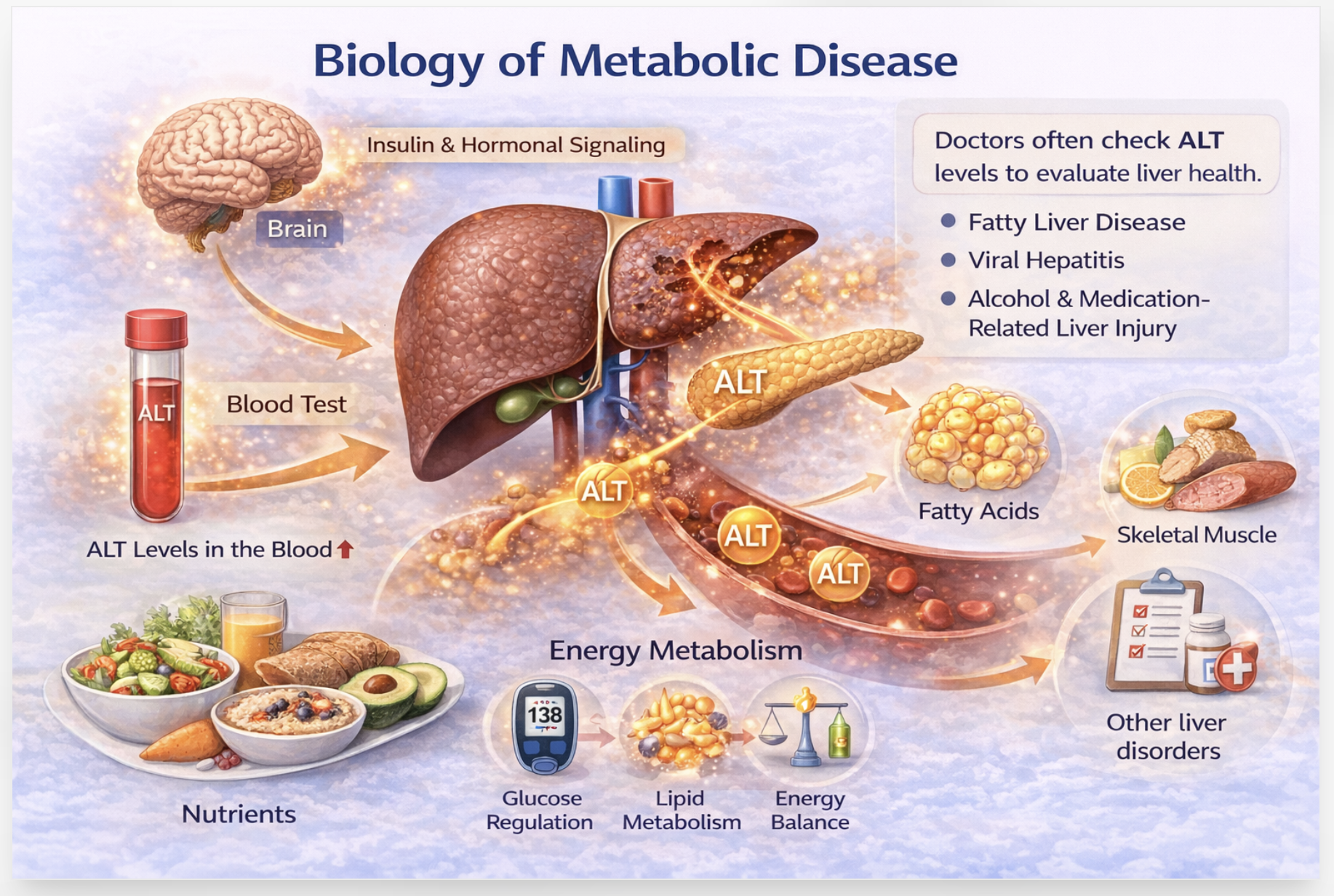
Metabolic disease refers to a group of disorders that affect how the body processes and regulates energy. These conditions include metabolic syndrome, type 2 diabetes, fatty liver disease, and several cardiovascular disorders.
Although these diseases appear in different forms, many arise from common biological processes involving energy metabolism, hormonal signaling, and nutrient processing.
Understanding the biology of metabolic disease helps explain how these conditions develop and why they often occur together.
Energy Metabolism
Human metabolism is designed to maintain stable energy balance. When food is consumed, nutrients are absorbed and distributed to tissues where they can be used for energy or stored for later use.
Key organs involved in this process include:
• the liver
• the pancreas
• skeletal muscle
• adipose tissue
These organs communicate through hormonal signals and metabolic pathways that regulate glucose, lipid, and energy metabolism.
The Role of the Liver
The liver serves as a central metabolic organ. It regulates blood glucose levels, synthesizes lipids, and processes nutrients absorbed from the digestive system.
Because nutrients pass through the liver before entering the general circulation, hepatic metabolism plays a critical role in determining how the body handles dietary energy.
Disturbances in liver metabolism can influence several metabolic pathways simultaneously.
Insulin Signaling
The hormone insulin helps regulate blood glucose levels and energy metabolism.
When insulin signaling becomes impaired—a condition known as insulin resistance—cells respond less effectively to insulin’s metabolic signals. This disturbance can lead to elevated blood glucose, altered lipid metabolism, and increased triglyceride production.
Insulin resistance is a central feature of metabolic syndrome and type 2 diabetes.
Adipose Tissue and Inflammation
Adipose tissue also plays an important role in metabolic regulation.
Fat cells produce hormones and signaling molecules known as adipokines that influence metabolism and inflammation. When adipose tissue expands—particularly visceral fat—these signals may contribute to chronic low-grade inflammation.
Inflammatory signaling can interfere with metabolic pathways and contribute to insulin resistance.
Cardiometabolic Consequences
Because metabolic pathways interact across multiple organs, disturbances in metabolism often affect the cardiovascular system.
Elevated triglycerides, altered lipoprotein metabolism, and chronic inflammation can contribute to the development of atherosclerosis and cardiovascular disease.
For this reason, metabolic disorders and cardiovascular disease are often closely linked.